
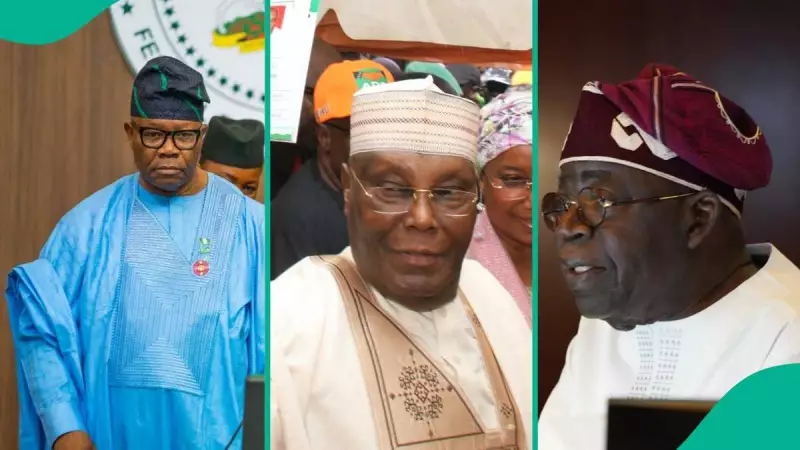
Former Vice President and presidential hopeful, Atiku Abubakar, has launched a scathing attack on the administration of President Bola Tinubu, branding the alleged forgery of provisions in a recently enacted tax reform law as "an act of treason against the Nigerian people."
Atiku's Explosive Allegation
In a strongly-worded statement personally signed by him on Tuesday, December 23, the Peoples Democratic Party (PDP) candidate in the 2023 election did not mince words. Atiku asserted that the purported illegal alterations made to the tax legislation after its passage by the National Assembly represent a direct assault on Nigeria's constitutional democracy.
He accused the executive arm of government of a "draconian overreach" that fundamentally undermines the principle of legislative supremacy. According to Atiku, this move reveals an administration more focused on extracting wealth from citizens already facing hardships rather than creating policies to empower them.
The Root of the Controversy
The firestorm was ignited by claims from Abdussamad Dasuki, a member of the House of Representatives from Sokoto State. Dasuki alleged that the version of the tax laws published in the official gazette and made available to the public contains significant discrepancies from the text originally passed and approved by the National Assembly.
In response to these serious allegations, the House of Representatives has constituted a seven-member investigative committee. This panel is tasked with uncovering the truth behind the alleged forgery and determining how and why the published law might differ from the legislated version.
A Constitutional Crisis in the Making?
Atiku Abubakar, who also holds a chieftaincy title in the African Democratic Congress (ADC), framed the issue as one that strikes at the very heart of Nigeria's governance. By allegedly bypassing the legislative process and unilaterally altering a law, the executive stands accused of violating the sacred separation of powers.
The former Vice President's statement suggests that this is not merely a bureaucratic error but a deliberate act with grave implications. Labeling it treason elevates the accusation to the level of a crime against the state itself, indicating the severe political and legal ramifications that could follow the House committee's findings.
This development adds another layer of tension to the nation's political landscape, centering on a key economic policy—tax reform—that directly impacts every Nigerian citizen and business. The outcome of the investigation is now eagerly awaited by the public and political observers alike.




