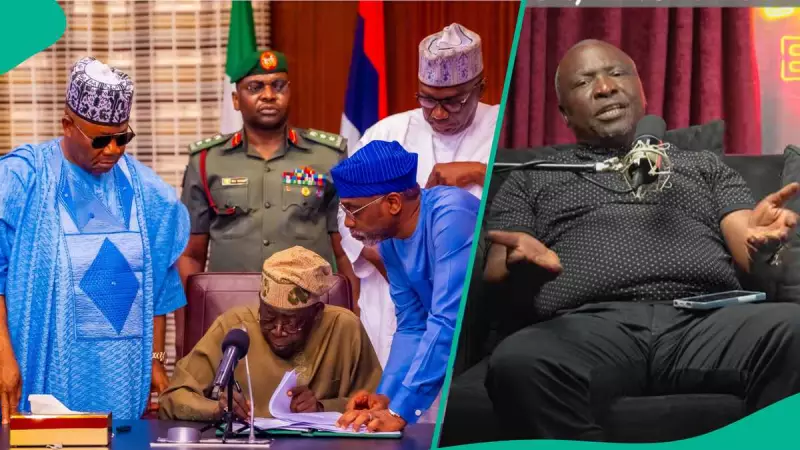
A controversial claim suggesting that Nigeria's new tax reforms will exempt Muslims while targeting Christians has been thoroughly investigated and debunked by fact-checkers. The assertion, made by Plateau-based cleric Ezekiel Dachomo, sparked widespread debate and concern across social media platforms.
The Viral Claim and Its Origin
During an appearance on the 'Lucky Udu Experience' podcast, Ezekiel Dachomo made a striking allegation. He stated that under the newly gazetted tax laws set for implementation in 2026, only Christians would bear the burden of taxation.
"They are saying next year, they will start paying tax. I told my fellow Christians, 'this tax, we are the one to be paying it'. But as far as Islamic people is concerned, they will never pay that tax. They are not paying that tax," Dachomo was quoted as saying.
His comments quickly gained traction online, leading many Nigerians to question the fairness and intent of the upcoming fiscal policies.
What the New Tax Laws Actually Say
The federal government officially gazetted the new tax reform laws on September 9, 2025, with their implementation scheduled to begin on January 1, 2026. The legislative package includes the Nigeria Tax Act, 2025 (NTA), the Nigeria Tax Administration Act, 2025 (NTAA), the Nigeria Revenue Service (Establishment) Act, 2025 (NRSEA), and the Joint Revenue Board (Establishment) Act, 2025 (JRBEA).
In October 2025, Taiwo Oyedele, Chairman of the Presidential Fiscal Policy and Tax Reforms Committee, clarified the obligations for all Nigerians. He emphasized that every individual who earns an income has a responsibility to declare it, a principle that has always existed in law.
"Sex workers, agberos, you know what I said is, everybody has the responsibility to self-declare. That is the first obligation in the law," Oyedele stated during an interactive session with journalists and analysts.
Independent Fact-Checking Verdict
A detailed review of the legislation by independent fact-checking platforms, including The Cable, found no basis for Dachomo's claim. The analysis confirmed that tax obligations are determined solely by objective economic criteria.
The laws specify exemptions based on:
- Income level (e.g., those earning below N250,000 monthly)
- Type of business or economic activity
- Applicable reliefs for low-income earners and small businesses
Nowhere in the legal documents is religious affiliation listed as a criterion for tax exemption or liability. The provisions are designed to be universally applicable to all taxable individuals and corporate entities, regardless of faith.
Consequently, the fact-checking exercise concluded that the claim of a Muslim exemption is false and misleading. The presidency has also dismissed any allegations of discrepancies between the bills passed by the National Assembly and the gazetted versions, labeling such reports as inaccurate.
The dissemination of this unverified claim underscores the importance of consulting official sources and credible fact-checking organizations for accurate information on critical national policies like tax reforms.