Nigeria's recently enacted tax laws have ignited a fierce national debate, pitting critics who warn of increased hardship and confusion against government officials who insist the reforms are necessary for long-term economic stability.
Obi Warns of "Extortion" Amid Policy Confusion
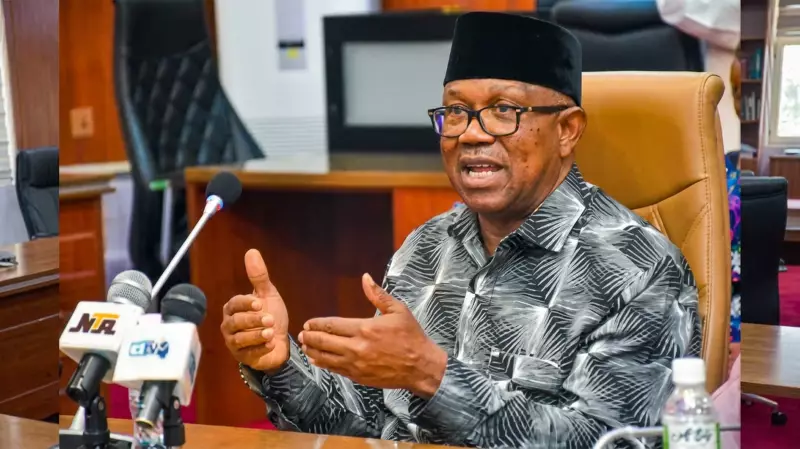
Peter Obi, the 2023 Labour Party presidential candidate, has issued a stark warning, stating the new tax regime risks worsening the economic plight of ordinary Nigerians. In a statement on his X handle, Obi cited a report from global accounting firm KPMG which identified 31 critical problem areas in the laws, ranging from drafting errors to policy contradictions.
He expressed alarm that these issues were reportedly only acknowledged after private meetings between the National Revenue Service and KPMG. "How can ordinary Nigerians be expected to understand their tax obligations if experts need closed-door discussions to interpret the laws?" Obi questioned.
He framed taxation as a social contract, arguing it cannot be enforced if it is neither understood nor trusted. Obi criticised the government's approach, stating it focuses on "increased extraction from citizens" without clear reciprocal benefits like improved healthcare, education, or infrastructure. "A tax system without clear public benefits is not reform but quite frankly, extortion," he declared.
Obi also highlighted the absence of broad consultations before the laws were introduced and pointed to the ongoing hardship following fuel subsidy removal. "Without trust, taxation feels like punishment. Without clarity, it breeds confusion. Without evident public value, it amounts to robbery," he concluded.
Kaigama Fears for the Poor, Cites Public Confusion
Echoing these concerns, Archbishop Ignatius Kaigama of the Catholic Archdiocese of Abuja described the tax policy as complex and poorly understood. He warned that its implementation comes at a time when many citizens are already grappling with severe economic difficulties.
"We are starting a new regime of the tax act... Nigerians are passing through difficulties, through difficult economic situations now. They are being taxed," Kaigama stated. He noted that inadequate public information has fuelled anxiety and confusion.
The Archbishop revealed that despite watching television programs and attending seminars, he himself is still unclear on the implications. "The government may be clear about what it wants, but the citizens are not clear about it. And this is what creates tension and conflict," he said.
His primary concern is the impact on the poor. "My concern is for the local people... who are already poor. If any tax regime is going to deepen poverty, then I am sorry that is not what we bargained for," Kaigama emphasised, urging greater transparency on how the taxes will benefit marginalised communities.
Officials Defend Reforms, Cite Need for Courage
In defence of the government's position, Taiwo Oyedele, Chairman of the Presidential Committee on Fiscal Policy and Tax Reforms, argued that implementing reforms requires courage beyond political will. Speaking at the Hadiza Bala Usman Governance Colloquium in Abuja, Oyedele acknowledged the challenges posed by low public trust and a weak tax culture.
He explained that many Nigerians were unaware of their tax obligations even under the old system. "Suddenly, there is a national awareness, and they just say the people have come with taxes all over the place when actually what the government is doing is to reduce those taxes they have been paying and harmonise them," Oyedele stated.
He provided a stark comparison, noting Nigeria collected about N2 trillion from personal income tax in 2025, versus over N60 trillion in South Africa. "So even if you eliminate corruption 100 per cent... Nigeria is still a poor country today," he said, stressing the need to collect the right taxes from the right people while improving transparency.
Muhammad Abdullahi, Deputy Governor for Economic Policy at the Central Bank of Nigeria, also spoke at the colloquium. He stated that reforms often fail not due to weak intentions, but because of an inability to build systems that withstand political pressure and public anxiety.
He described the current reforms under President Bola Tinubu as "the deepest and most far-reaching reforms in probably three or four decades." Abdullahi pointed to early positive signs like a $16 million credit account surplus and growing reserves, crediting the administration's capacity to endure short-term pain for a long-term vision.
Northern Think Tank Sees Opportunity in Reforms
Offering a regional perspective, the Arewa Think Tank (ATT) declared the tax reforms a major opportunity for Northern states to diversify their economies and boost internally generated revenue. The group's convener, Muhammad Alhaji Yakubu, stated the reforms could reposition the North as a competitive economic bloc if properly implemented by state governments.
Speaking at a sensitisation summit in Kaduna, Yakubu urged Northern leaders to leverage the reforms to invest in education, healthcare, agriculture, and solid minerals. "These reforms hold big fortunes and long-term prospects for Northern states," he said.
Kaduna State Governor, Uba Sani, represented by his revenue service chairman, said the reforms aim to harmonise multiple revenue streams into nine clear lines to simplify compliance, especially for youth-led and small businesses.
WHO Calls for Higher Taxes on Sugary Drinks, Alcohol
In a related global context, the World Health Organisation (WHO) has urged governments, including Nigeria's, to significantly increase taxes on sugary drinks and alcohol. WHO Director-General Tedros Adhanom Ghebreyesus stated that such health taxes reduce consumption of harmful products, prevent disease, and generate revenue for investing in public services.
WHO reports indicate that while many countries tax sugar-sweetened beverages, many high-sugar products like fruit juices and sweetened milk drinks often escape taxation. Similarly, alcohol has become more affordable in most countries as taxes have not kept pace with inflation.
The debate over Nigeria's tax future remains deeply polarised, balancing immediate public hardship against promises of future fiscal stability and development.