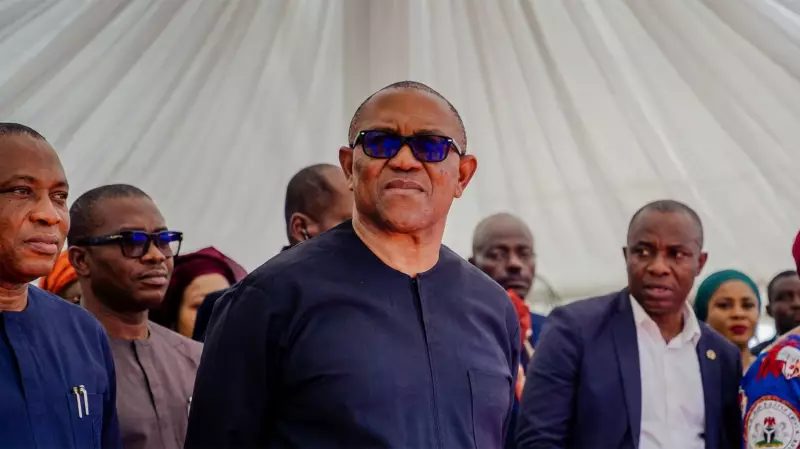
Former presidential candidate Peter Obi has issued a strong warning to the Nigerian government, urging authorities to avoid implementing tax policies that effectively "tax poverty" and further impoverish the already struggling masses. The Labour Party stalwart emphasized that the nation's current economic challenges require thoughtful, humane solutions rather than burdensome levies on the poor.
A Call for People-Centered Economic Strategy
Peter Obi made these remarks during a recent public engagement, where he addressed the pressing need for a strategic shift in the country's economic management. He argued that the focus should be on moving from a consumption-based economy to a production-based one. This fundamental change, according to him, is the only sustainable path to creating wealth, generating employment, and ultimately reducing poverty.
Obi pointed out that the government's approach to revenue generation appears to be centered on imposing new taxes and increasing existing rates. He cautioned that this method, without corresponding measures to boost production and expand the tax base through increased economic activity, is counterproductive. It places an unbearable burden on a small segment of the population, primarily those in the formal sector and ordinary citizens battling high costs of living.
The Path Forward: Production, Not Just Taxation
The former Anambra State governor outlined a clear alternative. He advocated for comprehensive reforms that prioritize human development and capital formation. His vision includes:
- Significant investment in sectors that can drive production, such as agriculture, manufacturing, and technology.
- Policies designed to support small and medium-sized enterprises (SMEs), which are the backbone of job creation.
- A drastic reduction in the cost of governance at all levels to free up resources for productive investment.
- Targeted support for the most vulnerable populations to ensure they are not crushed by economic policies.
Obi stressed that the goal of any reform should be to alleviate suffering and create opportunities, not to extract more from those who have little left to give. He referenced global best practices where tax systems are designed to be progressive and to stimulate economic growth, not stifle it.
Context of Current Economic Pressures
This counsel comes at a critical time when many Nigerians are grappling with the severe economic impact of policies like the removal of the petrol subsidy and the unification of foreign exchange windows. These measures, though aimed at long-term stability, have triggered a sharp increase in the prices of essential goods, transportation, and services, pushing millions deeper into economic hardship.
In this climate, the public has grown increasingly wary of any new tax proposals, fearing they will exacerbate an already difficult situation. Peter Obi's intervention taps directly into this widespread public sentiment, positioning him as a voice advocating for fiscal policies with a human face.
He concluded by urging the government to engage in broader consultation and to design a reform agenda that is holistic, transparent, and focused on pulling people out of poverty rather than pushing them further into it. The success of any economic policy, he maintained, must be measured by its positive impact on the lives of the ordinary citizen.