
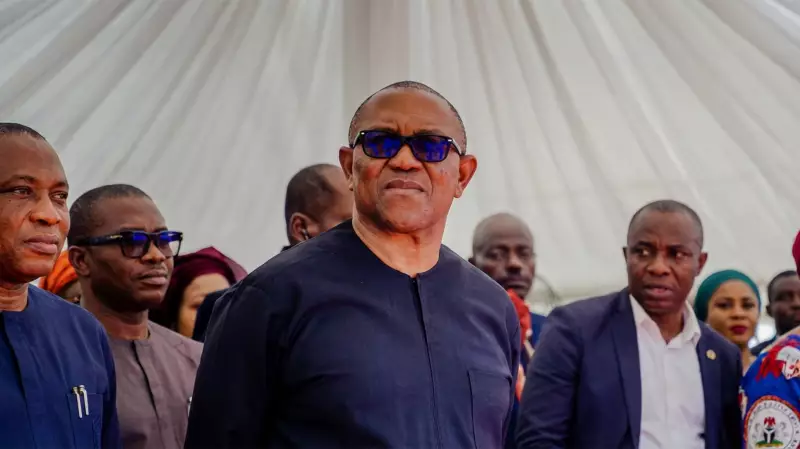
Former presidential candidate Peter Obi has launched a sharp critique of Nigeria's approach to taxation, warning that placing heavier burdens on the nation's poor citizens will damage economic growth, erode social trust, and threaten national unity.
A Call for a Transparent Social Contract
In a statement posted on his X account on 2 January 2026, the former governor of Anambra State argued that prosperity can never be achieved by taxing poverty. He emphasized that effective taxation must function as a clear social contract, built on the principles of fairness, honesty, and demonstrable public benefit.
"As I travel the world and meet leaders who have transformed their nations, one lesson is clear: lasting economic and social progress begins with national consensus," Obi wrote. He stressed that governments have a duty to be honest with citizens about how tax policies impact their incomes and how the collected revenue will lead to tangible development outcomes.
Focus on Wealth Creation, Not Just Revenue
The 2023 Labour Party presidential candidate insisted that the goal of taxation should not be limited to increasing government coffers. Instead, sound fiscal policy must aim to make citizens wealthier through supporting production, encouraging enterprise, and fostering job creation.
"Nigeria must rethink taxation if it is serious about economic growth, national unity, and shared prosperity," Obi stated. "The purpose of sound fiscal policy is not merely to raise revenue; it is to make the people wealthier so that the nation itself becomes stronger. Yet today, Nigerians are asked to pay taxes without clarity, explanation, or visible benefit."
He proposed that empowering small and medium-sized enterprises (SMEs) would naturally expand the tax base. This approach, he believes, is preferable to adding more pressure on households already grappling with a high cost of living. "You cannot tax your way out of poverty — you must produce your way out of it," he concluded.
Amid Controversial Reforms and Public Debate
Obi's comments arrive during intense public debate over Nigeria's tax reforms. The federal government has recently pushed to boost non-oil revenue as it contends with several challenges:
- Rising debt servicing costs
- A weak Naira
- The removal of fuel subsidies
The reforms, which took effect at the start of the new year, include changes to Value-Added Tax (VAT) administration, adjustments to excise duties, and efforts to widen the tax net.
The debate intensified following a controversy around a recently amended tax law. The National Assembly acknowledged discrepancies between the version passed by lawmakers and the one later gazetted. Obi referenced this episode, calling it alarming and unprecedented. He noted that citizens are being asked to pay higher taxes under a framework whose legitimacy is in question, without clear explanations or guarantees of public benefit.
"There is no virtue in celebrating increased government revenue while the people grow poorer," Obi wrote. "Any tax system that makes citizens poorer violates the fundamental principles of good governance and sound fiscal policy."
This critique highlights a central tension in Nigeria's fiscal strategy. Official data shows the country's tax-to-GDP ratio remains among the lowest globally, estimated at below 10 percent. While successive governments have argued that improving tax collection is essential to fund critical infrastructure, healthcare, and education, Obi's statement challenges the method and fairness of the current implementation.




