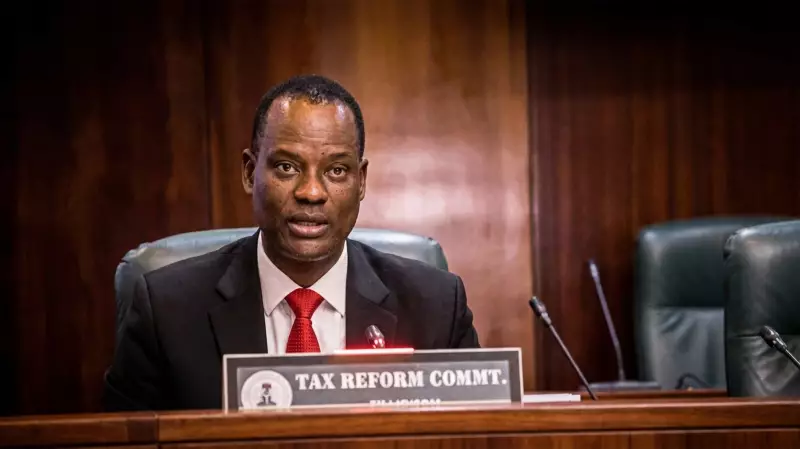
The Chairman of the Presidential Committee on Fiscal Policy and Tax Reforms, Taiwo Oyedele, has made a bold declaration of his commitment to Nigeria's fiscal overhaul, stating he is prepared to "die for Nigeria as a reformer." He made this statement while addressing concerns over alleged threats linked to the Nigeria Tax Administration Act (NTAA) 2025.
Defending Reforms Amidst Alleged Threats
Speaking at the Cowry Quarterly Economic Discourse in Lagos on January 17, 2026, Oyedele framed his personal risk in the context of national service. He revealed facing significant opposition, including threats to his family, since the drafting stages of the tax bill. "President Bola Tinubu is taking the political risk while I am taking the other risk, including from people who are looking for my address to beat up my family," Oyedele stated.
He passionately defended the reform process, dismissing failure as an option. "This reform cannot fail; we don't have a scenario for when it fails but how to make it better," he asserted. He also addressed allegations of forgery against the act, challenging critics to provide evidence and accusing them of conspiring with motives contrary to the national interest.
Clarifying Capital Gains Tax Provisions
A key focus of Oyedele's address was to clarify provisions within the new tax regime, specifically regarding capital gains. He explained that the law provides an automatic exemption for individuals if the total proceeds from selling an asset are not more than N150 million and the gain does not exceed N10 million within a 12-month period.
"The law says everyone is entitled to an exemption on capital gains tax. If the proceeds are not more than N150 million and the gain is not more than ₦10 million in 12 months, the exemption is automatic; no explanation, no conditions attached," he detailed.
He further noted that pension fund administrators and real estate investment trusts also benefit from exemptions, provided proceeds are reinvested. This structure, he emphasized, is designed to encourage long-term investment and stimulate market activity. High-net-worth individuals, he clarified, only incur the tax when they permanently exit investments without reinvesting.
Business Leaders Highlight Economic Challenges
While supporting the need for reform, other speakers at the event pointed to persistent hurdles in the business environment. The Director General of the Lagos Chamber of Commerce and Industry (LCCI), Chinyere Almona, acknowledged some optimism for 2026 but stressed that the cost of doing business remains critically high.
Almona identified power costs and inadequate infrastructure as primary burdens. "Businesses are struggling because of the cost of power, which affects every other thing," she said. She highlighted that Nigeria's infrastructure stock is only about 30% of GDP, far below the World Bank's benchmark of 60-70% for emerging economies, forcing businesses to self-provide essential services.
Adding to this, Johnson Chukwu, Group Managing Director of Cowry Asset Management Limited, warned of a misalignment between macro-economic improvements and micro-economic reality. "There's an increase in government revenue. So, the key thing we should look into is how do we drive improved household consumption? For this reform to be sustained, people must see improvement of their conditions," Chukwu stated, underscoring the need for reforms to translate into tangible benefits for ordinary Nigerians.
Oyedele concluded by positioning the tax reforms as a necessary step following other painful adjustments like subsidy removals and naira floatation, aimed at accelerating the transformation of policy outcomes into everyday economic reality.