
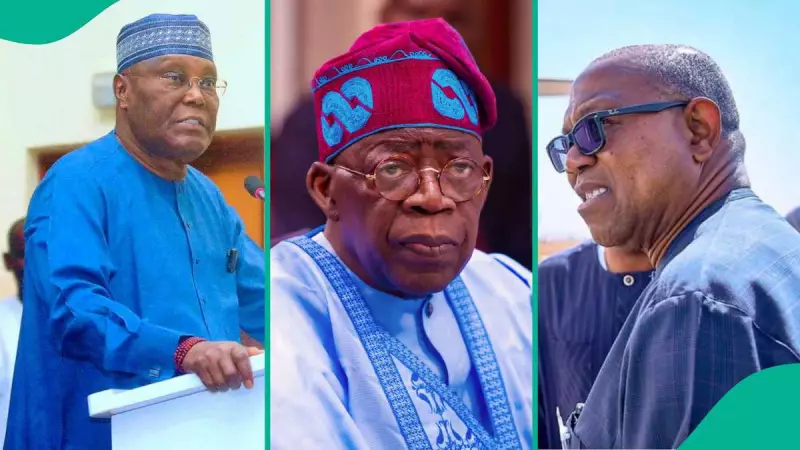
The Presidency of Nigeria has firmly rejected allegations that the country's newly enacted tax reform legislation was secretly tampered with after being passed by the National Assembly. This strong denial comes amidst a growing controversy fueled by opposition leaders and federal lawmakers who have raised serious concerns about discrepancies in the laws.
Lawmakers and Opposition Sound the Alarm
The crisis erupted when a member of the House of Representatives, Abdussamad Dasuki (PDP, Sokoto), raised a motion of privilege on Wednesday, December 21, 2025. He alleged that the versions of the tax bills that were later gazetted and released to the public did not match what was debated and approved by the parliament. Dasuki warned that such discrepancies could render the laws vulnerable to legal challenges.
In swift response, the Speaker of the House, Tajudeen Abbas, announced the constitution of a seven-man ad hoc committee to investigate the allegations and report its findings. The concerns were not limited to the legislature. Prominent opposition figures, including former Vice President Atiku Abubakar and Labour Party's Peter Obi, joined the fray, calling for the immediate suspension of the laws pending an independent and thorough investigation.
Presidency Labels Allegations as "Politically Motivated"
Reacting to the uproar, the Presidency dismissed the claims as unsubstantiated and driven by political motives. Speaking through the Senior Special Assistant on Media and Publicity, Temitope Ajayi, the administration of President Bola Tinubu insisted that the laws underwent strict constitutional and legislative processes.
Ajayi stated that the allegations of alteration had not been proven by any competent authority and described the controversy as opposition noise aimed at creating a toxic environment. He emphasized that preparations for the implementation of the laws, scheduled for January 1, 2026, had been ongoing for months and would not be derailed.
Echoing this stance, the President's Special Adviser on Information and Strategy, Bayo Onanuga, ruled out any suspension of the laws. He noted that the House committee should be allowed to complete its assignment and revealed that some aspects of the new tax regime were already being implemented ahead of the official deadline.
Specific Allegations and Broader Implications
Despite the Presidency's assurances, specific allegations have been made regarding the content of the gazetted laws. According to documents reviewed by some media outlets, lawmakers claim that certain oversight and accountability provisions approved by the National Assembly were omitted from the final Acts.
Conversely, it is alleged that new coercive provisions—including powers of arrest, garnishee orders without court approval, and compulsory foreign currency computation—were inserted even though they were never debated or passed by the legislators.
Atiku Abubakar, through his media aide Paul Ibe, condemned the alleged alterations as criminal acts of falsification. He called for an immediate halt to implementation to allow for proper scrutiny, warning that it raised dangerous questions about what else might have been doctored.
Peter Obi, in a statement on social media platform X, described the situation as a grave threat to constitutional order. He stated that Nigeria had moved from a era of budget padding to one of law forging, which severely impacts taxpayers' rights and access to justice.
The African Democratic Congress (ADC) also weighed in, labeling the reforms as draconian. The party's National Publicity Secretary, Mallam Bolaji Abdullahi, warned that tampering with passed legislation was an undemocratic act that concentrated too much power in the executive.
President Tinubu had recently signed four tax reform bills into law, hailing them as the most significant overhaul of Nigeria's tax system in decades. He had previously assured Nigerians that the new regime would bring relief to small businesses and protect vulnerable, low-income earners from excessive burdens.




