
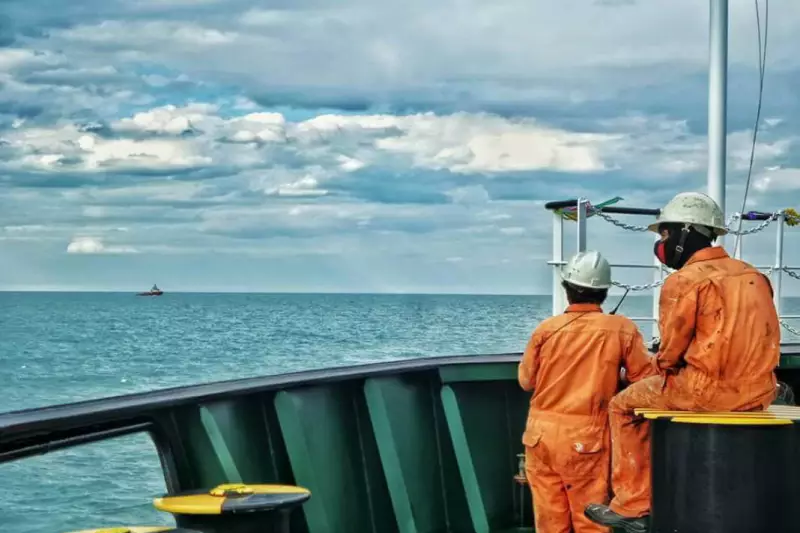
As Nigeria gears up for a major overhaul of its tax system in 2026, key voices in the maritime industry are raising an urgent call for special provisions to protect seafarers. They argue that without specific safeguards, the upcoming reforms risk placing an unjust financial load on professionals whose work conditions are vastly different from land-based employment.
Stakeholders Unite at Apapa Event
The appeal was made prominently during the Merchant Seafarers Association of Nigeria and USA Sailors Night and Awards ceremony, held in Apapa, Lagos. The gathering highlighted the unique challenges faced by those working at sea.
Professor Alfred Oniye, the Secretary-General of the Merchant Seafarers Association of Nigeria and USA, addressed the assembly. He stated that the impending tax framework presents a mix of potential benefits and significant hurdles for Nigerian seafarers. He emphasized that the principle of fairness must be at the core of how the rules are applied.
"The key lies in ensuring fair taxation policies that recognise the unique nature of our work," Oniye declared. He pointed out that the profession involves extended periods working outside Nigerian territory and in international waters, necessitating policies that align with global standards.
Calls for Exemptions and Clear Guidelines
Professor Oniye detailed the association's specific demands to the Federal Government. These include advocating for tax exemptions or rebates for seafarers engaged in international work. He also stressed the need for unambiguous guidelines on tax residency for crew members who spend most of the year at sea.
A critical part of their advocacy is ensuring seafarers are included in national social safety nets, such as pension schemes and health insurance. This inclusion must be done without subjecting them to double taxation. Oniye confirmed that the association is already in active discussions with the government to ensure the new regime empowers seafarers economically rather than weakening their financial standing.
"Our association is actively engaging with the Federal Government to ensure that seafarers are not unfairly burdened," he said, adding that clarity and equity will be paramount when the reforms take effect.
Essential Service Comparable to Armed Forces
Adding his voice to the debate, Douglas Zakana, Managing Director and Founder of Izonibe Oil and Gas Marine Limited, urged a thorough review of how the tax law applies to seafarers. He referenced ongoing public debates about discrepancies between the enacted law and what is being presented for implementation.
Zakana made a powerful comparison, arguing that seafarers perform essential national duties and deserve a special consideration similar to that granted to members of the armed forces, who are exempt from certain taxes.
"The same way they do not take taxes from the armed forces, we also do an essential duty," Zakana stated. He clarified that while seafarers are not sent to war zones, they are reserved for national service and play a crucial role in sustaining the economy, especially during crises.
He cited the COVID-19 pandemic as a definitive example. "During the COVID-19 era, everywhere was shut down. The seafarers staked their lives and did this job, and the nation’s wealth continued yielding," he recalled.
Zakana maintained that providing tax waivers or exemptions would be a tangible recognition of their sacrifices and offer much-needed relief to a sector that is the backbone of national economic activity. "They should give us that kind of regard to take this tax away from us, and it will help us a lot," he concluded.
Both stakeholders reached a consensus that as the 2026 deadline approaches, continued and constructive dialogue with government authorities is essential. The goal is to shape a tax regime that reflects the practical realities of seafaring and safeguards the welfare of the professionals who maintain Nigeria's critical maritime and energy supply chains.




