
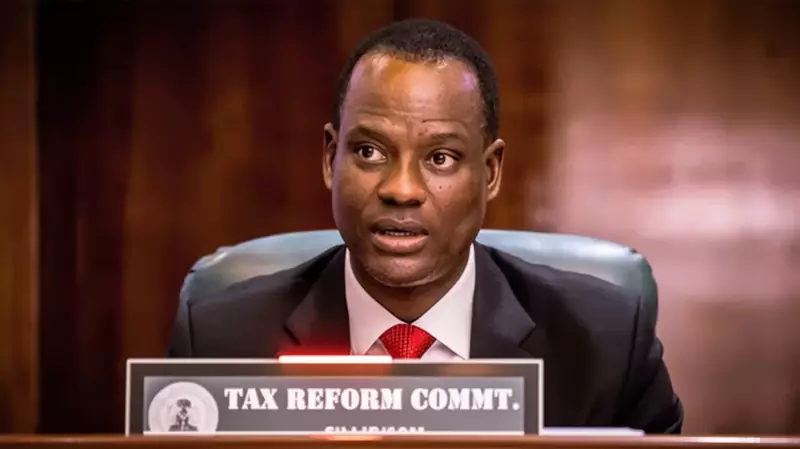
The Federal Government has reaffirmed its commitment to rolling out Nigeria's comprehensive new tax regime on the first day of the new year, dismissing any possibility of a delay. Professor Taiwo Oyedele, Chairman of the Presidential Committee on Fiscal Policy and Tax Reforms, made the declaration following a briefing with President Bola Tinubu in Lagos.
Reforms on Schedule, Two Laws Already Active
Oyedele stated that the implementation of the four pivotal tax reform laws is proceeding according to plan. He revealed that two of the four laws are already in effect. The Nigerian Revenue Service (Establishment) Act and the Joint Revenue Service (Establishment) Act commenced on June 26, 2025.
The remaining two pieces of legislation, the Nigerian Tax Act and the Nigerian Tax Administration Act, are firmly on track to become operational on January 1, 2026. "We met with Mr President to provide an update. Two of the laws have already commenced, while the remaining two are on track to take effect on January 1, 2026," Oyedele confirmed.
Massive Relief for Workers and Small Businesses
The committee chairman emphasised that the core objective of the reforms is to ease the financial burden on the majority of Nigerians and stimulate economic growth. He provided striking statistics on the expected impact:
- 98% of the working population will either pay zero personal income tax or see their payments significantly reduced under the new system.
- 97% of small businesses will be exempt from corporate income tax, Value Added Tax (VAT), and withholding tax.
- Even larger corporations will benefit from lower effective tax rates.
"The whole idea is to promote economic growth, inclusivity and shared prosperity. These reforms are designed to provide relief to Nigerians, not to impose additional hardship," Oyedele explained.
Preparation and Long-Term Vision for Revenue
Addressing the level of readiness, Oyedele noted that preparatory work began in October 2024 when the bills were submitted to the National Assembly. The six months since the laws were signed have been dedicated to capacity building, system upgrades, and public sensitisation. "Tax reform of this scale is a work in progress, you don’t get perfection immediately, but you improve continuously," he stated.
He also clarified that the reforms are not a scheme for immediate revenue collection. "The intention is not short-term revenue extraction. Over time, revenue will grow from economic expansion, not because tax rates have increased, but because the tax base has broadened," Oyedele said. He expressed confidence that by creating a fairer system, compliance would improve naturally, leading to sustainable revenue growth.
Oyedele welcomed the oversight role of the House of Representatives Committee, which is looking into allegations of alterations to the bills. He assured that the government would engage constructively with the National Assembly where needed, but stressed that this would not alter the implementation timeline.




