For millions of Nigerians, the promise of reliable telecommunication services remains a distant mirage. The year 2025 has continued the frustrating trend of poor network quality, marked by incessantly dropped calls and painfully slow internet speeds. This reality persists despite a significant 50 per cent tariff increase approved for operators in January 2025, which was accompanied by firm commitments to vastly improved services.
A Nationwide Struggle for Connectivity
From the bustling commercial hub of Lagos to the historic city of Kano, and from Ondo to Abuja, the story is uniformly grim for the vast majority of Nigeria's 175 million active telephone users. The Quality of Experience (QoE), which measures a user's overall satisfaction with the network, has been severely compromised. The Nigerian Communications Commission (NCC), under leadership that prioritized QoE from October 2023, has yet to effectively sanction underperforming operators, leaving subscribers in a lurch.
Subscriber frustration is palpable. Funmi Adeleke, a Lagos-based entrepreneur, highlighted how unstable networks disrupt her business and lead to missed mobile payments. In Abuja, IT professional Emmanuel Nwankwo decried daily struggles with buffering and dropped calls, calling the service in the capital the worst in the country. The President of the National Association of Telecoms Subscribers, Deolu Ogunbanjo, confirmed that hopes for improvement following the tariff hike have been dashed nearly a year later.
High Costs and Low Digital Quality of Life
The financial burden on Nigerians is heavy. According to Surfshark's Digital Quality of Life Index 2025, Nigeria ranks 97th globally, still trailing behind regional peers like Kenya and South Africa. The report reveals stark affordability issues: a Nigerian must work approximately 1 hour and 41 minutes to afford a month of mobile internet, and a staggering 14 hours and 32 minutes for fixed broadband. This is in stark contrast to countries with the most affordable services.
While Nigeria performed relatively well in digital security (58th), it ranked poorly in internet quality (117th) and digital infrastructure (108th). Only 39 per cent of Nigerians have internet access, underscoring a deep digital divide that hampers economic and social progress.
Root Causes: Infrastructure Under Siege
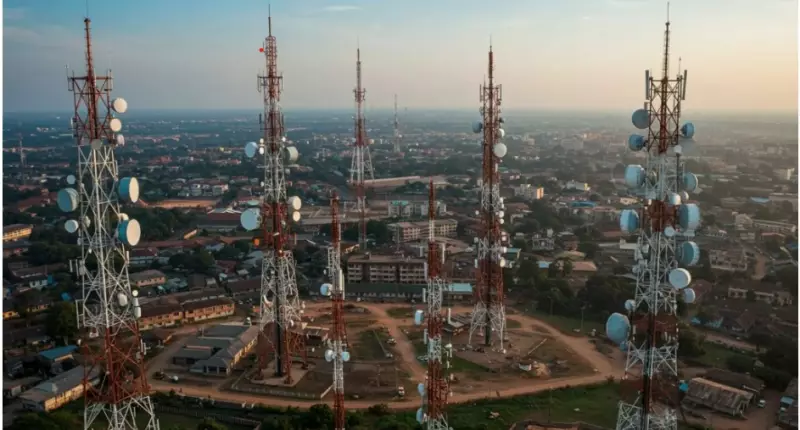
Industry leaders point to a hostile operating environment as the core problem. Gbenga Adebayo, Chairman of the Association of Licensed Telecom Operators of Nigeria, identified crippling challenges. The unreliable public power supply forces operators to run over 30,000 base stations on expensive diesel generators, skyrocketing operational costs.
Furthermore, telecom infrastructure is under constant attack. The sector grapples with an alarming 1,100 to 1,700 weekly incidents of vandalism and fibre optic cable cuts. These criminal acts, coupled with bureaucratic hurdles in securing Right-of-Way permits and damage from road construction, lead to frequent, widespread service outages.
The economic consequences are severe. Poor QoE disrupts mobile banking, e-commerce, and remote work, stifling the growth of Nigeria's digital economy. The phenomenon of unexplained rapid data depletion further erodes consumer trust in service providers.
Despite the NCC's partnership with Ookla to publish performance data and warnings of sanctions, no major operator has faced significant penalties. The data showed MTN with the most consistent national performance, while Globacom was highlighted for issues with latency and jitter affecting user experience. As operators like MTN, Airtel, Glo, and 9mobile report huge profits—over N2.5 trillion in the first nine months of 2025—subscribers are left waiting for the quality of service they were promised and have paid for.