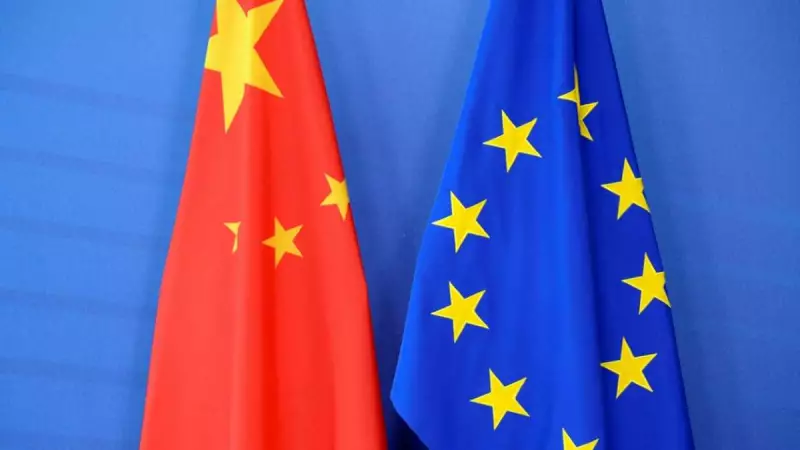
The European Union has strongly criticised China's decision to impose new tariffs on its dairy exports, labelling the move as unjustified. This marks a significant escalation in the ongoing trade tensions between the two economic giants.
Details of the New Dairy Duties
On Monday, China announced it would apply duty deposits ranging from 21.9 percent to 42.7 percent on various dairy products imported from the EU. These measures are set to take effect from Tuesday.
The targeted items include a wide range of popular exports:
- Fresh and processed cheese
- Curd
- Blue cheese
- Certain types of milk and cream
Beijing's commerce ministry stated that preliminary findings from an anti-subsidy probe, launched in August 2024, indicate a link between EU subsidies and "substantial damage" to China's domestic dairy industry. The full investigation is scheduled to conclude in February.
EU and Industry Reaction
The European Commission swiftly rejected China's conclusions. A trade spokesman for the Commission argued that the investigation was based on questionable claims and lacked sufficient evidence. "Our assessment is that the measures are therefore unjustified and unwarranted," the official stated, adding that the EU is examining the determination and will provide comments to Chinese authorities.
The French dairy industry expressed shock at the decision. François-Xavier Huard, head of the French dairy association FNIL, which includes giants like Danone and Lactalis, described it as "a shock, a blow." He highlighted that French food company Savencia, a major cheese exporter to China that had cooperated with authorities, would be particularly hard hit.
Escalating Trade Spat Between Economic Powers
This move is the latest in a series of retaliatory trade measures. It follows closely on the heels of China's decision to impose duties on EU pork imports for five years, which took effect on December 17. Those tariffs range from 4.9% to 19.8%.
The current trade dispute was ignited in 2024 when the EU moved towards imposing heavy tariffs on Chinese electric vehicles, citing unfair subsidies. Beijing responded with probes into European pork, brandy, and dairy. After the EU proceeded with the EV tariffs, China forced EU brandy makers to raise prices or face anti-dumping taxes of up to 34.9%.
The underlying tension is fueled by a significant trade imbalance. The EU ran a trade deficit of over $350 billion with China in 2024. French President Emmanuel Macron recently warned that Europe would consider strong measures, including tariffs, if this imbalance is not addressed.
Beyond trade, the EU and China remain at odds over geopolitical issues, notably Russia's war in Ukraine, with Brussels urging Beijing to pressure Moscow—a call that has so far gone unheeded.