
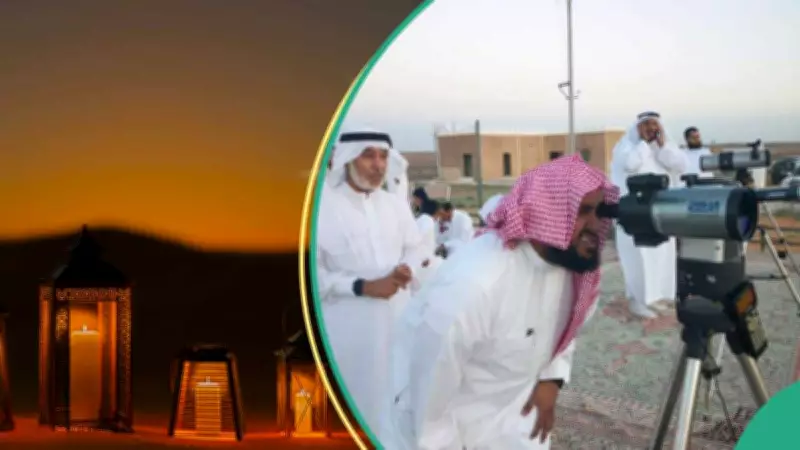
Saudi Arabia Initiates Ramadan 2026 Moon Sighting Process
The Supreme Court of Saudi Arabia has officially announced that Muslims across the Kingdom should commence the search for the crescent moon marking the beginning of Ramadan 2026 on Tuesday, February 17. This directive, as reported by Al-Arabiya, encourages individuals to use either their naked eyes or binoculars for the sighting. Those who successfully observe the moon are instructed to promptly report their findings to the nearest court or designated center to register their testimony, ensuring an accurate and communal verification process for the holy month's start.
Global Observance and Traditions of Ramadan
Ramadan, recognized as the ninth and holiest month in the Islamic lunar calendar, is celebrated with diverse customs worldwide, ranging from Iftar gatherings and household decorations to traditional culinary preparations. The fasting period, obligatory for all Muslims, begins at dawn with a pre-fast meal known as 'suhoor' and concludes at sunset with 'Iftar'. During this time, participants abstain from all food, drink, and other physical needs, emphasizing spiritual reflection and devotion. This practice fosters a sense of unity and holiness among the global Muslim community, as they refrain from ungodly activities and focus on prayer and charity.
Nigeria's Alignment and Challenges
In parallel, the Nigerian Supreme Council for Islamic Affairs (NSCIA) has declared the commencement of Ramadan 2026, urging Nigerian Muslims to begin fasting while remaining steadfast amid ongoing societal challenges. Under the leadership of His Eminence Alhaji Muhammad Sa’ad Abubakar, the NSCIA confirmed that the crescent moon should be sighted on February 17, 2026, corresponding to the 29th of Sha’aban 1447 A.H. According to the council, if the moon is observed on Tuesday, Wednesday, February 18 will mark the first day of Ramadan; otherwise, fasting will start on February 19.
The National Moon Sighting Committee (NMSC), in collaboration with the National Space Research and Development Agency (NASRDA), has initiated monitoring efforts to advise Muslim leaders accurately. In a message to the community, the NSCIA acknowledged the difficulties faced by Nigerian Muslims, including Islamophobic narratives, attacks by insurgents and bandits, and perceived media bias. The council specifically highlighted incidents in regions such as Southern Kaduna, Kwara, Kebbi, and Maiduguri, expressing concern over the framing of Muslims as aggressors in some reports. This call for resilience underscores the importance of faith and solidarity during the holy month, as believers navigate these adversities while upholding their religious obligations.