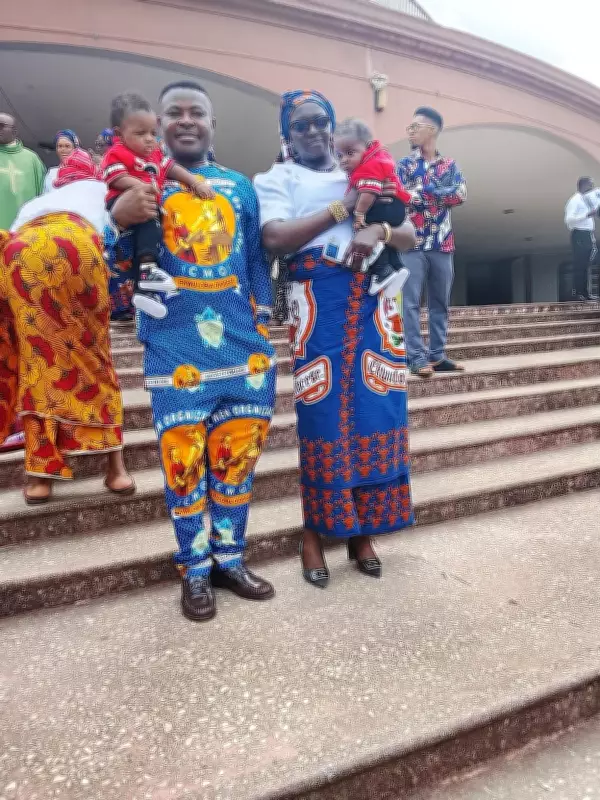
Nigerian Father Mocked for Having Only Daughters Celebrates Birth of Twin Boys
A Nigerian father, previously ridiculed for having five daughters and no male children, has joyfully welcomed a set of twin boys. The heartwarming story was shared by his employee, Emmanuel Eze-Chukwu, who attended the church dedication ceremony at St. Patrick's Cathedral in Awka, Anambra State, last Sunday.
Years of Mockery and Pressure
According to Emmanuel, his boss faced significant mockery and social pressure due to the absence of a son. In Igbo culture, where male heirs are often emphasized for carrying on the family name, the father was told that his wealth was useless without a son to inherit it. Some individuals even advised him to marry another woman who could bear male children, adding strain to his family life.
The father, who is the only son of his parents, had acquired extensive landed properties, including over 40 plots in his hometown alone, through purchase and inheritance. His construction of a massive house led people to openly question whom it was for, given he had only female children. At one point, during a kindred meeting, a man went so far as to tell him not to speak because he lacked a male child, highlighting the depth of the stigma he faced.
A Joyful Turn of Events
Fortunately, the situation took a positive turn when his wife conceived again and gave birth to twin boys in October 2025. The father, who married in February 2011, had six children by 2020, all females, with one sadly lost. The birth of the twins was seen as a divine blessing, with Emmanuel noting that it demonstrated that "God is not a man" and that human thoughts are not always aligned with divine plans.
The church gathering in Awka was a celebration of this gift, bringing relief and happiness to the family after years of enduring criticism and fear that the father might seek a mistress to have a male child. This story underscores the cultural pressures surrounding gender and inheritance in some Nigerian communities, while also highlighting a personal triumph over adversity.