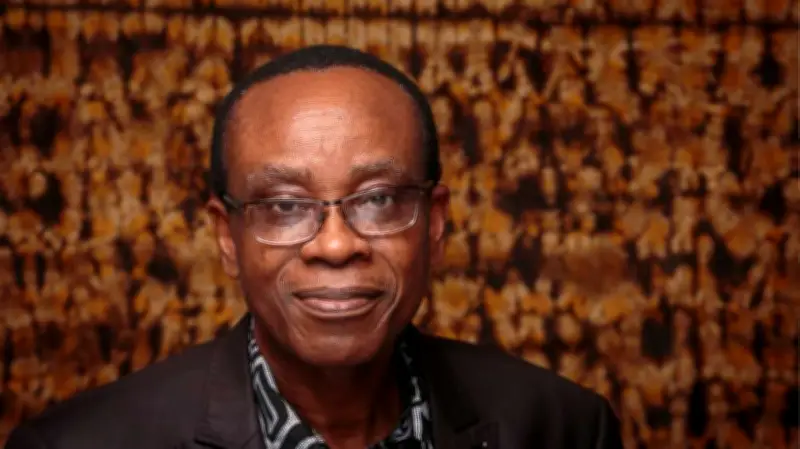
Environmental activist Nnimmo Bassey has called on universities to halt the "mindless global slide towards climate chaos" and demonstrate what real climate action looks like. He made the call during his keynote address at an event organized by Igbinadion University to mark this year's World Environment Day.
Universities as Vanguards of Climate Transition
Speaking on the theme 'Now for Climate: Nigeria's Moment, Edo's Opportunity – Universities at the Vanguard of the Climate Transition,' Bassey emphasized the vital role of universities in climate justice. He noted that as citadels of learning, universities must generate knowledge that builds capacity and shapes public debate on environmental protection.
"Protecting our ecosystems must be seen as an investment in the future rather than a constraint on development," Bassey said. "Climate Now ought to begin with leaving fossil fuels in the ground and urgently investing in community-centered energy resources."
Preparing Future Leaders
Bassey highlighted that universities are uniquely equipped to generate knowledge, build capacity, shape public debate, drive policy, and prepare present and future leaders. He stressed that generating and sharing climate action templates and frameworks must be a critical focus of universities.
"The question is not whether universities have a role to play. The question is whether our universities are prepared to lead," he added. "Every student graduating will enter a world shaped by climate realities. Whether they become teachers, lawyers, engineers, architects, doctors, economists, journalists, business leaders, or public servants, they will confront challenges linked to climate change and environmental sustainability."
Integrating Climate Literacy Across Disciplines
Bassey argued that climate literacy can no longer be confined to environmental science departments. It must become part of the educational experience across all disciplines. Students should understand the history of climate change, its main drivers, and the importance of historical responsibility in climate justice.
"Every graduate should understand the environmental dimensions of their profession and the responsibilities that come with it," he said. "Every citizen should be alert to global geopolitical imbalances that retard climate change negotiations."
Research and Local Realities
Universities must strengthen research that addresses local realities, rather than being shaped by external interests. Bassey urged institutions to generate knowledge that helps farmers adapt to changing climatic conditions, supports agroecology, improves renewable energy access, strengthens water management, protects biodiversity, and builds community resilience.
"Research should not remain confined to academic journals. It must serve society, with universities becoming centers of innovation and demonstration," he said. Campuses should model sustainable practices through energy efficiency, renewable energy deployment, waste reduction, water conservation, tree planting, and ecosystem restoration.
Edo State's Forests
Bassey noted that Edo State possesses rich forests, fertile lands, and important biodiversity but decried deforestation. While the state has 49 forest reserves, major reserves at Ehor, Sakponba, Gelegele, and Okomu are degraded except for Okomu. Properly managed forests can serve as carbon sinks to regulate the climate.