Engineer Advocates for 12 Noon School Closure Amid Economic Challenges
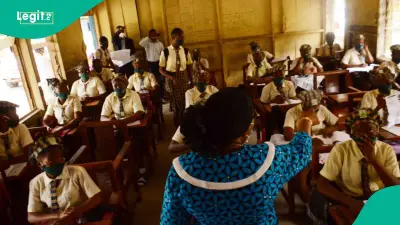
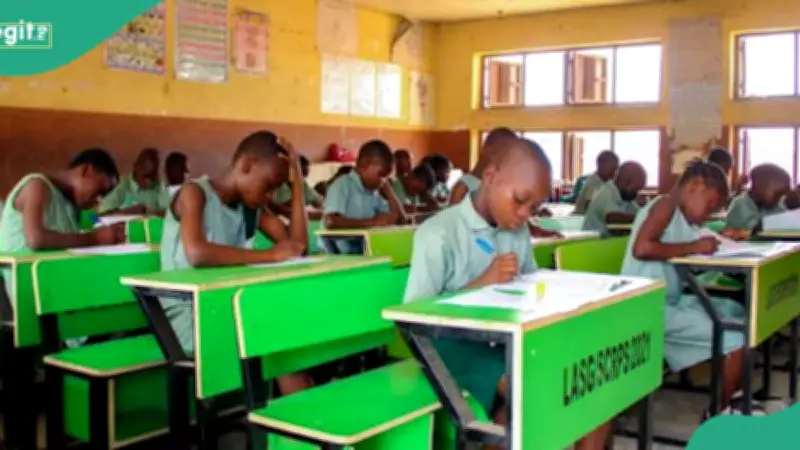
A Nigerian engineer has sparked a national conversation by proposing that primary and secondary schools should close by 12 noon daily. This suggestion aims to address the severe economic hardship affecting the country, allowing teachers to pursue additional income-generating activities and students to focus on learning trades or practical skills.
Reasons Behind the Proposal
The engineer, who shared his views via his X handle @baddest_cash on Wednesday, February 11, 2026, emphasized two key reasons for the early closure. First, he argued that the current economic conditions make it unsustainable to keep teachers and students in schools beyond midday. Second, he believes that this change would enable teachers to "hustle" for extra income while students dedicate afternoons to acquiring vocational skills, thereby balancing formal education with practical training.
He stated, "Schools should be closing by 12pm. Teachers should go and hustle, and students should go and learn trade or skills. The Country is hard." This comment has ignited a wide range of reactions from Nigerians, highlighting diverse perspectives on education and economic survival.
Public Reactions and Debates
On social media, responses varied significantly. Some users supported the idea, suggesting that early school hours could foster skill acquisition. For instance, @DaVinci_14 noted, "The extra school hours are not needed. Children should learn a trade early. Learning doesn't end in the classroom." Similarly, @obiadobe commented, "A very good idea cos the country is saturated with youths with only certificate. Let's learn skills as back up to the school certificate."
However, others criticized the proposal, arguing that it overlooks deeper systemic issues. @Sandraify6 responded, "But cutting school hours won't solve a hard economy. Education is not the problem; lack of opportunities is. Instead of choosing between books and skills, why not blend both? Let students learn practical skills alongside their studies. Teachers shouldn't have to hustle to survive; they should be paid properly." @Dazzle_3D added, "Nope. The country is hard because your politicians made it so, not because you do not spend enough time to hustle. The unemployed are neither students nor teachers. Why are they not making it? The answer: Bad government."
Additional reactions included suggestions for compromise, such as @CelebrityBoard11 proposing a 1 pm closure instead, and @inikoriinyang questioning whether schools should focus entirely on trades or skills. The debate underscores a broader discussion on education reform in Nigeria, touching on issues like teacher remuneration and curriculum development.
Context of Teacher Welfare and Education Policies
This proposal comes amid ongoing concerns about teacher welfare in Nigeria. Recently, outrage erupted over the alleged low salary of an Enugu smart school teacher with 12 years of experience, described on social media as "pure wickedness." Many Nigerians have criticized the disparity between teacher pay and the salaries of lawmakers and politicians, calling for better compensation to improve education quality.
In a positive development, Governor Alex Otti of Abia State approved adjusted minimum wage payments for education staff and teachers, as confirmed by his Special Adviser, Kenechukwu Nwosu. This move aims to address previous payment delays and support educators, highlighting efforts at the state level to enhance the education sector despite economic challenges.
The engineer's suggestion reflects a growing sentiment that Nigeria's education system needs adaptation to economic realities. While some see early closure as a pragmatic solution, others advocate for more comprehensive reforms that integrate skills training into the school day and ensure fair wages for teachers. As the debate continues, it emphasizes the need for balanced approaches to education that prepare students for both academic and practical success in a challenging economy.