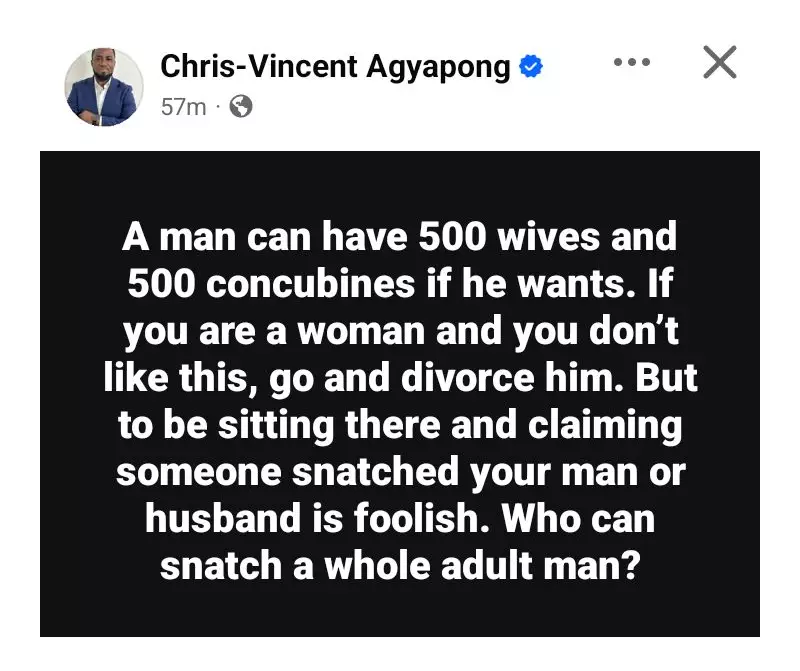
A Ghanaian lawyer and lecturer has ignited a fierce online debate with his unapologetic views on marriage, polygamy, and infidelity. Chris-Vincent Agyapong made a bold declaration that has left many social media users divided.
Chris-Vincent Agyapong's Controversial Facebook Post
On Sunday, December 1, 2026, the outspoken lecturer took to his Facebook page to share a provocative message directed at women. In his post, Chris-Vincent Agyapong asserted a man's absolute freedom in marital choices. He stated that a man is fully entitled to take as many wives and concubines as he desires. The post was made around 12:18 PM, according to the source.
His words were direct and left little room for ambiguity. He framed the issue as a matter of personal choice and consequence, placing the onus on women to accept or leave such arrangements.
"Who Can Snatch a Whole Adult Man?" - The Lawyer's Blunt Message
The core of Agyapong's argument challenged the common narrative where women accuse others of stealing their husbands. He labeled this mindset as foolish. "A man can have 500 wives and 500 concubines if he wants," he wrote emphatically.
He followed this with a stark ultimatum for women who find themselves in such situations. His advice was simple: "If you are a woman and you don't like this, go and divorce him." He dismissed the idea of another woman being responsible for a man's actions, questioning the logic behind it.
In a rhetorical question that captured his point, he asked, "But to be sitting there and claiming someone snatched your man or husband is foolish. Who can snatch a whole adult man?" This statement shifts the focus from external blame to the autonomy and responsibility of the man involved.
Public Reaction and Broader Implications
While the original post did not detail public response, statements of this nature from public figures typically generate significant backlash and support in equal measure. The comments likely reflect a deep cultural and generational divide on issues of marriage, polygamy, and gender roles in modern Ghanaian and, by extension, African society.
Chris-Vincent Agyapong's remarks touch on several sensitive topics:
- The legal and cultural acceptance of polygamy in some regions.
- The evolving expectations within marriages.
- The discourse on female agency and the choice to stay in or leave a relationship.
- The concept of personal responsibility in infidelity.
Such declarations from academics often fuel broader conversations about tradition versus contemporary views on relationships. They force a re-examination of social norms and the laws that govern marital unions. Whether one agrees with him or not, the lawyer's comments have successfully placed a contentious topic back in the court of public opinion for scrutiny and debate.