What is the main type of marriage in Nigeria? This question has occupied a special corner of my heart for years. After months of fresh research, conversations with elders and couples across Lagos, Kano, Enugu, and Port Harcourt, and years of observing Nigerian family life up close, I feel ready to lay out everything you need to know about Nigerian marriage types in one thorough, honest piece. If you have ever sat at a traditional ceremony wondering exactly what legal weight all those colourful rituals carry, or whether a church wedding is necessary after the family has already tied the knot traditionally, then you are in exactly the right place.
The short answer is that traditional marriage under customary law is the main type of marriage in Nigeria, and it has been that way for centuries. However, Nigeria's marriage landscape is fascinatingly layered, and understanding it properly means looking at all the recognised forms that sit side by side in our legal and cultural framework.
What Are the Four Main Types of Marriage Recognised in Nigeria?
Nigeria legally recognises four principal types of marriage, each governed by distinct rules, each carrying its own social weight, and each telling a different part of our national story. Before diving in, it helps to understand that Nigerian marriage law operates under two broad umbrellas: statutory marriage, governed by the Marriage Act CAP M6 of 2004, and non-statutory marriage, which encompasses customary law marriage and Islamic marriage. These frameworks do not always agree with each other, which is precisely why a single Nigerian couple might go through three separate ceremonies and still have legal scholars debating which one counts the most.
1. Traditional Customary Law Marriage
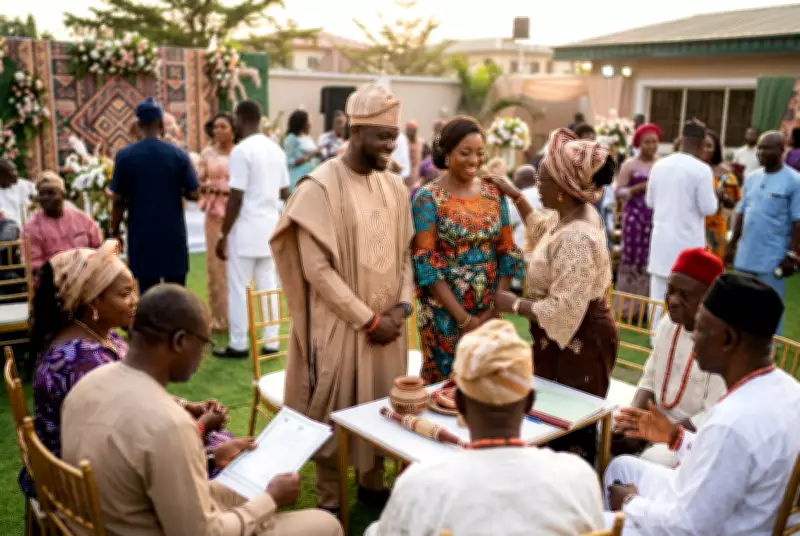
This is the original Nigerian marriage, existing long before colonial law arrived on our shores. Governed entirely by the customs of each ethnic group, it involves ceremonies such as bride price payment, family introductions, and rituals specific to the community. It is polygamous in nature under most customary law systems, meaning a man may marry more than one wife. No government certificate is issued, but the marriage is fully valid under Nigerian law within the customary framework.
2. Statutory Marriage (Civil or Registry Marriage)
This is conducted under the Marriage Act and takes place at a licensed marriage registry or approved place of worship. It is strictly monogamous. According to the Federal Ministry of Interior, which oversees the Marriage Act, any person already bound by a statutory marriage who attempts to marry another person commits an offence under Nigerian law.
3. Islamic Marriage (Nikah)
Conducted according to the tenets of Sharia law, predominantly in Nigeria's northern states. Like customary law marriage, it permits polygamy, allowing up to four wives provided specific conditions are met. No civil certificate is issued automatically, though registration is available.
4. Christian or Church Marriage
Performed in a licensed place of worship and only legally binding when that place of worship holds a valid government licence under the Marriage Act. Without that licence, a church ceremony is merely a blessing of a customary law marriage, not a statutory union.
Step-by-Step Breakdown of the Full Marriage Process in Nigeria
Here is how most Nigerian couples navigate the full process of getting married today:
- Family inquiry and informal visits between the two families.
- Official introduction ceremony, where both extended families meet formally.
- Bride price negotiation and agreement between family elders.
- Traditional customary marriage ceremony, the main event for most Nigerians.
- Registry marriage, if the couple wants a statutory monogamous union.
- Religious ceremony at a licensed church or mosque.
- Reception celebration with food, music, and community.
Not every couple completes all seven steps, and there is no legal requirement to do so. But this is the full ceremonial arc as Nigerians typically practise it. I remember being at a cousin's introduction in Onitsha some years ago and watching the bride's uncles negotiate the bride price list with the seriousness of a board meeting. It struck me then that the traditional marriage is not a formality for Nigerian families. It is the real thing.
Nigerian Marriage Types: Key Characteristics at a Glance
The table below brings together the defining features of each marriage type as they operate in Nigeria today. The differences in legal weight, polygamy allowance, and documentation are quite significant.
- Traditional Customary: Governed by Customary Law, polygamous (permitted), no certificate issued, registration optional.
- Statutory (Civil/Registry): Governed by Marriage Act CAP M6 2004, strictly monogamous, certificate issued, registration mandatory.
- Islamic (Nikah): Governed by Sharia Law, polygamous (up to four wives), no certificate issued, registration optional.
- Christian Church: Governed by Marriage Act (licensed), strictly monogamous, certificate issued, registration mandatory.
This makes clear that only statutory and licensed church marriages carry automatic government documentation. The majority of Nigerian marriages, traditional and Islamic, operate outside that documentation system, which is part of why the National Judicial Institute of Nigeria has noted that customary courts handle a very substantial proportion of marital disputes across the country.
Which Marriage is Most Common in Nigeria?
This is where we get to the heart of the matter: traditional customary law marriage is by far the most common form of marriage in Nigeria. Legal scholarship from the Edo State Judiciary confirms that customary marriage is the commonest form of marriage in Nigeria, noting that it gets statutory recognition through the Marriage Act's framework. This is not merely tradition for tradition's sake. Customary marriage is how families across all 36 states have formalised unions for generations, and it carries deep social legitimacy regardless of what a registry certificate might say.
Across Yorubaland, the traditional marriage is called Igbeyawo, meaning the taking of a bride. Among the Igbo, it is the beloved Igba Nkwu, or wine-carrying ceremony, where the bride navigates a crowd of guests looking for her husband to offer him palm wine. In the north, Hausa and Fulani communities conduct elaborate wedding celebrations known as Budan Kai and Walima. Every ethnic group has its own flavour, its own rituals, its own particular negotiations between families. But they all fall under the same broad umbrella of customary marriage.
What unites them all is the centrality of the family. A Guardian Nigeria piece on traditional marriage rites put it beautifully: in Nigeria, marriage is more than the union of two individuals. It is the union of families and their ancestors. That principle sits at the heart of every customary ceremony, however it looks on the surface. I have attended enough Nigerian weddings across the country to say confidently that the most vibrant, most emotionally charged moment in almost every one of them is not the registry signing or the church vows. It is the moment the bride carries the wine and finds her husband in the crowd. It is the moment the bride price list is read aloud. That is where the marriage lives for most Nigerians.
What Are the Two Main Types of Marriage in Nigeria?
When Nigerian legal scholars and family law practitioners divide marriage into its two broadest categories, they typically distinguish between statutory marriage and customary marriage. Statutory marriage, governed by the Marriage Act, is monogamous and produces a government-issued certificate. It is the kind of marriage that foreign embassies, banks, and courts recognise automatically. Customary marriage, by contrast, covers both traditional ethnic marriages and Islamic marriages under one broad umbrella. Under Nigerian family law, customary marriage is potentially polygamous, does not require a government certificate to be valid, and is dissolved differently from statutory marriage.
The practical result is that many Nigerians live in marriages that are legally valid under customary law but not documented at the statutory level. This is not illegal. It is simply a feature of how Nigeria's plural legal system operates. The confusion arises when couples need to prove their marriage for inheritance purposes, immigration applications, or legal disputes. That is when the absence of a registry certificate can become a real problem. A friend of mine in Abuja discovered this the hard way when she needed to prove her marriage to the British High Commission. Fifteen years of traditional marriage, three children, and the warmest family relationship you could imagine. But no certificate. She had to get a statutory marriage quickly, which was both expensive and stressful. My advice to anyone reading this: do the registry regardless of which other ceremonies you complete.
What Are the Eight Types of Marriage Practised Globally and Which Apply in Nigeria?
Globally, anthropologists and sociologists recognise a broader taxonomy of marriage arrangements. While Nigeria's legal system formally recognises four types, the eight categories commonly discussed in comparative scholarship include monogamy, polygyny, polyandry, group marriage, arranged marriage, forced marriage, child marriage, and same-sex marriage. Of these, Nigeria legally recognises and socially practises monogamy through statutory marriage, polygyny through customary and Islamic marriage where one husband may have multiple wives, and arranged marriage which in Nigeria typically takes the form of family-assisted introductions rather than fully arranged unions, though this varies significantly by community and generation.
Polyandry, one wife with multiple husbands, is not legally or culturally practised in Nigeria. Same-sex marriage is expressly prohibited under the Same-Sex Marriage Prohibition Act of 2014. Forced marriage and child marriage are illegal under Nigerian law, though enforcement remains a challenge in some areas. A Guardian Nigeria opinion piece on customary law and marriage makes clear that under customary law, polygamous marriage is a union for life of one man with several wives, with no statutory limit on the number of wives. In practice, however, the economics of Nigerian life mean that most customary law husbands marry two or three wives at most, and a significant proportion of modern educated Nigerians opt for monogamous arrangements even when the law would permit otherwise.
Understanding the Main Type of Marriage in Nigeria in the Context of Everyday Life
So to bring it all back: what is the main type of marriage in Nigeria in lived, everyday experience? It is traditional customary marriage. It is the bride price list read in the family compound, the palm wine carried across the dance floor, the Aso-Oke fabric chosen weeks in advance, the uncles who arrive with schnapps to formally knock on the door. This is Nigeria's marriage at its most authentic. The statutory registry and the church ceremony are additions that many couples choose, and important additions for practical legal reasons. But the traditional marriage is where families join, where communities celebrate, and where the emotional and cultural weight of the union is truly felt.
If you are planning a Nigerian wedding or simply trying to understand how marriage works in our society, here is my practical guidance: take the customary ceremony seriously as the cultural foundation. Add a registry marriage to protect your legal rights. Choose whatever religious ceremony resonates with your faith. And make sure the aso-ebi is gorgeous.
Frequently Asked Questions About the Main Types of Marriage in Nigeria
What is the main type of marriage in Nigeria?
Traditional customary law marriage is the main type of marriage in Nigeria, practised across all ethnic groups and regions. It is conducted according to the customs of each community, typically involves bride price payment, and is legally valid under Nigerian family law without requiring a government certificate.
Is traditional marriage legally recognised in Nigeria?
Yes, traditional customary marriage is fully legally recognised in Nigeria under the customary law framework. However, it does not produce a government-issued certificate, which can create complications for legal proceedings, inheritance claims, and international matters such as visa applications.
Can a man marry more than one wife in Nigeria legally?
Yes, under customary law and Islamic law marriage, a man may legally marry more than one wife in Nigeria. Under statutory marriage conducted through the Marriage Act, however, the union is strictly monogamous, and marrying a second person while bound by a statutory marriage is a criminal offence.
What is the difference between customary marriage and statutory marriage in Nigeria?
Customary marriage is conducted according to ethnic traditions, is potentially polygamous, and does not require a government certificate to be valid. Statutory marriage is conducted under the Marriage Act, is strictly monogamous, and produces a legally recognised marriage certificate issued by the government.
Do Nigerians need to do a court marriage after a traditional marriage?
There is no legal requirement to conduct a court or registry marriage after a traditional ceremony, as the traditional marriage is already legally valid under customary law. However, obtaining a statutory marriage certificate is strongly advisable for practical legal protection, particularly regarding property rights, inheritance, and international recognition.
What is bride price and why is it important in Nigerian marriages?
Bride price is a payment made by the groom's family to the bride's family as part of the traditional marriage process, representing the groom's commitment and the formal transfer of the bride into her husband's family. It varies widely across ethnic groups in terms of items and amounts, ranging from livestock and palm wine to agreed sums of money, and its payment is considered essential for the validity of most customary law marriages.
What is Islamic marriage in Nigeria and where is it practised?
Islamic marriage, known as Nikah, is conducted according to Sharia law and is most prevalent in Nigeria's northern states, including Kano, Sokoto, Borno, and Kaduna. It permits a man to marry up to four wives, provided he meets specific conditions of fairness and financial capability outlined in Islamic law.
What happens if a statutory marriage breaks down in Nigeria?
The dissolution of a statutory marriage in Nigeria is governed by the Matrimonial Causes Act, which requires established legal grounds such as irretrievable breakdown. The process goes through the High Court, which has jurisdiction over statutory marriages, and the court may also address matters of property division, maintenance, and child custody as part of proceedings.
Is a church wedding legally binding in Nigeria?
A church wedding is legally binding in Nigeria only if it is conducted in a place of worship that holds a valid government licence under the Marriage Act. Without that licence, the church ceremony is legally treated as a blessing of a customary law marriage rather than a statutory union, meaning no statutory marriage certificate is produced.
What is the Igba Nkwu ceremony in Igbo traditional marriage?
Igba Nkwu, meaning wine carrying, is the centrepiece of the Igbo traditional marriage ceremony, in which the bride carries a cup of palm wine and searches through the gathered guests to find and offer it to her husband. When the groom accepts and drinks from the cup, the marriage is publicly and symbolically confirmed before both families and the entire community.
How many types of marriage does Nigerian law formally recognise?
Nigerian law formally recognises three categories of marriage: statutory marriage under the Marriage Act, customary law marriage including Islamic marriage, and marriage under Islamic personal law in states that apply Sharia. In practice, most Nigerians identify four types: traditional customary, statutory civil, Islamic Nikah, and licensed Christian church marriage.
Are same-sex marriages recognised in Nigeria?
Same-sex marriages are not recognised in Nigeria and are expressly prohibited under the Same-Sex Marriage Prohibition Act of 2014. The law is unambiguous on this point, reflecting both the dominant religious values of Nigerian society and the formal position of Nigerian statutory law.
What is the main type of marriage in Nigeria? It is traditional customary marriage, the living heart of Nigerian family life, celebrated with colour, community, and deep ancestral meaning across every ethnic group in our country.