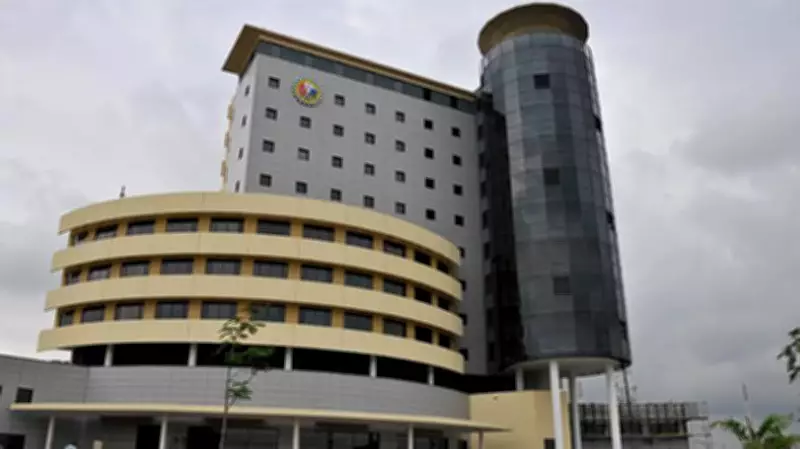
The Petroleum Technology Development Fund (PTDF) has initiated a training program for 35 researchers in computational catalysis, aimed at accelerating Nigeria's industrial growth. The workshop, organized in collaboration with Ahmadu Bello University (ABU) in Zaria, focuses on developing homegrown solutions to address the nation's industrial challenges and reduce dependence on foreign expertise.
Workshop Theme and Objectives
Themed "Why It Matters: Opportunities for Research, Industry, and National Development in Nigeria," the training seeks to equip participants with skills to translate scientific research into practical applications. Speaking at the event, PTDF Executive Secretary Prof. Shu'aibu Shehu-Aliyu, represented by Hajiya Rabi Waziri, General Manager of Education and Training, emphasized the workshop's role in driving industrial growth. He noted that computational catalysis is essential for advancing research in petroleum, petrochemical, and energy sectors, improving efficiency and accelerating innovation.
Commitment to Indigenous Capacity
Prof. Shehu-Aliyu reiterated PTDF's commitment to building indigenous human capacity and promoting technological advancement in Nigeria's oil, gas, and energy sectors. He stated, "For a country like Nigeria, where energy resources are central to economic growth and sustainability, building capacity in advanced fields is critical." The Fund has established a PTDF Professorial Chair Programme at ABU Zaria and five other universities to address industry challenges and support national development.
Vice-Chancellor's Remarks
ABU Vice-Chancellor Prof. Adamu Ahmed, represented by Prof. Bello Sabo, Deputy Vice-Chancellor for Administration, described the institution as a national institution built on indigenous knowledge and homegrown expertise. He stressed that the workshop is a deliberate investment in Nigeria's capacity to design and optimize catalytic systems for the petroleum industry, petrochemical sector, and clean energy ambitions using computational tools developed by Nigerian scientists.
Addressing Dependence on Foreign Expertise
Prof. Ahmed noted that despite Nigeria being the largest oil producer in Africa, the country remains reliant on foreign technical expertise for catalyst design and process modeling. He described this as an opportunity, which the PTDF Chair in Chemical Engineering aims to address.
Participant Selection and Impact
PTDF Chair Professor at ABU, Prof. Abdulazeez Yusuf-Atta, explained that the 35 participants were selected competitively based on their research and commitment to advancing science in Nigeria. He highlighted that computational catalysis can transform molecules into valuable products like propylene, a building block for plastics and chemicals worth billions. The workshop drew participants from across Nigeria and one from Chad. Prof. Yusuf-Atta stressed the need for sustained training and suggested that researchers spend more time on computers to reduce laboratory experiments, saving costs, time, and energy. He added, "It guides you to a more specific area before you go into the lab. So, it saves cost, time, and energy for a country like Nigeria." The goal is to build a critical mass of experts who can use computational catalysis to solve problems and cascade knowledge as trainers of trainers.