By Wale Ajao
He was my lecturer at Ife. He initiated me and other young undergraduates into Marxism-Leninism. In those days in the eighties, Marxism-Leninism was a leftist ideology that was very popular among scholars in many tertiary institutions around the world. This was because it was the era of the Cold War when the entire world was divided into two opposing ideological blocs. The Soviet Union led the socialist bloc of countries in Eastern Europe, Asia, Africa, and South America. The United States led the capitalist countries in Western Europe, Asia, Africa, and South America.
In many tertiary institutions around the world, socialist or leftist or Marxist lecturers formed groups on campuses and propagated Marxist political perspectives. Young undergraduates got attracted and, along with their lecturers, tried to organize workers and trained them to resist exploitation by the bourgeoisie so that eventually workers would organize themselves and seize power.
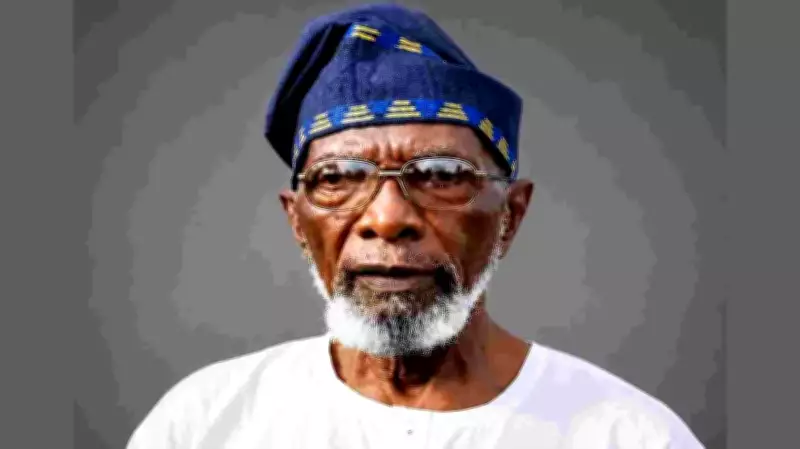
Dr. Segun Osoba was among the socialist lecturers who formed a Marxist group on campus. The group was known as the Socialist Collective. The group published a magazine that circulated on many campuses where socialist lecturers were members of staff. This was because the socialist lecturers knew one another and worked together. At the Polytechnic Ibadan, there was Comrade Sanda, a lecturer, and at the University of Ibadan, there were Comrade Ola Oni and Professor Bade Onimode. At Ahmadu Bello University, there was the late Dr. Bala Usman, who was an ally of Dr. Segun Osoba, and both of them were in the Constituent Assembly in 1977.
The Constituent Assembly was put together by military head of state General Olusegun Obasanjo to draft the constitution of Nigeria that would be used as the nation prepared for the return to civil rule in 1979. Dr. Segun Osoba and Dr. Bala Usman wrote a minority report and advocated a Marxist approach to development, which both of them saw as the proper road to Nigerian development. Unfortunately, the military government abandoned the minority report and chose the majority report, which was essentially a bourgeois document that advocated a capitalist road to Nigerian development.
Dr. Osoba was a senior lecturer in the Department of History when I was admitted into the department in 1978, when the Joint Admissions and Matriculation Board (JAMB) was created. We were the first set of students to be admitted to the university through JAMB. Dr. Osoba taught many courses and supervised many doctorate degree students. Among them was my best man when I got married in 1988. My best man was the late Professor Siyan Oyeweso, who was my lifelong friend since we met in 1978 at the University of Ife, when we were both admitted as Special Honours degree students.
Special Honours degree students are those who specialized in history and offered major courses in history only, and offered minor elective courses in other departments in the Faculty of Arts. They are generally regarded as more brilliant and more interested in history than Combined Honours students, who did major courses in history and one other subject in the Faculty of Arts. Some of them combined history with religion. Among them is your brother and my friend, Alhaji Demola Animashaun, whom I nicknamed Ayatollah after the leader of the Iranian Revolution of 1979, the year Demola Animashaun gained admission to Ife by Direct Entry. Special Honours degree students must write a project and submit it for assessment by a history teacher who must supervise the project, whereas Combined Honours degree students do not do a project and do not need a supervisor, thereby making more students prefer Combined Honours degree.
Osoba was a vocal lecturer on campus, and Soyinka was a right-wing lecturer who was always single-handedly attacking Segun Osoba and other Marxist lecturers on campus whenever there was a symposium and Soyinka was invited. Soyinka argued several times that the Marxist lecturers were armchair critics who could not carry out a revolution. He said the Marxist lecturers were cowards who could not confront the military dictators ruling Nigeria and other African countries in those days when military rule was the vogue all over Africa. Soyinka has been vindicated today because till today Marxism is still an ideological perspective propagated only on campuses because the Marxist lecturers have not been able to form a political party and seize power. But the perspective helped youths to see the contradictions in the capitalist system.
Osoba was a persuasive speaker and a prolific writer. He detested accumulation of wealth, which he saw as bourgeois mentality. And many of us young undergraduates wanted to be like him. Among the Marxist lecturers at Ife in the eighties were Professor Toye Olorode, Professor Idowu Awopetu—both of them are still alive. There was also Dr. Biodun Jeyifo, who passed on two months ago at 92. Others include Dr. Dipo Fasina, who is still alive.
May the soul of Dr. Segun Osoba rest in peace.
Wale Ajao, a veteran journalist, wrote via [email protected]