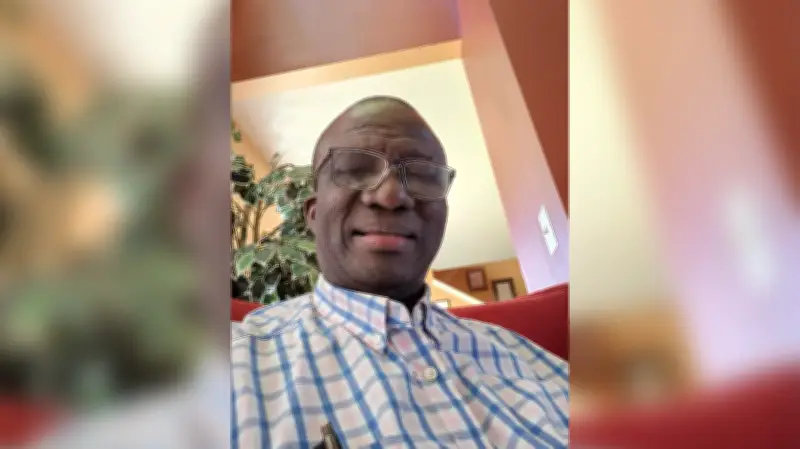
Professor Olawale Awodiya has dedicated his life to the profound task of shaping humanity through philosophy and journalism. Philosophers, unlike scientists or engineers, do not produce tangible objects; instead, they shape how we think, which quietly influences nearly every aspect of human existence. At its core, philosophy questions assumptions. Socrates built his method around asking, 'How do you know that?' This habit of examining beliefs rather than merely inheriting them is foundational to critical thinking, science, law, and everyday decision-making.
The Role of Philosophy in Society
Philosophers clarify ideas that people frequently use but rarely define, such as justice, truth, freedom, and consciousness. Immanuel Kant reshaped moral philosophy by arguing that intent and universal principles matter more than outcomes alone. This framework still underpins modern debates on ethics, human rights, and responsibility. Philosophy also aids practical daily choices by providing a body of values that serve as a framework for expectations. The inalienable variable of philosophy is the ability to question any belief. It is not intellectually safe to characterize beliefs as positive or negative until they have been subjected to a community's acceptable variables. Thus, decision-making, which involves weighing values and processes rather than just outcomes, remains one of philosophy's key influences on our daily trajectories.
Tools of philosophical inquiry include argument analysis, which identifies weak logic, bias, and manipulation, and exploring meaning and purpose, which examines what makes a life good or worthwhile. The entire existential concept, in all its ramifications, has been influenced by philosophy. Social systems, economic systems, religious systems, political systems, and many other human systems are rooted in philosophical ideas. Thinkers like John Locke influenced modern democracy by arguing concepts like individual rights and government by consent into existence.
Criticism and Power of Philosophy
While philosophy can feel abstract or disconnected, its merit depends on whether one values reflection versus action. A fair criticism is that philosophy does not always solve problems directly; it often reframes them. However, this reframing can be powerful: the way a problem is understood determines what solutions are possible. Philosophers do not just give answers; they improve the quality of questions, leading to better thinking everywhere else.
Awoism and Awodiya's Mission
The extent to which philosophy has influenced the emergence of Awoism, enunciated by Obafemi Awolowo, is open to debate. Awoism focuses on man, identifying the challenges of man in his environment and how to overcome them for a successful and fulfilling life. Awolowo philosophized his ideas into existence, a task that politics and philosophy must extrapolate. The advocacy for philosopher kings, or more appropriately philosopher presidents, prime ministers, or leaders, presupposes embedded values in such leaders. This is the task Professor Olawale Awodiya has pursued all his life. He has asked questions on various aspects of human endeavor and created better thinking individuals worldwide. He has authored fourteen books, co-authored eight others, and written numerous journal articles, papers, presentations, and workshops. Professor Awodiya has been philosophizing, asking questions, spreading the gospel of critical thinking, and shaking the tables. Some of his books have been adopted as course books in universities on merit, without any influence peddling, testifying to his depth and panoramic vistas.
Awodiya's Academic and Professional Impact
Obafemi Awolowo met the challenge of practicality with his philosophy, impacting lives transformatively over generations. Awodiya has chosen to connect his philosophy to humanity in a slightly different way. He impacts lives across several academic institutions on different continents, including the University of Lagos, Nigeria; Delaware State University, USA; Suffolk County Community College, New York; Bowie State University, Maryland; Rowan University, New Jersey; University of District of Columbia, Washington DC; Nassau Community College, New York; Charles Community College, Maryland; and the College of New Rochelle, New York. He is a member of the university senate in many institutions.
Awolowo, in his 1968 book My Early Life, reflected on dedication to intellectual work and public service over hedonism: 'While many men in power and public office are busy carousing in the midst of women of easy virtue and men of low morals, I, as a few others like me, am busy at my desk thinking about the problems of Nigeria and proffering solutions to them. Only the deep can call to the deep.' This principle has guided Professor Awodiya. His love of solitude is amazing; his need for mental space is insatiable. Solitude provides him peace and engages his mind constructively, enhancing mental productivity. He fits the characterization of a connoisseur of reclusiveness. He seldom appears at ceremonies. He is social but very disciplined. Eight out of ten times, he is found in a library rather than at a party. He is a bookworm with a complex constitution, a mix of reticence and glowing affability. He is warm, polite, and courteous, making others comfortable in conversation. He exudes calmness and control, radiating gentility and geniality laced with refrained enthusiasm.
Awodiya's Journalistic and Publishing Career
Professor Awodiya is a successful academic with influence across reputable institutions in Nigeria and the USA. Like Awolowo, who was also a journalist, Awodiya has gone through the grind to become a distinguished journalist. He has worked in public relations and become a publisher. The confluence of philosophy and journalism is evident: a journalist acting as a philosopher can be described as a philosopher journalist. He bridges lived experience with intellectual inquiry, often focusing on social justice and moral failures to provide context to societal events. He merges investigation of immediate events with the search for deeper meaning, treating journalism as philosophy practiced under exposure. He uses reporting tools such as research, interviews, and narrative to uncover universal truths and ethical implications, acting as a guide and mirror of his age. This requires mastering judgments, discerning truth from propaganda, and maintaining high moral responsibility to the audience.
When a philosopher acts as a journalist, he brings deep conceptual analysis, ethical rigor, and a focus on underlying principles to news reporting, transforming 'what happened' into 'what it means.' He bridges the gap between abstract ideas and daily events, enhancing opinion pieces and identifying core ethical or social failures in stories. He clarifies key concepts, cutting through jargon and buzzwords, and analyzes ethical dimensions of crises, such as evaluating the justness of wars or identifying moral failures in criminal justice systems. He connects current events to broader, universal questions about human existence. Most importantly, he brings structural discipline to argument-driven journalism, ensuring sound arguments for policy or social change.
Professor Awodiya has brought this combination to his work. From his earliest days as a script writer at Olu Holloway Limited, Lagos, to being sub-editor at Concord Newspapers, Ikeja, Lagos, and regional public relations officer to NITEL, he has trudged the thick forest of pristine professionalism. Many of his fourteen books focus on communication in various ramifications. He has examined the subject from every angle and laid the foundation for the coming generation of intellectuals. As a publisher, his monthly publication Nigeria University Times has garnered qualitative reputation among those seeking the latest about Nigerian tertiary education.
Awodiya's Heritage and Legacy
Professor Awodiya is authentically autochthonous to Ijesaland. His paternal grandfather, Chief James Esan Awodiya, was the Odole of Ilesa from 1951 to 1973. Chief Esan Awodiya was a two-time regent, the only person with such honor in Ijesa history, serving as regent from 1956 to 1957 before Owa Obokun Ogunmokun Fiwajoye Biladu III and from 1963 to 1966 before Owa Obokun Adeniran Olatunji Agunlejika II. Odole Esan Awodiya was married to Princess Aina Awodiya. His chieftaincy compound at Ifofin remains an ode to history and heritage. Chief Oladeinde Awodiya, the professor's father, was known for taste and class, serving as General Manager of Wesley Guild Hospital, Ilesa, for 35 years, a record unbroken. His house at Omiiru, Ilesa, exemplifies the dalliance of tradition and modernity. Madam Bukola Abeni Awodiya, his mother, was a formidable businesswoman with distributorship of International Breweries, Ilesa, and Ewekoro Cement Factory, and a wholesale marketer of kerosene and flour in Ibadan. She was Iya-Egbe of Cement Sellers Association of Challenge, Ringroad, and Jericho, Ibadan.
Coming from such a distinguished background, Professor Awodiya shares much with the sage Obafemi Awolowo and German philosopher Friedrich Engels. Engels, a philosopher, social theorist, journalist, and businessman, authored at least 25 to 30 significant works. Professor Awodiya is in good company. His quest to shape minds and humanity through critical questions will outlive him, enshrining his footprints in the sands of immortality.