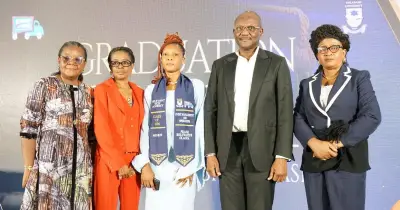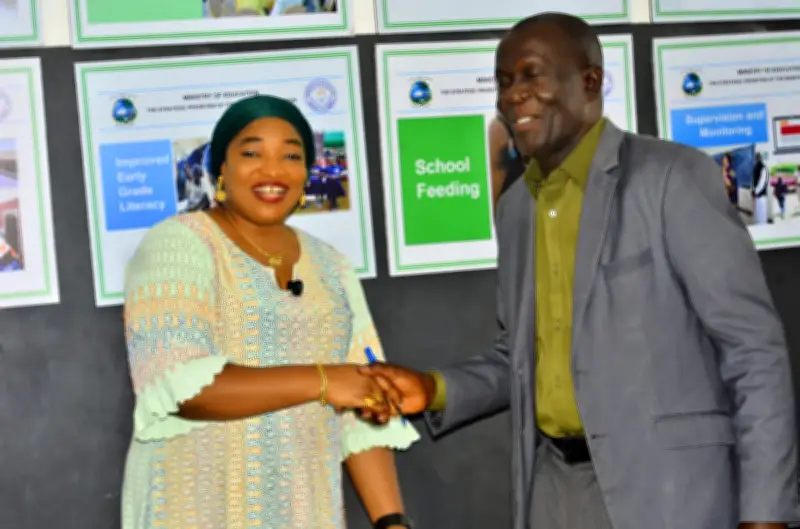
Women in Mining Africa (WiM-Africa) has advanced its continental NextGen programmes aimed at preparing African children and young people for future participation in the continent's natural resource and minerals sector. The organisation made this known following a courtesy engagement with the Liberian Ministry of Education, where it presented its NextGen programmes and explored opportunities for collaboration, adaptation and possible integration into Liberia's education system.
Engagement with Liberia's Ministry of Education
The engagement forms part of WiM-Africa's broader Africa-wide initiative under its Action Plan 2030 to strengthen the pipeline of future minerals professionals and leaders through education, leadership development, STEM, Technical and Vocational Education and Training (TVET), environmental awareness and career readiness. Executive Director of WiM-Africa, Dr. Comfort Asokoro-Ogaji, said Africa's mineral future must be built by investing in its young population from an early age.
"The future of Africa's mineral and natural resource economy will not be determined only by what is in the ground. It will be determined by what is built in the minds of children and young people today," Asokoro-Ogaji said. According to her, Ministries of Education have a critical role to play in preparing young Africans for the opportunities and responsibilities associated with the continent's growing minerals economy.
"The Ministry of Education is not peripheral to mining transformation. It is foundational. Africa must begin earlier — from primary school, secondary school, TVET, mentorship, school clubs and structured leadership exposure," she added.
Flagship NextGen Initiatives
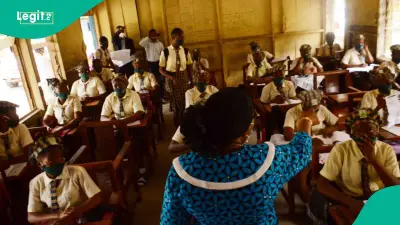
WiM-Africa's two flagship NextGen initiatives are the Future Minerals Leaders Club and the NextGen Mining & Leadership Academy. The Future Minerals Leaders Club targets primary school pupils aged eight to 13, introducing them to natural resources, minerals, environmental responsibility, safety, leadership, teamwork, values and responsible citizenship through age-appropriate school activities.
The NextGen Mining & Leadership Academy, on the other hand, targets secondary school and TVET-linked students aged 13 to 20. It focuses on areas including responsible mining, geoscience awareness, environmental, social and governance principles, mine safety, gender inclusion, leadership, communication, mineral value chains, enterprise opportunities, career development and mentorship.
WiM-Africa said the programmes were designed to complement, rather than disrupt, existing national education priorities. The organisation explained that the programmes were modular and can be adapted to existing school clubs, STEM initiatives, girls' education programmes, career guidance, environmental education, TVET preparation and other education-to-employment activities. It said the approach would enable countries to tailor the programmes to their education systems, natural resource profiles, school structures and development priorities.
Alignment with Africa's Minerals Development Agenda
The organisation further noted that its NextGen programmes align with Africa's broader minerals development agenda, including the Africa Mining Vision, local value addition, responsible mineral governance, women and youth inclusion, green skills, ESG awareness and TVET readiness. WiM-Africa said it has developed implementation manuals, concept notes, session modules, facilitator guides, reporting tools, country adaptation templates and results frameworks for the two programmes.
The materials, it said, were being provided as free open-source resources for Ministries of Education, government agencies, schools, rural schools, TVET institutions, mining host communities, women-in-mining organisations and development partners across Africa. Schools and institutions implementing the programmes are encouraged to submit reports covering activities, attendance, photographs, progress and lessons learned to support continental tracking, quality assurance and technical assistance.
WiM-Africa also said it would provide technical support through its pool of expert volunteers, including virtual training-of-trainers sessions for teachers, school focal persons, volunteers and implementing teams where funding for physical training was unavailable.
Call to Action for Education and Development Partners
The organisation called on African Ministries of Education, government agencies, schools, TVET institutions and mining host communities to join the initiative and help prepare young Africans for the future of critical minerals and natural resource development. It also appealed to development finance institutions, foundations, philanthropic organisations, mining companies, education partners and development agencies to support the national adaptation, piloting and expansion of the programmes.
WiM-Africa stressed that every African child, whether living in a mineral-producing community or not, should have basic knowledge of the value of natural resources, environmental stewardship and the opportunities available across the continent's mineral value chains. The organisation said it remains committed to working with African governments, education authorities, schools, TVET institutions, women-in-mining organisations, development partners and the private sector to build a generation of informed, responsible and leadership-ready young Africans capable of driving the continent's mineral transformation.