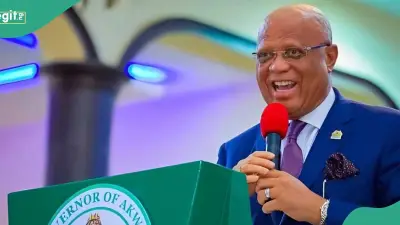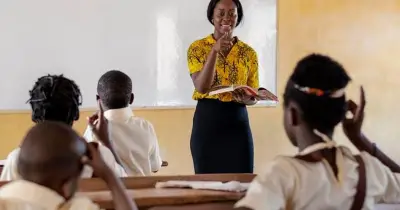
Lagos State Governor Babajide Olusola Sanwo-Olu's administration has announced that 61.52 per cent of public secondary school students sponsored by the state in the 2025 West African Senior School Certificate Examination (WASSCE) obtained five credits, including English Language and Mathematics. The disclosure was made during the ongoing 2026 ministerial press briefing marking the third year of the governor's second term.
Financial Commitment to Education
The Commissioner for Basic and Secondary Education, Mr. Jamiu Tolani Alli-Balogun, revealed that the state government committed ₦1.4 billion to sponsor the registration of 45,598 Senior Secondary School III students for the 2026 WASSCE. He described the intervention as part of efforts to remove financial barriers preventing students from accessing quality education.
Improved Performance Through Reforms
According to Alli-Balogun, the improved performance in the 2025 examination reflected the growing impact of strategic educational reforms and targeted learning interventions introduced by the Sanwo-Olu administration. The Eko Learners Support Initiative, launched in January 2025, aims to close learning gaps, improve exam readiness, and give every Lagos learner a fair chance to succeed.
He added that the programme had significantly improved students' confidence, engagement, and academic outcomes across public secondary schools due to its consistency, accessibility, and alignment with examination requirements.
Distribution of Learning Materials and Technology
As part of measures to improve teaching and learning, the ministry distributed essential Mathematics textbooks, Fundamental Formulas of English, Bedrock of English Grammar materials, and Hope-Edu textbooks to public schools across the state. Smart learning devices were also distributed to public secondary schools in March 2026 to strengthen digital education and improve students' access to modern learning tools.
The state launched a state-of-the-art Teachers Digital Hub in January 2026 to enable live streaming of teaching sessions to schools across Lagos, ensuring equal access to quality educational content. The ministry also organised educational film shows across the six education districts and showcased digital animations during the Festival of Instructional Materials to make classroom learning more interactive.
Access to Education and Infrastructure Development
On access to education, Alli-Balogun said the government continued efforts to bring more children into the school system, especially those from underserved communities and out-of-school backgrounds. He disclosed that 4,539 candidates applied for admission into Model Colleges and upgraded secondary schools, out of which 3,024 candidates secured provisional admission, representing a 66.62 per cent admission rate. Additionally, 11,727 students were transferred into public Junior Secondary School II and Senior Secondary School I classes across Lagos.
Speaking on infrastructure development, Alli-Balogun revealed that 15 schools were constructed or rehabilitated in hard-to-reach communities, while modular classrooms were deployed in several schools to reduce overcrowding. He highlighted the completion of the Tolu School Complex in Ajegunle, a massive educational facility comprising 36 schools serving over 20,000 students.
The state also supplied 223,343 ergonomic furniture units to public schools, completed eight new 18-classroom blocks in 2025, and commenced construction of 18 additional classroom blocks in 2026. Seven more classroom blocks have already been approved for the 2026/2027 academic session, bringing the total number of classrooms delivered since the re-inauguration of the Special Committee on Rehabilitation of Public Schools to 1,416.
Health and NGO Interventions
The commissioner further disclosed that the ministry approved 37 non-governmental organisations for interventions in healthcare, innovation, entrepreneurship, leadership training, and career development programmes across public schools. He added that 18,122 girls across the six education districts were vaccinated against the Human Papillomavirus (HPV) under ongoing school health intervention programmes.