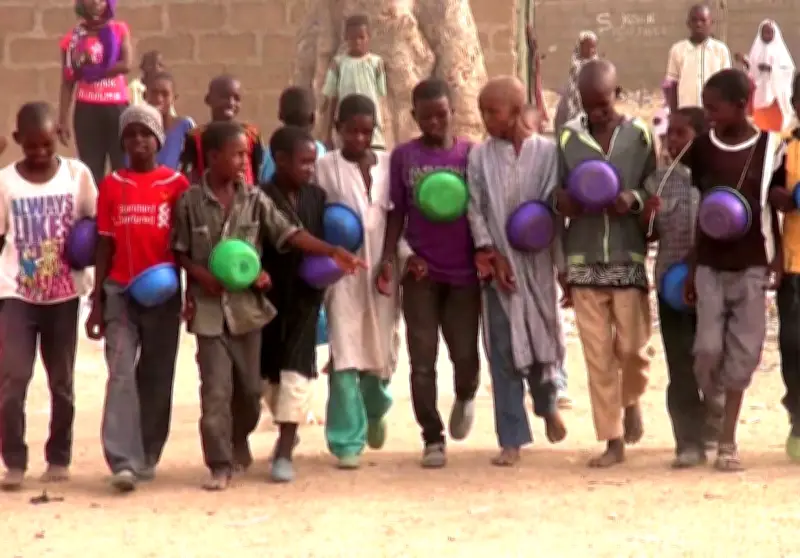
A comprehensive survey conducted across Kano State has revealed that an estimated 875,593 children aged five to 18 are out of school, representing 13.4 per cent of the state's projected 6.6 million school-age population. The assessment, which was Kano's first statistically representative out-of-school children evaluation in over a decade, concluded in March and covered all 44 local government areas.
Survey Methodology and Key Findings
The survey was implemented by the Kano State Ministry of Education and the State Bureau of Statistics, in collaboration with the UK FCDO-funded Partnership for Learning for All in Nigeria (PLANE). The state Commissioner for Education, Ali Makoda, presented the outcomes of the four-month survey to stakeholders and media representatives last Thursday.
The evaluation covered 1,783 households and 13,915 individuals, including 7,013 children aged five to 18. According to the report, 13.4 per cent of the surveyed children were out of school, while 86.6 per cent were enrolled. The out-of-school population recorded a male-to-female ratio of 54:46.
Mr Makoda stated that the survey was initiated to quantify the number of out-of-school children across the state, with data disaggregated by gender, age, and location to identify primary barriers preventing children from accessing education. He added that the project aims to map the geographic distribution of out-of-school children down to ward and LGA levels, profile household socio-economic conditions, and establish a baseline to monitor progress toward Sustainable Development Goal 4 (SDG 4) through 2030.
Access and Retention Crisis
The study surveyed 7,192 children across 100 urban and rural Enumeration Areas (EAs), finding that 86.67 per cent (6,233 children) are currently enrolled in school, while 13.34 per cent (959 children) are out of the formal education system. Of these, 6.97 per cent (501 children) had never attended school, while 6.37 per cent (458 children) dropped out.
Financial constraints emerged as the leading barrier, with approximately 22.3 per cent of parents unable to afford educational expenses, followed by limited access to schools at 17.2 per cent. The report also highlighted long distances to schools, domestic chores, early marriage, and child labour as additional deterrents.
Myth of Parental Apathy
The report delivers a decisive policy reframing: the crisis is a failure of service delivery and equity, not a lack of demand. Out of 1,783 caregivers interviewed, 99.6 per cent (1,775 respondents) stated that education is either “important” or “very important” for their children, with only a single respondent (0.056 per cent) viewing it as “not important at all.” Additionally, 90.9 per cent of parents explicitly voiced support for equal educational access for both boys and girls.
“The policy message is unambiguous: the out-of-school crisis in Kano State is not an attitude or demand problem… Parents want school for their children; the system is failing to make it accessible, affordable, and of sufficient quality,” the survey uncovered.
Gender Split and Almajiri Dynamics
In a departure from typical trends where girls constitute the majority of unschooled children, Kano's survey revealed that boys represent 54.2 per cent (520) of the out-of-school population, compared to 45.8 per cent (439) for girls. This disparity is driven primarily by economic pressures requiring male child labour and the strong pull of the traditional Tsangaya/Almajiri system.
The survey exposed severe regional inequality across Kano's 44 LGAs, ranging from zero per cent out-of-school children in Ghari LGA to an emergency level of 40 per cent in Doguwa LGA. The top ten out-of-school children rates by LGA are: Doguwa (40 per cent), Warawa (34.69 per cent), Gaya (33.86 per cent), Sumaila (28 per cent), Wudil (26.75 per cent), Bichi (25.83 per cent), Ungogo (21.65 per cent), Kiru (20.99 per cent), Gezawa (20.16 per cent), and Kumbotso (19.85 per cent).
Researchers noted that this 40-percentage-point spread offers an immediate opportunity for targeted intervention, with prioritising emergency funding and infrastructure in the top 10 highest-burden LGAs potentially resolving the state's overall out-of-school footprint.
Multi-Sectoral Response Needed
The report stresses that no single strategy will resolve the emergency, as barriers are evenly distributed across five core areas: family and cultural pressures (22.6 per cent), financial constraints (20.8 per cent), school-related failures (20 per cent), child-level factors (18.3 per cent), and external shocks including insecurity and disasters (18.2 per cent).
In Kano, like many other northern Nigerian states, traditional non-formal Qur'anic education systems, such as the Almajiri schools, often take boys away from formal basic schooling, contributing significantly to the male-skewed out-of-school ratio. Almajiri children are often sent to study the Qur'an, during which they live with their teachers, but many end up on the streets as beggars and engage in petty crimes. These pupils lack basic numeracy, literacy, and entrepreneurial training comparable to students in the conventional education sector.
Nigeria has one of the highest numbers of out-of-school children globally. To support the state's emergency on education and work toward SDG 4 by 2030, officials emphasised that a coordinated, multi-sectoral response addressing infrastructure, safety, and poverty reduction must be deployed immediately. The long-term consequences of inaction include reduced workforce productivity, heightened youth vulnerability to social instability, and cycles of generational poverty.