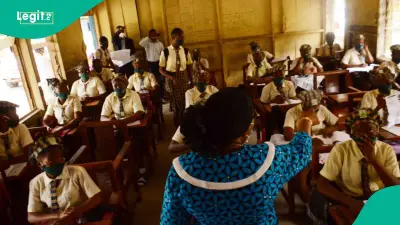
The Katsina State Government, in a significant partnership with the United Nations Children's Fund (UNICEF), is set to commence a comprehensive census targeting Almajiri pupils and Islamiya schools across the state.
This crucial data-gathering exercise is scheduled to be officially launched by the state governor, Dr. Dikko Radda, on Saturday, 27 December 2025. The operation will be managed by the Katsina State Bureau of Statistics.
Why This Census Is Critical for Katsina
Katsina is recognized as one of the states with the highest population of Almajiri children in Nigeria's northwest. A previous count conducted by UNICEF in 2022 estimated the number at 243,000 pupils. While the state government registered 25,922 Almajiri pupils and integrated 255 Qur'anic schools between 2019 and 2022, officials believe a more precise and current count is essential for effective planning.
The primary goal is to count every student enrolled in Islamiya or Tsangaya schools. According to a statement from the office of the Statistician-General, this accurate data will be the foundation for government interventions.
"When the government has the right data, it will know exactly where to build new classrooms and how to help the students," the statement explained.
Execution and Long-Term Vision
The Statistician-General of the state, Professor Saifullahi Sani, and his team are currently in the preparation phase, training enumerators who will carry out the fieldwork. These workers will visit homes and schools door-to-door to collect the necessary information.
The bureau has framed this initiative as "the first step to building a better future" for the children. It emphasized that by knowing the exact number of Almajiri children, the government can develop more effective plans for their education and overall welfare.
"This census is a key part of Governor Radda’s plan to make sure every child in Katsina State has a bright future and that no school is left behind," the statement added. The data collected is expected to directly inform policy on infrastructure development, teacher deployment, and welfare programs tailored to the unique Almajiri education system.