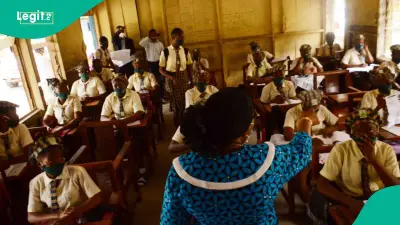
There is a wave of relief and celebration for students recently freed from mass abductions in Niger and Kebbi states. An online education provider has stepped forward with a significant intervention: a two-year full scholarship designed to aid their recovery and facilitate a return to formal learning.
STEM-EduReach Steps In With Lifeline Scholarship
The initiative was unveiled by the edtech organization, STEM-EduReach, during a press conference held in Abuja on Tuesday, December 2. The founder, Mamu Alhaji Muhammad, framed the scholarship as a moral imperative. He stated it is a responsibility to help protect the futures of children impacted by the persistent conflict and attacks on educational institutions in northern Nigeria.
Muhammad confirmed that all rescued students from both Niger and Kebbi states are eligible for the support package. The scholarship aims to create a safe and supportive learning environment to help them reintegrate into the classroom. The organization has formally notified the respective state governments and is prepared to collaborate on implementation.
Insecurity Deepens Nigeria's Education Crisis
During the briefing, Muhammad connected the scholarship to a much larger, systemic crisis. He emphasized that the continuous assaults on schools are worsening the educational deficit in the North, a region already struggling with inadequate infrastructure, teacher shortages, and economic hardship.
He presented stark statistics to illustrate the scale of the challenge. According to him, Nigeria currently has approximately 350,000 teachers serving 46 million students. This creates a daunting teacher-to-student ratio of about 130:1, which is far below the global benchmark of 20:1. The situation is compounded by the fact that nearly half of the country's teachers are unqualified, while teacher attrition rates are as high as 20%.
Fear Fuels Rise in Out-of-School Children
Muhammad pointed directly to the psychological and practical consequences of the kidnappings. The recent incidents in Niger and Kebbi, which led to further school closures across the region, have amplified fear among parents and pushed more children out of the education system.
He warned that prolonged insecurity has already deprived hundreds of thousands of children in the north of their fundamental right to basic education. Furthermore, he highlighted the lasting trauma, noting that many rescued children may experience post-traumatic stress disorder (PTSD), which can severely hinder their ability to learn and readjust.
The founder issued a strong call to action, urging federal and state governments, development partners, and civil society organizations to intensify efforts to address the insecurity and systemic failures threatening education in northern Nigeria. "No child should be denied safe, equitable and quality education," he asserted.
This scholarship offer emerges against a backdrop of relentless attacks. The report notes that bandits launched a fresh assault in a Kebbi community, abducting residents merely a day after 24 schoolgirls were rescued, marking the third major attack on the area within a month.