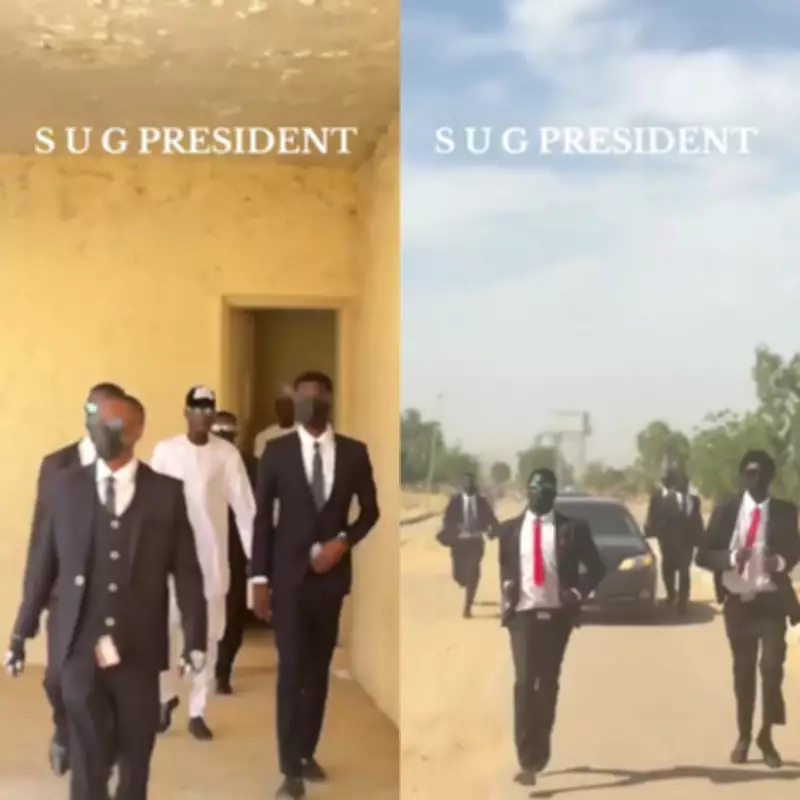
Federal University Dutse SUG President's Security Convoy Video Sparks National Criticism
A recently circulated video featuring the Student Union Government President of Federal University Dutse has generated significant controversy and public backlash across Nigeria. The footage, which has gone viral on multiple social media platforms, depicts the student leader in what many are calling an excessive display of authority and privilege.
Details of the Controversial Video Footage
The video clearly shows the SUG President dressed in traditional white native attire, being escorted by what appears to be a dedicated security team consisting of both men and women wearing formal suits. The security personnel are seen actively performing their duties, with one individual specifically opening the door of a waiting vehicle for the student leader and promptly closing it once he has entered.
As the vehicle begins to move, members of the security team are observed running alongside the car while still wearing their formal suits, creating a spectacle that has drawn considerable attention. The footage further reveals additional vehicles forming what appears to be a convoy, with some cars leading the way and others following behind the president's vehicle.
Public Reaction and Social Media Backlash
Nigerians from various backgrounds have expressed strong opinions about the video, with many questioning the appropriateness of such security arrangements for a student union leader. The public response has been overwhelmingly critical, with numerous social media users commenting on what they perceive as:
- Excessive security measures for a student leadership position
- Questionable use of resources within the student union framework
- Inappropriate emulation of political convoy culture at the student level
- Concerns about priorities in student governance and representation
The video originally appeared on Linda Ikeji's blog platform and has since been shared across multiple social media channels, amplifying the public discourse surrounding student leadership norms and expectations in Nigerian universities.
Broader Implications for Student Politics
This incident has sparked broader conversations about the nature of student union governance in Nigerian higher education institutions. Many commentators are expressing concern about what they see as a growing trend of student leaders adopting the trappings and behaviors typically associated with elected political officials rather than focusing on their primary role as student representatives.
The controversy raises important questions about the appropriate scope of student union authority, the allocation of student union resources, and the expectations placed on student leaders within academic environments. As the discussion continues to evolve, it remains to be seen how this incident will impact perceptions of student governance at Federal University Dutse and potentially other institutions across the country.