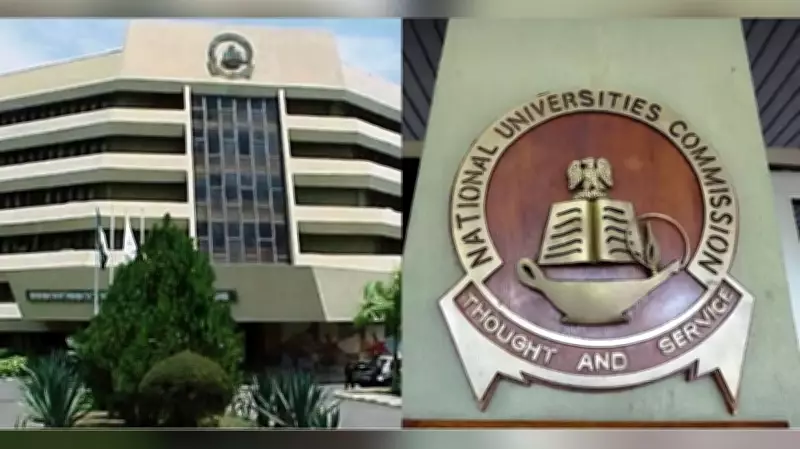
NUC Implements Strict Guidelines to Regulate Honorary Doctorate Awards in Nigeria
The National Universities Commission (NUC) has taken decisive action to address growing concerns about the indiscriminate conferment and misuse of honorary doctorate degrees across Nigerian universities. In a significant move to preserve academic integrity, the commission has issued comprehensive new guidelines that establish clear parameters for awarding and using these honorary distinctions.
Addressing Widespread Abuse in the University System
In a public notice released on its official X page on Thursday, the NUC expressed grave concern about the increasing incidence of improper honorary doctorate awards within the Nigerian University System. The commission cited its authority under the Education (National Minimum Standards and Establishment of Institutions) Act, CAP E3, Laws of the Federation of Nigeria, 2004, in approving the new regulatory framework.
"The Commission has observed, with grave concern, the increasing incidence of indiscriminate conferment and misuse of Honorary Doctorate Degrees within the Nigerian University System," the official notice stated. "In response to this development, the Management of the Commission has approved comprehensive Guidelines for the Award and Use of Honorary Doctorate Degrees in Nigeria."
The guidelines specifically aim to regulate the conferment process, safeguard academic integrity, and protect the credibility and global reputation of Nigerian higher education institutions. All universities and degree-awarding institutions have been directed to comply strictly with the new regulations, with the NUC warning that regulatory sanctions will be imposed for any violations.
Clear Distinction Between Honorary and Earned Degrees
The commission emphasized a crucial distinction that has often been blurred in practice: honorary doctorate degrees, whether awarded locally or internationally, represent honorary distinctions and are not equivalent to earned academic doctorates obtained through rigorous study and research.
Executive Secretary of the NUC, Prof. Abdullahi Yusufu Ribadu, explained that the framework was developed in alignment with established academic traditions, including resolutions from the Association of Vice-Chancellors of Nigerian Universities as articulated in the Keffi Declaration of 2012. The guidelines also incorporate inputs submitted by universities in December 2025.
Prof. Ribadu stated that the guidelines are intended "to provide informed policy direction, strengthen institutional practices, and promote a more transparent and accountable system for the award and use of honorary doctorate degrees in Nigeria."
Investigations Reveal Alarming Patterns of Abuse
An investigation referenced in official reports uncovered widespread abuse within the honorary degree system, including the operation of 32 entities functioning as honorary degree mills. These problematic entities included:
- Unaccredited foreign universities operating without proper authorization
- Unlicensed local institutions lacking degree-awarding powers
- Professional bodies without the legal authority to confer academic degrees
Some of these entities were reportedly issuing fake professorships alongside questionable honorary doctorates, further undermining the credibility of Nigeria's academic landscape.
Key Provisions of the New Regulatory Framework
The comprehensive guidelines establish multiple layers of regulation to ensure proper conferment and usage of honorary doctorate degrees:
Institutional Eligibility and Maturity Requirements
- Institutional eligibility: Only approved universities, whether public or private, are eligible to award honorary doctorate degrees in Nigeria.
- Maturity requirement: Universities must have graduated their first set of PhD students before becoming eligible to award honorary doctorates.
Award Purpose and Selection Criteria
- Purpose of the award: Honorary doctorates must recognize exceptional and sustained contributions, reflect institutional values, and ensure diversity in recognition.
- Criteria for the award: Selection criteria must be clear, transparent, and include balanced representation across gender, race, nationality, and discipline to avoid conflicts of interest.
- Procedural transparency: All procedures for selecting and awarding honorary doctorate degrees must be clearly stated on the official website of the awarding institution and made publicly accessible.
Recipient Eligibility and Confidentiality Protocols
- Recipient eligibility: Self-nominated candidates and elected or appointed serving public officials are explicitly excluded from consideration.
- Confidentiality: All aspects of honorary doctorate nominations and selections must be treated with the highest level of confidentiality. Nominees may only be contacted after their nominations have received approval from both the University Senate and Governing Council.
Nomination, Approval, and Conferment Processes
- Award nomination: All nominations must be processed by the statutory committee established for this purpose.
- Approval requirements: All nominations require formal approval from both the University Senate and the Governing Council.
- Number of awards: The number of honorary doctorate awards at each convocation ceremony shall not exceed three.
- Nomenclature and title: All honorary doctorate degrees must contain the nomenclature or title "Honoris Causa." Examples include Doctor of Science (Honoris Causa) or D.Sc. (h.c.).
- Conferment protocols: Conferment should occur in-person at the ceremony. In exceptional cases, virtual conferment or conferment in absentia may be permitted. Posthumous awards are also allowed under specific circumstances.
Financial Prohibitions and Usage Restrictions
- No fee policy: Honorary doctorate degrees must be conferred without any fee or expectation of payment from the recipient.
- Usage guidelines: Recipients may use the approved nomenclature or title of their honorary doctorate degree, such as Doctor of Law (Honoris Causa) or LL.D. (h.c.), after their names. However, they are not permitted to use the title "Dr.," which is reserved exclusively for holders of earned degrees and medical professionals.
- Professional limitations: Recipients cannot use honorary doctorate degrees to practice as scholars or professionals, oversee administrative units, or supervise research work.
Institutional Responsibilities and Accountability Measures
- Orientation requirements: All awarding universities must provide both written and verbal orientation to recipients regarding proper usage of their awards.
- Publication of records: Universities must regularly publish the names of honorary doctorate degree recipients on their official websites and make this information publicly accessible to uphold transparency.
- Revocation policy: All awarding universities must establish formal mechanisms to rescind awards if recipients are convicted of fraud or engage in unethical conduct inconsistent with the values of the awarding institution.
Enforcement and Compliance Mandates
The NUC has reiterated that recipients cannot use honorary degrees to practice as scholars, supervise research, or oversee administrative units. The commission has stressed that all eligible universities must comply strictly with the new framework, with sanctions awaiting institutions that violate the regulations.
This comprehensive regulatory intervention represents a significant step toward restoring integrity to Nigeria's higher education system and ensuring that honorary recognitions maintain their intended purpose of celebrating genuine contributions to society and academia.