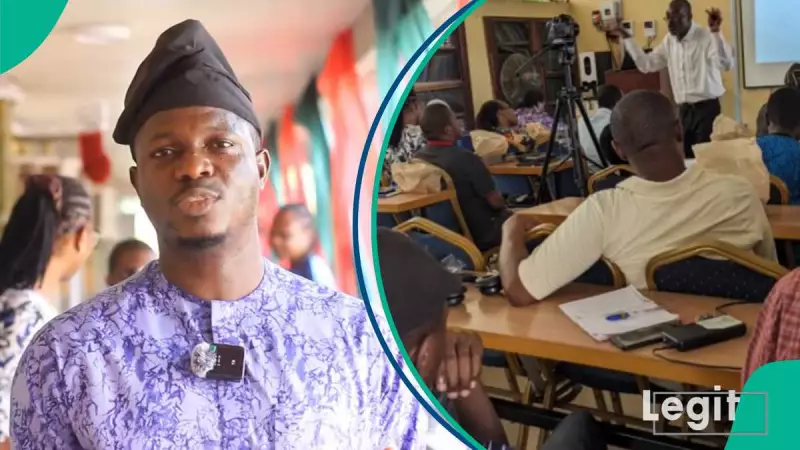
In a bid to reshape media narratives in Nigeria, a University of Ibadan (UI) lecturer has taken a significant step by training journalists on a more constructive form of reporting. Dr Ridwan Kolawole, an academic and practising journalist, recently convened a practical workshop on solutions journalism for both professional and aspiring reporters in Oyo State.
Shifting the Focus from Problems to Responses
The training, held at the Department of Communication and Language Arts, University of Ibadan, aimed to equip media practitioners with the skills to move beyond traditional problem-centric reporting. Dr Kolawole, who also serves as the Oyo State correspondent for Legit.ng, emphasised that the global journalism landscape is evolving. He stressed the need for Nigerian journalists to adopt solutions journalism (SoJo), which rigorously reports on how people are responding to social problems and what can be learned from their efforts.
"The world of journalism has changed, and part of this change is solutions journalism," stated Dr Kolawole, who is also a certified trainer for the Solutions Journalism Network (SJN) based in the United States. He poignantly noted that while "problems scream, solutions whisper," highlighting the media's traditional bias towards negative news. The workshop was designed to help journalists amplify those whispered solutions, focusing on community and individual initiatives that are effectively addressing challenges within Oyo State.
The Four Pillars of Effective Solutions Journalism
Dr Kolawole took participants through the core framework of SoJo, explaining its four essential pillars. He defined solutions journalism as a rigorous, evidence-based reporting on responses to social problems.
The first pillar is Response, which involves detailing the specific actions taken to tackle an issue, such as measures to combat water scarcity or community vigilante activities to prevent crime.
The second is Evidence. Here, journalists must investigate and present proof of the response's effectiveness, asking what has changed before and after the intervention.
The third pillar, Insight, explores whether the successful response could be replicated or adapted in other contexts, allowing lessons to be shared broadly.
Finally, the fourth pillar addresses Limitations. Dr Kolawole emphasised that credible solutions journalism must honestly reveal a response's shortcomings and challenges, as no solution is perfect.
Dispelling Myths and Exploring Financial Sustainability
The training also featured presentations from other experts who helped clarify common misconceptions. Dr Rasheed Adebiyi of Fountain University, Osogbo, distinguished solutions journalism from development journalism. He clarified that SoJo focuses on reporting people's responses to problems, whereas development journalism is concerned with reporting on broad development issues like poverty and health, not necessarily from a solutions perspective.
In a session focused on sustainability, Mutiu Iyanda of Infoprations Limited engaged journalists on the topic 'Creating and Capturing Value from Solutions Journalism Practice.' He identified SoJo as a potential financial goldmine for Nigerian journalists, outlining opportunities for revenue through sponsorships, grants, and other innovative business models that support this type of impactful reporting.
The Head of the Department of Communication and Language Arts at UI, Dr Bisi Olawuyi, commended Dr Kolawole for the initiative, describing it as timely and impactful. He revealed plans for a major solutions journalism workshop in 2026 as part of the department’s 50th-anniversary activities. Dr Olawuyi urged all participants to incorporate the lessons into their daily work, reinforcing the role of journalism that not only informs but also enlightens and drives positive change.