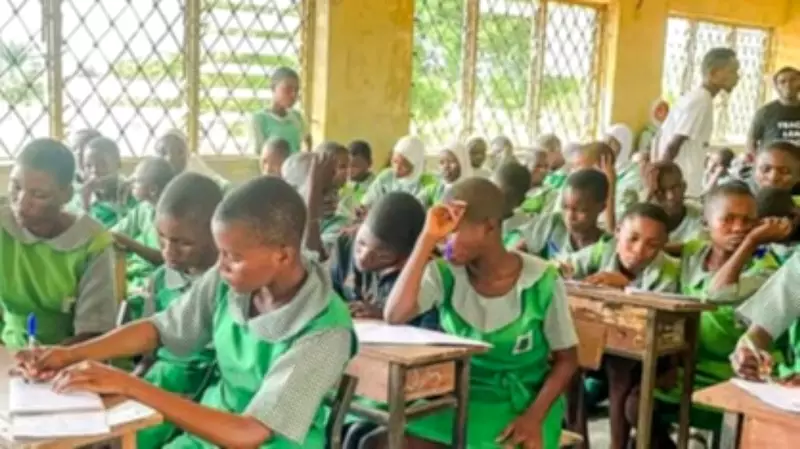
UNESCO Declares 2030 Universal Education Target Unrealistic Amid Rising Exclusion
The United Nations Educational, Scientific and Cultural Organisation (UNESCO) has issued a stark warning that the global ambition to achieve universal education by 2030 may be unrealistic. According to the latest Global Education Monitoring (GEM) Report on Access and Equity, approximately 272 million children, adolescents, and youths remain out of school, with this number increasing for the seventh consecutive year. The report, which reviews progress toward Sustainable Development Goal (SDG) 4 and tracks countries' performance against international education commitments, attributes this failure to the system's inability to deliver on successive global education goals.
Historical Failures and Rising Exclusion
The report highlights that three major global education agendas have increased ambition faster than education systems could expand. These agendas promised universal access to primary education in 1990, universal completion of primary education in 2000, and universal completion of secondary education in 2015. "Not even the first would have been achieved by 2030," the report stated, underscoring the persistent challenges.
Despite significant gains in access, with 1.4 billion students now in school worldwide—a 30% increase in enrolment since 2000, adding 327 million more students—exclusion remains widespread and persistent. The number of out-of-school children, adolescents, and youth has risen by 3% since 2015, reaching 273 million in 2024. This means one in six children, adolescents, and youth globally are excluded from education.
Hidden Figures and Conflict-Affected Regions
The report warns that the actual figure may be higher when accounting for conflict-affected regions. It estimates that the population is undercounted by at least 13 million if supplementary information from humanitarian sources is used to correct data gaps in the ten most affected countries. This underscores the urgent need for more accurate data and targeted interventions in crisis zones.
Slowing Progress and Persistent Inequalities
As the first in a three-part countdown to 2030 series, the GEM Report focuses on access and equity, stressing that progress in education has become increasingly difficult as countries shift from expanding enrolment to sustaining completion and quality. "Global education progress is now slowing, particularly since 2015, even as expectations continue to rise," the report notes.
On completion rates, improvements have been made but remain insufficient to guarantee universal secondary education in the foreseeable future. Since 2000, completion rates have increased from 77% to 88% in primary education, from 60% to 78% in lower secondary, and from 37% to 61% in upper secondary. However, at current expansion rates, the world would only achieve 95% upper secondary completion by 2105.
The report highlights persistent inequalities, particularly in low-income countries where children are more likely to start school late and repeat grades, delaying completion and widening disparities.
Leadership Responses and Calls for Action
UNESCO's Director-General, Khaled El-Enany, described the findings as alarming but noted that progress made since 2000 proves change is still possible. "This report confirmed an alarming trend, with more and more young people deprived of education around the world each year. However, there is hope," he said.
Manos Antoninis, Director of the GEM Report, emphasised that future global targets must reflect national realities rather than impose uniform expectations. "National targets must be both ambitious and rooted in what is genuinely achievable. Global targets should then be the sum of these commitments, not the other way around," he stated.
The launch of the report brought together education ministers and policymakers from across the world to discuss policy responses to widening access gaps. UNESCO stressed that the findings should serve as a warning to governments and development partners. Without accelerated action, the world risks missing its most important education targets for another generation, leaving millions of children locked out of classrooms.