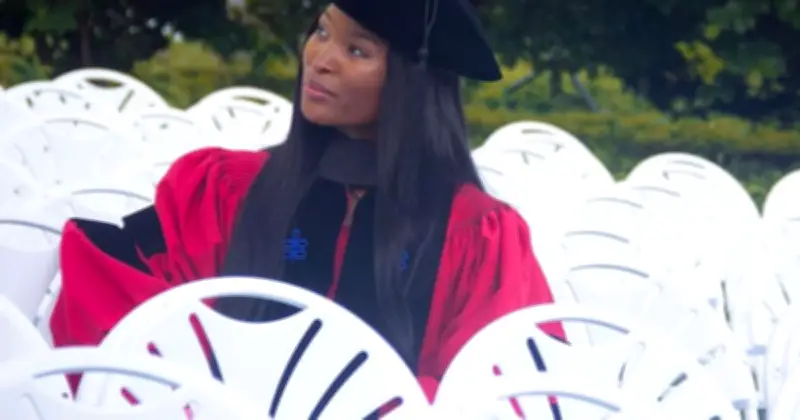
Dr Ifeosa Anwulika, a first-class graduate of the University of Lagos (UNILAG), has completed a fully funded PhD at Harvard University, fulfilling a promise she made as a teenager. In an interview with Pulse Nigeria, she shared how a dream declared at age 15 led her from UNILAG to Harvard, detailing the fear, faith, rejections, and practical lessons for Nigerian students aspiring to study abroad.
From Self-Doubt to Head Girl
Anwulika's journey was not marked by early academic confidence. She said her first few years in secondary school were filled with self-doubt. "For the first two or three years in secondary school, I struggled with feeling out of place. I genuinely believed the students who won prizes were a special breed. I was okay with just being average," she recalled.
Everything changed after a personal decision she describes as a conversation with God. She began studying differently, reading more intentionally, and challenging herself academically. The results followed: she became one of the school's top students, won several academic prizes, and eventually emerged as Head Girl. It was during this period that Harvard stopped feeling like an impossible fantasy. "It was in seeing that transformation happen that Harvard came to my heart. I realised everything was possible," she said.
Applying at 22 During NYSC
Although she first mentioned Harvard when she was about 15 years old, she did not apply until she was 22, during her National Youth Service Corps (NYSC) year, serving in Ekiti State. Her original plan was to pursue a master's degree at the University of Ibadan after NYSC. However, conversations with professors and friends from UNILAG gradually changed her perspective. Instead of applying for a master's degree first, they encouraged her to apply directly for a PhD at Harvard. She listened, and looking back, she believes that unexpected posting to Ekiti instead of Oyo State completely changed the direction of her life.
The application almost never happened. Harvard's doctoral programme reportedly admits only a tiny fraction of applicants each year, making the process highly competitive. She wondered whether someone without a master's degree really stood a chance. "For a moment, I thought maybe it was better never to know than to apply and be rejected. This was Harvard after all," she admitted. The night before submitting her application, she called a friend, they prayed together, and then she clicked the submit button.
Family Support and Fully Funded Offer
Anwulika says getting into Harvard wasn't a solo effort. Her mother encouraged her whenever she doubted herself. Her father consistently paid expensive international application fees. Her siblings became her biggest cheerleaders throughout the process. The prize money she received from UNILAG for graduating with outstanding results helped pay for her Graduate Record Examination (GRE), one of the key requirements for many graduate programmes in the United States at the time. She also spent weeks refining her Statement of Purpose with mentors until it truly reflected her journey and ambitions.
For many Nigerians, affordability is a major concern. For Anwulika, Harvard removed that burden. "I am deeply grateful to God to have gone to Harvard fully funded by the university. Otherwise, I could never have afforded it," she said. Fully funded doctoral programmes at Harvard typically cover tuition while providing stipends for living expenses and health insurance, allowing students to focus on research and teaching responsibilities.
Overcoming Imposter Syndrome at Harvard
Even after gaining admission, Anwulika battled severe imposter syndrome upon her arrival in the United States. She had never travelled outside Nigeria before. Many classmates had studied at prestigious institutions like Oxford, Cambridge, Yale, Princeton, and Stanford. Some already held master's degrees. She had none of those advantages. "Whenever we had seminars, I felt huge knots in my belly. I sometimes just wanted to go back home," she said.
Instead of allowing fear to define her, she gradually pushed herself to participate in class discussions, adjust to a different learning system, and keep improving. Over time, she found herself taking on leadership roles across academic and student communities. People began seeking out her opinions. That journey, she says, taught her what she now calls "the gift of progress."
When asked what made Harvard choose her, she said she still doesn't know the exact answer. Harvard receives thousands of outstanding applications from around the world every year. Rather than claiming she had the perfect formula, she simply points to excellence, sincerity, and faith. "I honestly don't know. What I do know is that God showed me the validity of His grace," she said.
Advice for Nigerian Students
For students hoping to study overseas, Anwulika says the journey begins long before filling application forms. She believes applicants should genuinely enjoy learning instead of simply chasing grades. She also advises prospective students to develop a clear research interest and avoid rushing applications at the last minute. Most importantly, she encourages young Nigerians not to disqualify themselves before trying. "Try. We never know until we try," she said.
Nearly 17 years after boldly telling classmates she would study at Harvard one day, she has now completed that dream. Her story offers proof that sometimes, the dream that sounds impossible is simply waiting for someone brave enough to submit the application.