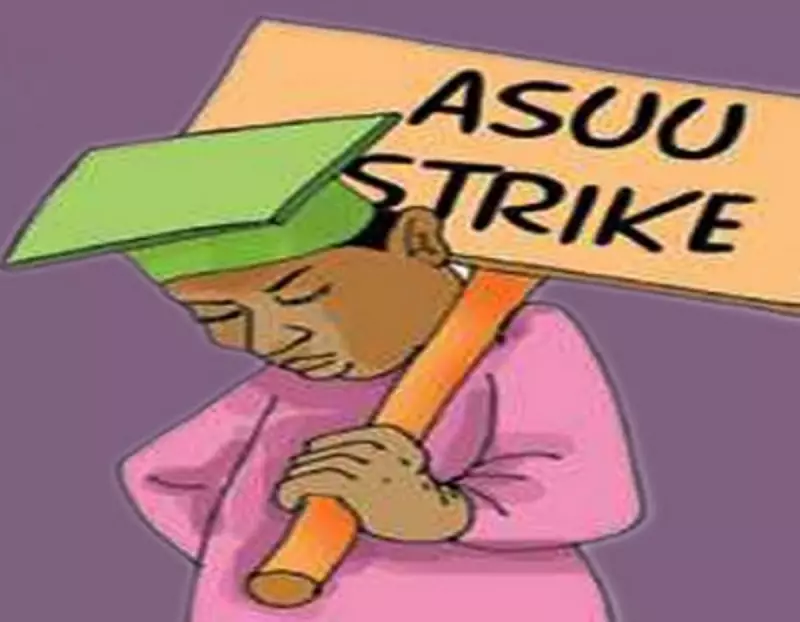
The Vice-Chancellor of Delta State University, Abraka, Professor Samuel Asagba, has strongly criticized the Federal Government for its repeated failure to properly manage agreements with the Academic Staff Union of Universities.
A System Crippled by Broken Promises
Speaking at a press conference on Tuesday to mark his first year in office, Professor Asagba warned that the constant cycle of industrial actions and campus shutdowns is severely damaging the future of education in Nigeria. He stated that the endless disruption of academic activities, primarily caused by the government's refusal to implement negotiated welfare packages, has left the country's university system unstable, unappealing, and far below international standards.
The Vice-Chancellor directly challenged President Bola Tinubu to urgently establish a regular and automatic salary adjustment mechanism for university staff. He proposed a system similar to the periodic, quiet reviews enjoyed by the military, as a way to prevent future unrest.
"Why Can't They Treat Us as Important Stakeholders?"
"It is high time ASUU is called and negotiated with," Asagba declared. "With our salaries streamlined, lecturers won't have to cry out every time. The government adjusts military salaries silently every three or four years. Why can't they do that for universities? Why can't they treat us as important stakeholders in this nation?"
He expressed deep regret over the declining prestige of the academic profession. The DELSU VC recalled that during the 1960s, a Nigerian professor's salary and social standing were on par with that of the Chief Justice of Nigeria, a stark contrast to the present situation.
The Cost of Habitual Agreement Breaches
Professor Asagba specifically faulted what he termed the Federal Government's "habitual breach" of memoranda signed with ASUU. He noted that every unfulfilled pact inevitably leads to a new round of confrontation, with devastating consequences.
This pattern, he explained, results in stranded students, distorted academic calendars, weakened research output, and a loss of competitiveness for Nigerian universities on the global stage.
Despite highlighting these national challenges, Professor Asagba also pointed to significant reforms and accomplishments within DELSU during his first year. He insisted that the institution is steadily transforming itself into a modern, technology-driven university, even amid the broader systemic issues plaguing the education sector.