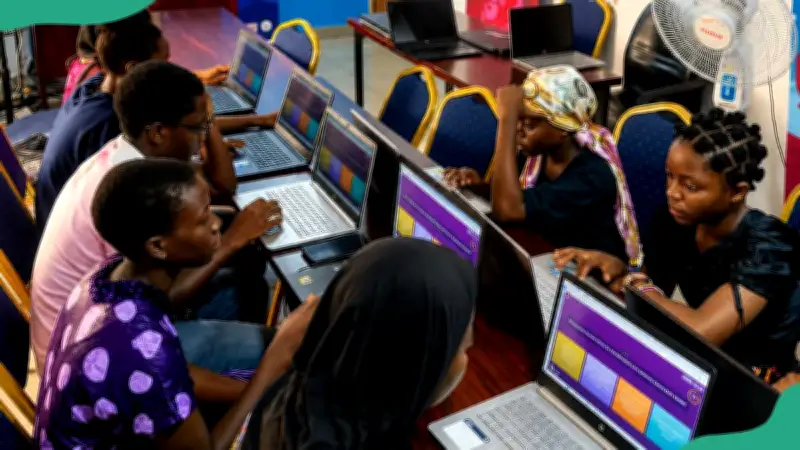
The West African Examination Council (WAEC) has been urged to make computer-based testing (CBT) mandatory across Nigeria to eliminate the menace of 'miracle centres' where examination malpractice is allegedly organised. Timothy Manga, an official at the WAEC office in Makurdi, made the call during an interview with the News Agency of Nigeria (NAN) on Monday, August 10, citing growing concerns over the credibility of public certificates.
WAEC Official Warns Against 'Miracle Centres'
Manga said rumours of miracle centres operating in Benue state had become a serious concern, even though WAEC had not officially confirmed the existence of any such centre in the state. In Nigerian education, a miracle centre refers to an examination venue where malpractice is allegedly organised, enabling candidates to obtain answers or unauthorised help during exams.
Describing the trend as a direct threat to the integrity of Nigeria's education system, Manga argued that schools should be recognised for the quality of teaching they offer rather than their capacity to facilitate cheating. "Any system that rewards students for cheating undermines those who have worked hard to prepare for examinations," he said.
Call for Strict CBT Implementation
Manga added, according to Vanguard: "We need an examination system where success is determined by knowledge, preparation, and competence, not by the ability to access assistance during examinations. Though WAEC has not gotten any information on any school being a 'miracle centre', we would continue to put our ears to the ground in case we hear of any that we can set an example with."
The push for CBT comes as WAEC has already introduced upgraded question serialisation to ensure candidates receive different question arrangements in CBT exams. Over 1.9 million candidates have been registered for the 2026 WASSCE under the computer-based examination format, according to Legit.ng.
Teachers Back CBT, Demand CCTV and Biometrics
Rebecca Ezekiel, a teacher at NKST Secondary School in Makurdi, supported the push for CBT, saying it would allow examination bodies to take direct control of venues, personnel, and security without the interference of individual schools. "Candidates should be examined under conditions that are independent of the schools where they receive instructions," she said.
Ezekiel also recommended that authorities deploy biometric verification systems and closed-circuit television (CCTV) cameras across examination centres to tighten monitoring. This, she argued, would help curb malpractice and ensure a level playing field for all candidates.
School Proprietor Questions Accusations
However, Jude Odeh, a school proprietor in Otukpo Local Government Area, pushed back against what he described as broad-brush accusations. He said accepting students in their final year of secondary school did not automatically make a school a miracle centre. Odeh acknowledged hearing allegations about such centres in Benue but said he had not been able to point to any specific school.
He also raised the issue of cost, noting that some parents move their children to new schools because certain institutions charge excessive examination and tuition fees. Some schools in Benue, he said, maintain a strict policy of registering only students who have come through their own SS2 class for external examinations.
WAEC's Broader Efforts Against Malpractice
Meanwhile, Legit.ng also reported that WAEC introduced upgraded question serialisation to ensure candidates receive different question arrangements in CBT exams. Over 1.9 million candidates have been registered for the 2026 WASSCE under the computer-based examination format. WAEC, however, warned against malpractice syndicates while confirming strict monitoring and prosecution measures during the exams.
The debate over CBT and miracle centres highlights the ongoing challenges in Nigeria's education sector, with stakeholders calling for systemic reforms to restore trust in examination processes. As WAEC continues to digitise its operations, the effectiveness of these measures in curbing malpractice remains to be seen.