BBC Under Fire for Censoring Nigerian Filmmaker's Political Remarks at BAFTA Awards
The British Broadcasting Corporation (BBC) is facing significant criticism and public backlash after editing out the 'Free Palestine' conclusion from Nigerian-born filmmaker Akinola Davies Jr.'s acceptance speech during the BAFTA Film Awards broadcast. The incident has ignited a heated debate about media censorship, political expression, and the boundaries of editorial discretion on major international platforms.
The Controversial Edit and Its Immediate Aftermath
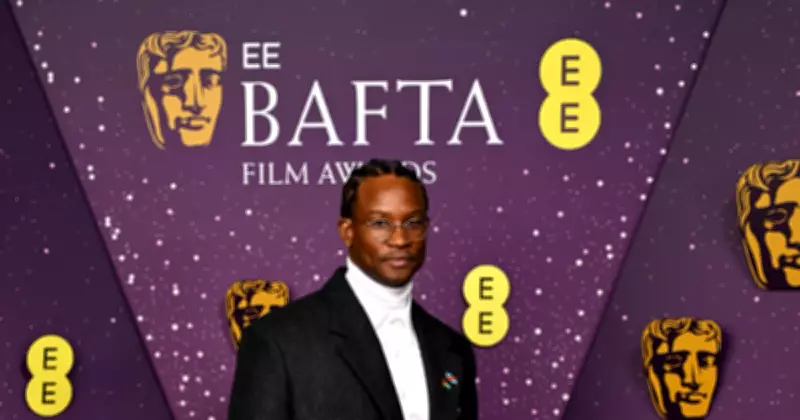
During Sunday's prestigious BAFTA Film Awards ceremony, the film 'My Father's Shadow' by brothers Wale Davies and Akinola Davies Jr. won the award for Outstanding Debut by a British Writer, Director or Producer. This victory marked a significant milestone in the film's remarkable journey from its acclaimed premiere at the Cannes Film Festival to recognition on the British awards stage.
However, the celebratory moment quickly transformed into controversy when viewers discovered that the BBC's televised broadcast had selectively edited Akinola Davies Jr.'s acceptance speech. The filmmaker's original remarks included a powerful dedication to "all those whose parents migrated to obtain a better life for their children," specifically mentioning "the economic migrant" and "the conflict migrant," as well as "those under occupation, dictatorship, persecution, and those experiencing genocide."
Davies Jr. concluded his speech with an emotional call to "archive your loved ones" and a closing line that named Nigeria, London, the Congo, Sudan, and emphatically stated 'free Palestine.' This final portion, containing all references to migration, occupation, genocide, and Palestine, was completely absent from the BBC's broadcast version.
BBC's Official Explanation and Growing Skepticism
In response to mounting criticism, a BBC spokesperson provided a procedural explanation, stating that the three-hour ceremony needed to be reduced to two hours for broadcast. The broadcaster claimed that 'the same happened to other speeches made during the night, and all edits were made to ensure the programme was delivered to time.' They further noted that full, unedited speeches would be available on BAFTA's official YouTube channel.
While award shows routinely trim content for time constraints, the specific context surrounding this edit has raised serious questions about potential political motivations. This controversy emerges against a backdrop of recent BBC sensitivity regarding politically charged moments during broadcasts. Last year, the broadcaster faced national backlash after live-streaming Glastonbury act Bob Vylan chanting 'death to the IDF,' prompting increased caution around overt political messaging.
The fundamental uncertainty remains whether Davies Jr.'s remarks were specifically targeted due to their content or simply fell victim to standard runtime adjustments. The BBC maintains that other speeches were similarly edited, but the criteria for these editorial decisions and whether politically sensitive lines received disproportionate scrutiny remains unclear.
Broader Implications for Political Expression and Media Responsibility
This incident highlights significant questions about visibility and representation in media broadcasting. Would this edit have drawn the same level of attention if the filmmakers were not Nigerian-born creatives whose work explicitly explores themes of migration and identity? Or if the speech had referenced a different geopolitical conflict without the current international sensitivity surrounding Palestine?
In today's cultural climate, where statements regarding Gaza and Palestine have led to professional consequences for numerous artists, editorial omissions are rarely perceived as neutral actions. The Davies brothers' achievement stands regardless of the broadcast edit, with 'My Father's Shadow' continuing its successful awards season run and the complete speech remaining accessible online.
Nevertheless, this controversy has reopened a persistent debate about the limits of political expression on major cultural stages and about who ultimately determines what content reaches public broadcast audiences. As media organizations navigate complex political landscapes, this incident serves as a crucial case study in balancing editorial control with artistic freedom and political commentary.