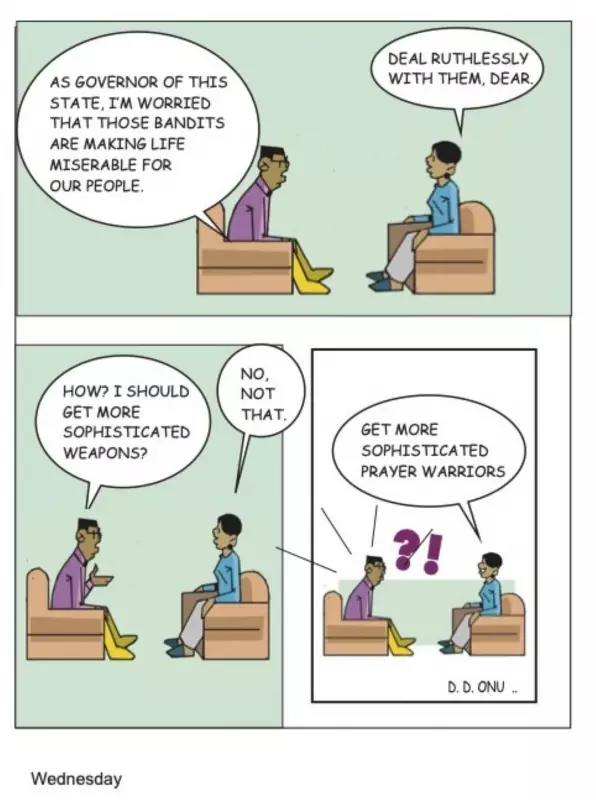
A recent editorial cartoon published by The Guardian Nigeria has captured widespread attention for its poignant and satirical depiction of the country's prevailing economic climate. The single-panel artwork serves as a powerful visual commentary on the struggles faced by ordinary citizens.
Visual Metaphors of Struggle
The cartoon employs classic symbolic imagery to convey its message. It features a central character, an everyday Nigerian, depicted in a state of visible distress and exhaustion. This figure is surrounded by visual cues representing the various pressures of the current socio-economic environment.
Elements within the illustration likely point to issues such as rising inflation, the high cost of living, and economic uncertainty. The artist uses these metaphors to translate complex national issues into a universally understandable format. The style is consistent with the rich tradition of editorial cartooning, using exaggeration and humor to highlight serious truths.
The Role of Satire in Public Discourse
This piece, published under the newspaper's regular cartoon section, underscores the vital role that political and editorial cartoons play in Nigerian media. They act as a form of social critique, often bypassing lengthy articles to deliver an immediate, emotional impact.
Cartoons like this one provide a barometer for public sentiment, giving artistic form to the frustrations and experiences of the populace. They spark conversation and reflection, making them a unique and potent tool for journalism. The Guardian's platform for such work highlights a commitment to diverse forms of commentary and freedom of expression.
Art Reflecting National Mood
The resonance of this cartoon with readers suggests it has effectively tapped into the shared national experience of economic difficulty. It moves beyond mere illustration to become a cultural artifact of a specific moment in Nigeria's history.
By focusing on human emotion and relatable struggle, the artist creates a connection with the audience that is both personal and political. The work does not merely report on conditions; it evokes the feeling of those conditions, fostering empathy and a sense of common understanding among viewers from all walks of life.
In conclusion, this editorial cartoon is more than just a drawing. It is a sharp, insightful piece of visual journalism that contributes significantly to the national dialogue. It proves that satire remains a powerful and necessary lens through which to examine and challenge reality, holding a mirror up to society for both introspection and, potentially, inspiration for change.