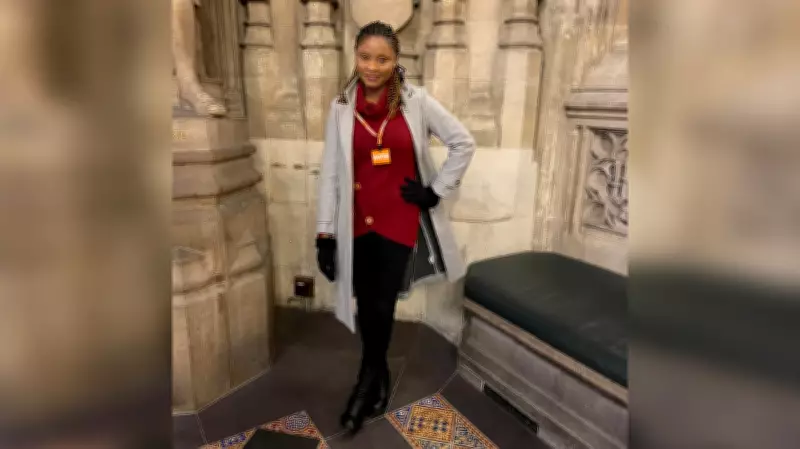
Labiran Mayowa: Letting Story's Core Emotion Dictate Palette and Texture
With a portfolio spanning daily soaps like Tinsel to film-noir projects like Oloibiri, Labiran Mayowa has tailored her working approach to match the varied emotional tones of each project. She lets the story's core emotion dictate the palette, texture, and lighting. "For Tinsel, I lean into bright, high-key, clean aesthetics to support its energetic, everyday drama, while in Oloibiri, I shift to desaturated tones, deep shadows, and gritty textures to amplify tension and melancholy. The design becomes a silent translator—warm and open for soap, cold and constrained for dark, dramatic storytelling," Labiran Mayowa muses.
Wealth as a Mask: The Visual Concept for Wura
Her work on Wura brought a distinct, luxurious aesthetic to the screen. The core visual concept was "wealth as a mask." She explains, "I wanted every room to feel desirable but cold—like you'd love to live there but sense something's wrong. I executed it by pairing warm, rich materials with hard, sharp lighting and slightly oversized furniture. The space doesn't hug you; it judges you."
Maintaining Consistency in Long-Running Series
For intense drama series like Hotel Majestic and Hush, Mayowa maintained a consistent visual language over hundreds of episodes by creating a visual rulebook. "Fixed colour families for each character, a short list of approved textures, and strict prop categories. Then I assign 'keepers' on set whose only job is continuity. After episode 50, memory fails—systems don't," she states.
Art Directing for International Audiences
Colore, a French series, presented a different challenge. "The biggest difference was pacing of visual information. French audiences are comfortable with stillness and negative space. Nigerian storytelling often wants energy in every frame. I had to learn to hold back—to let one meaningful object sit alone and breathe. That was harder than adding more. Still, I let the Nigerian in me come out once in a while," she quips.
Designing for Comedy vs. Drama
When working on comedies like Kambili and Alakada versus thrillers like Zero Hour, Mayowa changes her design process. "For comedy, I ask 'what can go slightly wrong in the background?' A tilted picture, a clashing pattern, a prop that shouldn't be there. For drama, I ask 'what's hidden?' My color palette expands for comedy and contracts for drama. Comedy is generous; drama is withholding."
Authentic Grit in Oloibiri
Oloibiri required a gritty, authentic look. Mayowa made decay earned, not decorated. "You can't just throw dirt on new walls. We had to layer grime—water stains, rust, smoke damage—in a specific order that told time. The hardest part was stopping myself from over-doing it. Authentic grit has restraint," she says.
Reflecting Character's Inner Life
In Conversations in Transit and This Lady Called Life, Mayowa creates intimate spaces by shrinking the world with minimal objects. "Fewer objects, softer edges, and everything placed within arm's reach of the character. If she's lonely, her space has one chair, one cup, one light. If she's hiding, there are layers—curtains, half-open doors, things stored away. The set becomes her subconscious," she explains.
Most Rewarding Challenge: Mystic River
Mayowa describes Mystic River as her most rewarding challenge. "We built the entire set in a forest and had to turn limited living space into sets; nature itself was our set. The story is heavy—grief, suspicion, quiet rage—and the temptation was to make the sets feel as dark as the emotions. But I learned that true tension lives in what you 'don't' show. I designed spaces that felt almost too normal: warm kitchens, tidy living rooms, ordinary streets. The horror wasn't in the walls—it was in how those normal spaces suddenly felt wrong when a character walked through them carrying a secret. The challenge was trusting the audience to feel the unease without me painting it onto every surface. That project taught me that less isn't just more—sometimes less is everything."
Authenticity Through Research
Mayowa doesn't research from a distance. She travels, sits, and listens. She hires local advisors who laugh when she gets it wrong. "And I build a 'never' list—patterns, colors, objects that would never appear in that real-world context. Authenticity isn't accuracy; it's avoiding the fake note," she reflects.
Meeting Deadlines: Tauranin Zamani
In Tauranin Zamani, she led the team to meet the deadline by building the set in a hotel reception with limited time. "I stripped every non-essential, pre-built modular walls we could reconfigure, and had the team paint while assembling. It was tough but it turned out really good."
From Script to Mood Board
When she receives a script, she first thinks of the scene inside a character's home. "How do they live when no one's watching? That single tells me their relationship with comfort, control, and truth. Everything else flows from there." To translate a writer's words into a detailed mood board, she finds four anchors: one for colour, one for texture, one for light quality, and one for emotional temperature. "Then I find real-world photographs—never other films. I present no more than 15 images. If they don't see it by then, I haven't understood them yet," she says confidently.
Colour Grading and Signature Looks
For colour grading sets, particularly for Wura, she paints 2x2 foot boards in candidate colours and brings them to the actual location under the actual lighting plan. Then she shifts them in-camera with the DOP before building. "For Wura, we landed on a gold that reads warm on skin but cool on walls—luxury without sleepiness."
Balancing Aesthetics and Functionality
To balance aesthetics with functionality, she physically walks every camera path and actor mark. "If a lens hits a wall or an actor can't sit naturally, the design fails. I've learned to love negative space—emptiness looks like intention, not budget." On props, she assigns every one a job: reveal character, advance plot, or create mood. "If it doesn't do at least one, it's out. Then I remove one more. A cluttered set tells me the designer was insecure."
Sustainable and Cost-Effective Practices
Mayowa incorporates sustainable practices by renting everything that isn't nailed down, building sets to break flat and store small, and keeping warehouse inventory of reusable walls and dressings. "I've become ruthless about asking 'do we need to build this, or can we find it?'"
Influences and Inspirations
She admires Stuart Craig, who showed her that nothing is impossible, and locally, Pat Nebo showed her that Nigerian stories deserve global craft. "I don't copy them," she says, "I steal their questions."
Physical Sets vs. CGI
When deciding between physical set construction and CGI, she says, "If an actor touches it, breathes on it, or leans against it—build it. If it's background, sky, or impossible scale—CGI. But I fight for practical every time. Actors act better in real rooms. Physics matters."
Maintaining Passion Under Pressure
A self-motivated professional, she keeps her creative passion high by protecting one small thing per project that's just for her—a hidden detail, a color no one else notices. "That secret keeps me curious. Also, I eat. Burnout or hunger isn't a badge of honour," she laughs.
Managing the Art Department
To manage her team, she uses morning huddles, written briefs with reference images, and a wall of "approved vs rejected." She also makes sure everyone knows the story, not just their task. "When a painter knows why a wall is sad, they paint differently."
Handling Budget Cuts
When she faced a 40% budget cut three days into building, she swapped two custom rooms for one versatile set dressed three ways, used lighting to hide cheaper materials, and begged a rental house for last-minute favours. "The director never knew. The audience saw nothing missing."
Building Trust with Directors
To build trust with a new director or DOP, she asks them to show her their favorite frame from any film and tell her why. Then she builds a small test set based on that conversation. "Trust isn't talked into existence; it's built in miniature."
Handling Creative Differences
When creative differences arise, she builds their version first—quickly, cheaply. "Nine times out of ten, they see the problem themselves. On the tenth time, I ask 'what's the story need, not what do we prefer?' The story is the boss."
Debunking Misconceptions
To debunk the common misconception about art directors, she says, "We're just nicer decorators. No—we're storytellers who work in three dimensions. A writer uses words; we use walls. A bad art director makes pretty rooms. A good art director makes you feel something before anyone speaks."
Experience on Wura
On Wura, she confesses it was the first time she had to make evil feel like a promotion. "Every design choice asked: 'What would power look like if it never had to apologize?' The gold, the scale, the stillness—it all said 'I've won.' That was thrilling and uncomfortable. I loved every second—the hardest fun I have ever had."