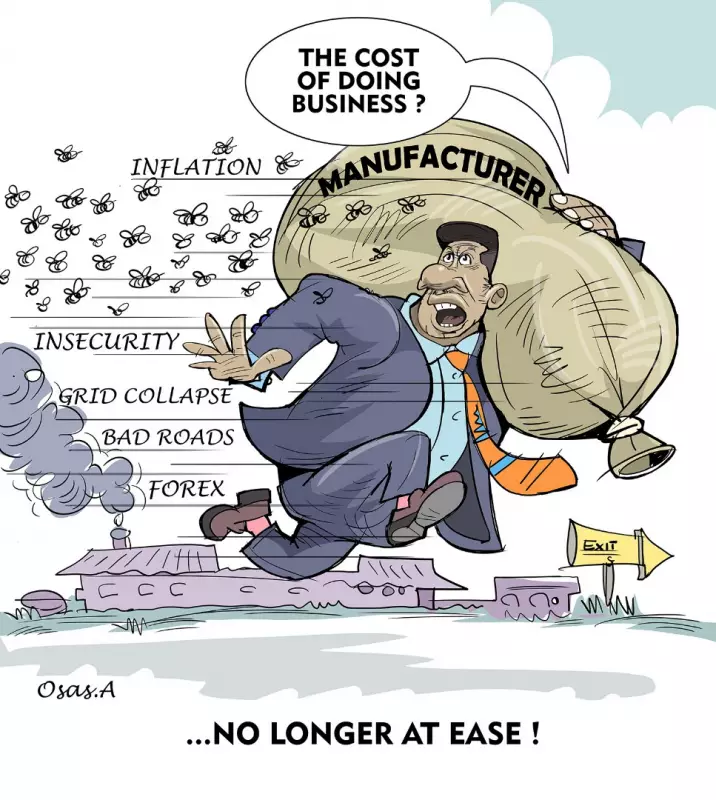
In a nation where words often fall short, the sharp, insightful lines of a cartoonist's pen can speak volumes. This week, readers of The Guardian Nigeria were greeted by the latest offering from one of the country's most respected visual commentators, Mike Asukwo. His cartoon, featured in the publication's esteemed opinion section, serves as a powerful mirror held up to contemporary Nigerian society, prompting reflection, debate, and a call for introspection.
The Art of Visual Commentary
Mike Asukwo has long established himself as a critical voice in Nigeria's media landscape, using his artistic talent not merely for entertainment but for profound social and political critique. His work consistently cuts through the noise of daily news cycles to highlight underlying truths about governance, economic hardship, and the social contract between the people and the state. This latest piece continues that proud tradition, employing familiar symbolism and stark imagery to convey its message with immediate impact.
The cartoon operates on multiple levels, a hallmark of Asukwo's skilled craftsmanship. On the surface, it presents a recognizable scene, but a closer look reveals layers of meaning that comment on specific national challenges. The artist masterfully uses visual metaphors—common objects, expressions, and scenarios—to represent complex issues such as economic disparity, political accountability, and the resilience of the everyday Nigerian.
Decoding the Imagery: A Nation at a Crossroads
While the specific visual elements of the cartoon are copyrighted to the artist and The Guardian, the themes it engages with are universally felt across the country. Asukwo's work often depicts the stark contrast between the promises made by those in power and the lived reality of the citizens. It visualizes the weight of inflation, the frustration with infrastructural decay, and the ironic humor found in the face of adversity.
This form of political satire and social commentary is a vital part of a healthy democracy. It provides a space for critique that is both accessible and potent, reaching audiences who might not engage with lengthy editorial columns. The cartoon does not just state a problem; it evokes an emotional response, challenging viewers to recognize the absurdities and injustices within their own environment. It asks a silent but powerful question: Is this the Nigeria we were promised?
More Than Just a Drawing: The Role of Cartoonists in Society
The publication of Asukwo's work in a major national newspaper like The Guardian underscores the important role that editorial cartoonists play. They are not just illustrators but journalists and activists wielding pens and ink. In a climate where press freedom can face pressures, the cartoon remains a uniquely potent tool for speaking truth to power, often using humor and exaggeration to deliver messages that might otherwise be censored in plain text.
Historically, Nigerian cartoonists have been at the forefront of social movements, using their art to mobilize public opinion and hold leaders to account. Asukwo's latest contribution sits within this courageous lineage. It serves as a historical record of the national mood, capturing the anxieties, hopes, and criticisms of a particular moment in time. For future generations, these cartoons will be primary sources, revealing more about the public sentiment of the 2020s than many official documents ever could.
The conversation sparked by such a cartoon extends beyond the newspaper page. It fuels discussions in homes, offices, and across social media platforms. It gives people a shared reference point—a common visual language—to articulate their collective experiences. This democratization of critique is essential for fostering an engaged and vigilant citizenry.
Mike Asukwo's new cartoon in The Guardian is more than a piece of art; it is a civic intervention. It reminds the public of the power of observation and the necessity of holding a critical lens to the events that shape their lives. In a single frame, it compresses complex national dialogues, proving that sometimes, a picture is not just worth a thousand words—it can ignite a thousand conversations. As Nigeria continues to navigate its multifaceted challenges, the work of satirists and commentators like Asukwo will remain indispensable for a nation striving for better governance and a more equitable society.