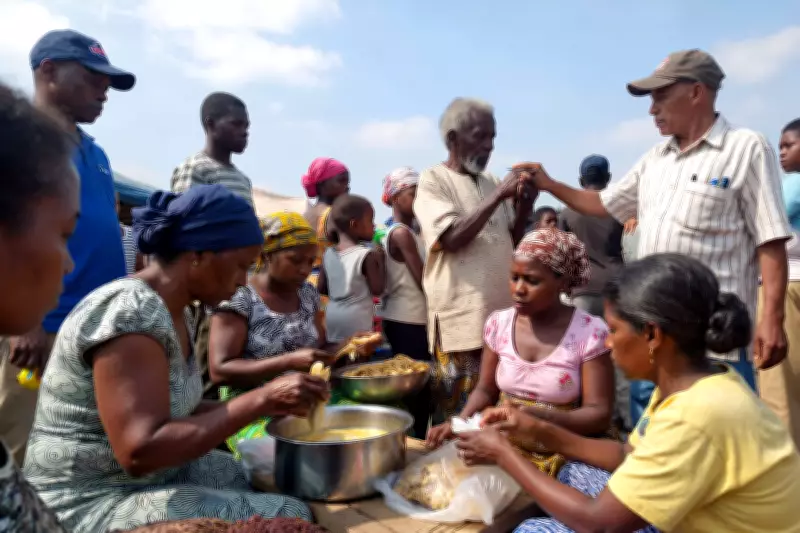
Welcome, friend. If you have landed here asking what Nigerian values are, know that you are in good company. This is a question I have been circling for most of my adult life, and this article is the conclusion of months of dedicated research into the topic, drawing on years of experience writing about Nigerian culture, identity, and society. I have had long conversations with elders in Kano, sat with community leaders in Enugu, and interviewed young Nigerians in Lagos who are passionately trying to reconcile the values they inherited with the world they are building. What emerged was a picture far richer, far more layered, and frankly far more encouraging than I expected.
What Are Nigerian Values?
Nigerian values are not simply a list of dos and don'ts. They are a living, breathing inheritance, shaped by hundreds of ethnic traditions, two dominant faiths, colonial history, and the sheer daily creativity of over 220 million people figuring out how to live together. Understanding them does not just help you navigate Nigerian society better. It helps you understand what makes Nigeria, Nigeria.
What Are the 7 Core Values of Nigeria?
Ask ten Nigerians to name the country's core values and you will probably get ten slightly different answers, each coloured by their ethnic background, religion, or generation. But having combed through community discussions, academic literature, and government documentation, I have found that seven values consistently emerge across ethnic and religious lines.
The Independent Corrupt Practices and Other Related Offences Commission (ICPC) developed Nigeria's National Ethics and Integrity Policy in collaboration with the Office of the Secretary to the Government of the Federation and the National Orientation Agency. That policy, approved by the Federal Executive Council in August 2020, identified six formal national values: Human Dignity, Voice and Participation, Patriotism, Personal Responsibility, Integrity, National Unity, and Professionalism. These are not arbitrary selections. They were chosen precisely because they reflect the values Nigerians themselves consistently articulate when asked what a 'good Nigerian' looks like.
Here are the seven that show up repeatedly in both formal policy and everyday life:
- Respect for elders and authority. This one runs so deep it barely needs explaining to most Nigerians. You address your elders as 'sir,' 'ma,' 'uncle,' or 'aunty' even when no blood relationship exists. Kneeling or prostrating when greeting older people is standard practice across Yoruba, Igbo, and many other cultures. Even young Nigerians who have grown up abroad find this instinct hard to shake, and most do not want to.
- Communal responsibility (Ubuntu spirit). There is a reason Nigerians say things like 'it takes a village.' The success of one person genuinely reflects on their whole family, clan, and sometimes their entire ethnic group. Your cousin's university graduation is a community celebration. This is not just sentiment. It shapes real financial decisions, living arrangements, and career choices.
- Honesty and integrity. Despite the international reputation Nigeria has sometimes suffered, honesty remains a deeply held ideal. The shame attached to being caught in dishonesty, whether in a market negotiation or a public office, is social currency in most Nigerian communities. The problem is not that Nigerians do not value honesty. It is that systemic pressures sometimes make dishonesty feel survivable in ways that integrity does not.
- Hard work and enterprise. The Nigerian hustle is not a cliche. It is a deeply ingrained cultural value that has produced one of Africa's most dynamic informal economies. From roadside traders in Port Harcourt to tech founders in Lagos's Yaba district, the ethic of hard work carries enormous social prestige across all ethnic groups.
- Patriotism and national pride. Even the most cynical Nigerian abroad will defend Nigeria fiercely when criticised by an outsider. There is something remarkable about this. People who complain bitterly about NEPA, bad roads, and government corruption still feel a genuine, sometimes ferocious pride in their country's creativity, resilience, and potential.
- Religious devotion and moral integrity. Nigeria is one of the most devout nations on earth. Christianity in the South, Islam in the North, and traditional spiritual practices woven throughout both. Religion does not merely sit alongside daily life. It structures it, from morning devotions to business decisions to naming ceremonies.
- Hospitality. Arriving at a Nigerian home without being offered food or drink, regardless of the household's financial circumstances, is almost unthinkable. Hospitality is less a social nicety and more a moral obligation. A guest who leaves hungry brings quiet shame to the household. I remember visiting a family in Ibadan some years ago, unannounced, around lunchtime. Within twenty minutes there was eba, egusi soup, and a whole plate of fried plantain in front of me. The family had clearly not been expecting guests. They simply did not consider not feeding me. That is Nigerian hospitality. And it tells you everything about Nigerian values.
What Are the 10 National Values of Nigeria?
The formal articulation of national values in Nigeria has evolved over decades, shaped by policy, crisis, and the ongoing project of building a cohesive national identity from extraordinary diversity. The National Orientation Agency (NOA), established in 1993 under Decree 100, carries the official mandate to promote civic values, national unity, and positive cultural orientation across all 774 local government areas of the country.
Drawing on the NOA's mandate, the ICPC's National Ethics and Integrity Policy, and the broader academic and policy literature, ten national values consistently appear in Nigerian civic education and public discourse:
- Integrity — acting with honesty and strong moral principles in public and private life
- Patriotism — a genuine commitment to Nigeria's wellbeing above personal or ethnic interest
- National Unity — acknowledging and celebrating Nigeria's diversity as a strength, not a weakness
- Human Dignity — treating every person as inherently worthy of respect, regardless of status
- Voice and Participation — the right and responsibility to engage in democratic processes
- Personal Responsibility — owning the consequences of one's actions and contributing to society
- Professionalism — bringing excellence and ethical conduct to one's work and public role
- Discipline and Self-reliance — resisting shortcuts and building genuine capacity
- Respect for the rule of law — accepting that institutions and legal frameworks must be upheld
- Tolerance and peaceful coexistence — living alongside difference without resorting to conflict
The challenge, as a thoughtful piece on Guardian Nigeria's opinion section once put it when exploring role models in Nigerian public life, is that knowing these values and living by them are two very different things. The article made the point that moral exemplars, from Queen Amina of Zaria to contemporary leaders who resist corruption, demonstrate that these values are achievable. They are not merely aspirational. Nigeria's national values are not invented from scratch. They are drawn from the common threads running through Hausa, Yoruba, Igbo, Efik, Tiv, Kanuri, and hundreds of other cultural systems. The genius of Nigeria's national values project is recognising what already exists and amplifying it.
Nigerian National Values: Overview Across Dimensions
The table below summarises how Nigeria's core national values manifest across different dimensions of daily life, drawing on documented cultural practices, government policy frameworks, and field observations from communities across the country's six geopolitical zones.
| Value | Formal Policy Source | Community Expression | Ethnic Resonance | Generational Trend | Challenge |
|---|---|---|---|---|---|
| Integrity | ICPC National Ethics Policy | Shame culture around public dishonesty | Universal across groups | Declining under economic pressure | Systemic corruption undermines practice |
| Patriotism | NOA mandate, Decree 100 (1993) | Fierce pride in Nigerian identity | Strongest in diaspora communities | Strong across generations | Ethnic loyalty sometimes supersedes national loyalty |
| Human Dignity | ICPC National Ethics Policy | Hospitality norms, elder respect | Universal, varies in expression | Emerging equality discourse among youth | Class and gender hierarchies persist |
| Communal Responsibility | Traditional governance structures | Extended family financial obligations | Especially strong in Igbo (onye aghala nwanne ya) | Weakening in urban diaspora settings | Individual ambition vs. collective obligation |
| Hard Work | Cultural folklore, proverbs | Market culture, entrepreneurship | Igbo commercial culture especially prominent | Very strong among Gen Z | Economic barriers limit reward for hard work |
| Religious Devotion | Constitutional protection of religion | Daily prayer, tithing, fasting | Islam (North), Christianity (South), traditional throughout | Intensifying among youth | Interreligious tensions, religious manipulation |
| Hospitality | Traditional social codes | Feeding guests, celebration culture | Universal, particularly warm in Edo and Yoruba communities | Maintained broadly | Urbanisation strains informal hospitality norms |
This table reveals something important: Nigerian values are not evenly distributed or uniformly practised. They exist in tension with economic realities, generational change, and structural pressures. That does not make them less real. It makes them more human.
What Are Some Nigerian Values That Define Daily Life?
This is where it gets interesting for me personally, because the values that shape daily life in Nigeria are not always the ones that appear in formal policy documents. Some of the most powerful Nigerian values are informal, unwritten, and transmitted through something as simple as how a family sits around a meal.
The value of celebration. Nigerians celebrate with breathtaking generosity. Weddings that last entire weekends. Naming ceremonies that bring three generations together. Burial rites that can stretch across five days. These are not just social occasions. They are value transmission events, moments when communities rehearse what they believe about family, achievement, loss, and continuity.
The value of education. Across all ethnic and religious lines, Nigerian parents sacrifice enormously for their children's education. I have spoken with market traders in Aba who work eighteen-hour days to pay school fees, and professionals in Abuja who send most of their salary home to educate younger siblings. The Yoruba concept of education as a path to social elevation, the Igbo valorisation of credentialism, the Hausa-Fulani investment in Islamic learning, all point to the same deep conviction: knowledge is the most durable inheritance a parent can give a child.
The value of respect as currency. In Nigerian social life, respect functions almost like currency. How you address people, whether you prostrate or kneel when greeting, whether you remember to bring kola nut when visiting, whether you call to check on an elder who has been ill: these gestures build social capital that outlasts money. I once watched a highly successful entrepreneur in Lagos bow deeply to greet an elderly woman who ran a small food stall near his office. He explained it to me plainly: 'She is old enough to be my grandmother. What would it cost me to show her honour?'
The value of resilience. There is a particular quality of optimism that characterises Nigerian life, especially given the structural challenges many Nigerians navigate daily. Power cuts, fuel queues, difficult bureaucracy, economic unpredictability: and yet, Nigerians laugh. They innovate. They adapt. This resilience is not passive acceptance. It is an active, creative response to difficulty, and it is one of the most distinctive and admirable aspects of Nigerian character.
A Guardian Nigeria features article on integrity in Nigerian public life made the observation that the absence of integrity at the systemic level makes it harder for individuals to practise the values they genuinely hold. That is an important and honest observation. Nigerian values do not exist in a vacuum. They are shaped by the systems within which Nigerians live. The Federal Ministry of Information and National Orientation has increasingly recognised this tension, partnering with bodies like the NYSC to run sensitisation programmes specifically aimed at revitalising core national values among young Nigerians. The idea is that values do not sustain themselves automatically. They require active cultivation.
What Are Nigerian Values? A Direct Answer to the Core Question
So let us bring this together clearly. Nigerian values are the principles, moral codes, and behavioural expectations that bind Nigerian society across its extraordinary ethnic, religious, and regional diversity. They include both formally articulated national values (as codified in policies like the National Ethics and Integrity Policy) and informally transmitted cultural values that are passed down through families, communities, religious institutions, and daily social practice.
At their core, Nigerian values can be understood through several interconnected clusters:
- Relational values: respect for elders, communal responsibility, hospitality, and the primacy of family and kinship networks
- Moral values: honesty, integrity, personal responsibility, and religious devotion
- Civic values: patriotism, national unity, voice and participation, respect for the rule of law
- Achievement values: hard work, enterprise, education, and the aspiration to elevate both oneself and one's community
What unites all of these is a fundamentally collective worldview. Even Nigerian individualism, and there is real, fierce Nigerian individualism, especially in Igbo culture, tends to be framed within community. The Igbo expression 'onye aghala nwanne ya' (do not abandon your brother) captures this beautifully. You can achieve everything. But you do not do it by leaving your people behind.
What Are the 7 Types of Values and Their Examples in Nigerian Context?
Values scholars typically categorise values into broad types. Understanding how these map onto Nigerian life adds a useful analytical dimension to everything we have discussed. The seven types of values, with Nigerian examples, are as follows:
- Moral values — guiding right from wrong. Examples in Nigeria include honesty in business dealings, keeping one's word, and the social shame attached to dishonourable behaviour. 'Omoluabi' in Yoruba culture encapsulates the idea of a person of good character, someone who is well-raised and morally grounded.
- Social values — shaping how people relate to each other. In Nigeria, this includes the enormous emphasis on greetings, the complex protocols around addressing people by appropriate titles, and the expectation that neighbours and community members will support each other through hardship.
- Cultural values — defining identity and heritage. Language preservation, participation in cultural festivals like Eyo in Lagos or Argungu Fishing Festival in Kebbi State, traditional dress codes, and cuisine all carry cultural value in Nigeria. As one Guardian opinion piece on the traditional institution noted, traditional rulers have a responsibility to guard the core social values, customs, and traditions that distinguish their communities, even as they adapt to contemporary realities.
- Religious values — deriving from faith traditions. Nigeria's deep religious life means that Islamic principles of justice, charity, and submission to God, and Christian principles of love, forgiveness, and service, permeate public discourse and private decision-making. For most Nigerians, religious and cultural values are virtually inseparable.
- Economic values — governing how wealth is created, shared, and assessed. The Nigerian market ethic, the dignity attached to hard work and enterprise, and the expectation that success will be shared with the extended family all reflect deeply held economic values. Wealth that is hoarded without generosity loses social respectability, regardless of how much Naira is involved.
- Political values — shaping engagement with power. Democratic participation, accountability, patriotism, and the aspiration to good governance are political values that Nigerians articulate loudly, even when they feel those values are systematically betrayed. The persistence of civic protest, the energy of Nigerian social media commentary, and the sheer intensity of Nigerian political engagement all reflect how seriously political values are held.
- Aesthetic values — defining beauty, creativity, and excellence. Nigeria's vibrant creative culture, from the astonishing world-building of Nollywood to the global dominance of Afrobeats, from the intricate beadwork of Benin to the architectural traditions of Kano's old city, reflects a society that places extraordinary value on creative excellence and cultural beauty.
How to Live, Work, and Connect in Alignment with Nigerian Values: A Seven-Step Guide
Whether you are a Nigerian reconnecting with your heritage, a diaspora member raising children between cultures, or a visitor trying to navigate Nigerian society respectfully, these seven steps will help you engage authentically with Nigerian values in practice.
- Master the greeting culture. Greetings in Nigeria are not optional pleasantries. They are the opening act of every interaction. In Yoruba culture, prostrating or kneeling for elders communicates respect you cannot convey any other way. Learn at least a basic greeting in the local language of wherever you are. 'Bawo ni' in Yoruba, 'Kedu' in Igbo, 'Sannu' in Hausa: these small gestures carry enormous relational weight.
- Accept food when it is offered. Refusing food in a Nigerian home can cause genuine offence. Even if you have just eaten, accepting a small portion and eating symbolically honours the hospitality being extended. If dietary restrictions make eating impossible, explain warmly and with visible appreciation for the gesture.
- Show up for communal obligations. Weddings, funerals, naming ceremonies, and milestone celebrations are not optional social events in Nigeria. Attending, contributing financially where appropriate, and showing genuine interest in the family's joy or grief are how you demonstrate that you value the relationship.
- Speak respectfully about religion. Nigeria's religious landscape is deeply sincere and deeply diverse. Criticising someone's faith, even casually, causes real harm to relationships. Ask questions with genuine curiosity. Acknowledge the role of faith in people's lives even if your own religious views differ.
- Invest in relationship before business. Nigerian professional culture places enormous value on personal trust before commercial transaction. Rushing into business discussions without first spending time building a genuine human connection signals that you view the person as a transaction rather than a human being. Shared meals, conversation about family, and patient relationship-building pay dividends that contracts alone cannot secure.
- Acknowledge elders in every space. When entering a room with older people present, greet them first. When joining a conversation, acknowledge the senior persons before engaging with peers. This is not merely courtesy. It is a public demonstration of values that others in the room will notice and appreciate.
- Practise generosity visibly. Nigerian culture places high social value on generosity. When you succeed, sharing that success, whether through hosting a meal, contributing to a community project, or simply bringing gifts when you visit, communicates that you understand and embrace communal responsibility.
Conclusion: Nigerian Values Are a Living Inheritance Worth Protecting
What are Nigerian values? They are the answer to the question of how 220 million people, speaking hundreds of languages and worshipping across multiple faith traditions, manage to build something coherent, creative, and recognisably unified. They are the kneeling greeting, the shared plate of food, the midnight prayers, the hustle on the roadside, the Afrobeats beat carrying a whole continent's emotion, the entrepreneur who sends half her profit home, the elder who gives counsel without being asked, and the young Nigerian who refuses to be defined by the worst stories told about his country.
Nigerian values are not perfect. They exist in tension with structural realities that sometimes make them difficult to practise. But they are real, they are powerful, and they deserve to be understood, honoured, and actively transmitted to the next generation.
If you take one thing from this article, let it be this: Nigerian values are not problems to be solved. They are resources to be built upon. Greet every elder with genuine respect, in word and in gesture, and watch how quickly doors open that money could never unlock. Show up for your community's milestones, even when it is inconvenient, because the social capital you build is the foundation of everything else in Nigerian life. Practise integrity not because the system rewards it immediately, but because Nigerian values at their best are about who you are when nobody is watching, and that character is the most durable inheritance you will ever pass on.
Frequently Asked Questions About Nigerian Values
What are Nigerian values in simple terms?
Nigerian values are the shared moral principles and cultural standards that guide behaviour across Nigeria's diverse communities. They include respect for elders, communal responsibility, honesty, hard work, hospitality, religious devotion, and patriotism, expressed differently across ethnic and regional lines but recognisable nationwide.
Are Nigerian values the same across all ethnic groups?
Not exactly, but there is remarkable overlap. Values like respect for elders, communal responsibility, and hospitality appear across Hausa, Yoruba, Igbo, and most other Nigerian ethnic groups. The expression of these values varies significantly: Yoruba prostration differs from Igbo kneeling, for instance, but the underlying value of honouring elders is shared.
What is the most important value in Nigerian culture?
Most Nigerians, when pressed, would point to respect as the cornerstone value, particularly respect for elders and for the community. Without that foundation, most other values struggle to take root. A person who disrespects their elders is considered morally deficient regardless of their other qualities.
How do Nigerian values differ from Western values?
Nigerian values tend to prioritise collective wellbeing over individual autonomy, whereas many Western value systems place personal freedom and individual rights at the centre. Nigerian culture generally expects personal success to benefit the extended family and community, not just the individual. Religion also plays a far more central and public role in Nigerian life than in most contemporary Western societies.
What role does religion play in Nigerian values?
Religion is foundational, not peripheral. For most Nigerians, Islamic or Christian values are not separate from cultural values. They are deeply integrated, shaping decisions about marriage, business ethics, community obligations, and daily conduct. Traditional spiritual beliefs layer beneath and alongside formal religion in many communities.
How are Nigerian values transmitted to younger generations?
Values are transmitted primarily through family, religious institutions, community rituals, and cultural celebrations. Naming ceremonies, traditional festivals, family gatherings, and the daily example of elders all serve as transmission mechanisms. Formal education and organisations like the National Orientation Agency also play a role in civic value formation.
Are Nigerian values changing under modern pressures?
Yes, and this is one of the most important conversations happening in Nigerian society. Urbanisation, digital connectivity, economic pressure, and exposure to global culture are all reshaping how Nigerian values are expressed. Core values persist, but their expression is evolving, sometimes in tension with traditional forms, sometimes in creative synthesis.
What is 'omoluabi' and how does it relate to Nigerian values?
Omoluabi is a Yoruba concept describing a person of excellent character, someone who is well-raised, respectful, honest, hardworking, and morally grounded. It functions as a comprehensive value ideal rather than a single trait. The concept has parallels across other Nigerian cultures, all pointing to the same ideal of the person who lives in harmony with communal moral expectations.
How does the Nigerian government promote national values?
The National Orientation Agency, established in 1993, is the primary government body responsible for promoting civic values, national unity, and positive orientation across Nigeria. The ICPC's National Ethics and Integrity Policy, approved in 2020, provides a formal framework of national values that all Nigerians and Nigerian institutions are expected to uphold.
What is communal responsibility in Nigerian culture?
Communal responsibility refers to the expectation that individuals will prioritise the wellbeing of their family, clan, and community alongside their personal interests. In practice, this means contributing financially to relatives' school fees or medical bills, attending community celebrations, supporting neighbours through hardship, and sharing the fruits of personal success with one's network.
Do Nigerian values conflict with modern life?
Sometimes, yes. The expectation of financial generosity to extended family can conflict with personal savings and financial planning. Communal obligations can conflict with individual career goals. Traditional gender expectations can conflict with contemporary equality values. These tensions are real and are being negotiated by millions of Nigerians every day, often with remarkable creativity and grace.
Why is hospitality such a core Nigerian value?
Hospitality in Nigerian culture reflects a deep theological and communal conviction that guests carry blessings, and that how you treat a visitor reveals your character. Across Islamic, Christian, and traditional spiritual frameworks, generosity to strangers and guests is a moral virtue. In practical terms, hospitality also sustains the dense networks of mutual support that help Nigerians navigate uncertainty together.