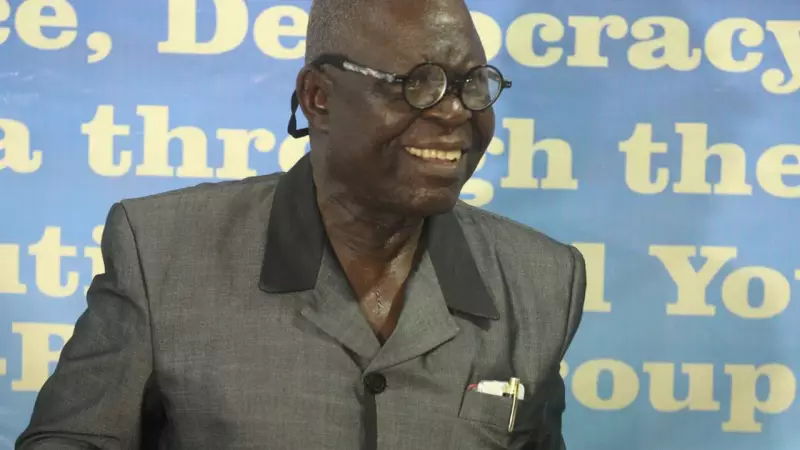
A significant new literary work examining Nigeria's military past is set for presentation in Lagos. Chief Ayo Opadokun, a respected elder statesman and NADECO activist, will unveil his book titled 'The Gun Hegemony' on Thursday, January 15.
A Poignant Launch Date
The timing of the launch is deeply symbolic. The event at the Muson Centre coincides precisely with the 60th anniversary of Nigeria's first military coup on January 15, 1966. That fateful event abruptly ended the First Republic and set the nation on a new, turbulent political course dominated by military rule for decades.
This book enters a rich field of existing literature on the subject. It joins other notable accounts like Major Adewale Ademoyega's 'Why We Struck,' Alexander Madiebo's 'The Nigerian Revolution and the Biafran War,' and Ben Gbulie's 'Nigeria's Five Major.' Scholarly interpretations, such as Isaac Ogbogo's 2018 journal essay and Ibiang Ewa's 2024 paper, also seek to explain the coup's enduring impact.
Inside 'The Gun Hegemony': A Comprehensive Analysis
Chief Opadokun's contribution is a substantial 428-page volume structured into 15 detailed chapters. The book aims to provide a thorough dissection of how the military's intervention reshaped the nation.
The chapters systematically cover the nation's state before the coup, the historical background of the military institution, and the preparation of the 'military politicians.' It delves into the coup's multifaceted impacts on Nigeria's socio-political landscape, economy, social services, judiciary, police force, and even the military itself.
Other critical sections address the abuse of human rights, the repression of the media, the often-troubled transitions to civilian rule, and the societal factors that sustained military dictatorship. The work concludes with a postscript, offering final reflections on this complex period.
The book is enriched with appendices containing valuable primary documents, including a list of coups worldwide, exchanges on the civil war, and reports on the 1966 coup. A complete bibliography and index make it a robust resource for researchers and general readers alike.
Unearthing New Facts and a Lasting Legacy
According to the review by Prof. Sylvester Odion Akhaine of Lagos State University, a key strength of Opadokun's work is its presentation of firsthand accounts that have never before been published. This new information enriches the historical repository on a pivotal era.
The book argues that the 1966 coup entrenched a 'gun hegemony'—an overbearing military influence in national affairs that undermined democratic institutions. It describes how democratic ethos gave way to dictatorial impulses, crippling institutions like the judiciary with ouster clauses and repressing civil society.
Prof. Akhaine notes that while the 1966 coupists aimed to address issues like corruption and nepotism, the military rule that followed entrenched many of these very problems. He commends Chief Opadokun, a soon-to-be octogenarian, for this patriotic service of documenting history for younger generations. The book stands alongside few others, like General Chris Alli's 'Federal Republic of the Nigerian Armed Forces,' in attempting to fully account for the military's overwhelming presence in Nigeria's national life.
The launch of 'The Gun Hegemony' is more than a literary event; it is a timely historical reflection. As Nigeria marks six decades since the coup that changed everything, Opadokun's analysis provides crucial context for understanding the nation's contemporary political challenges and the long shadow of its military past.