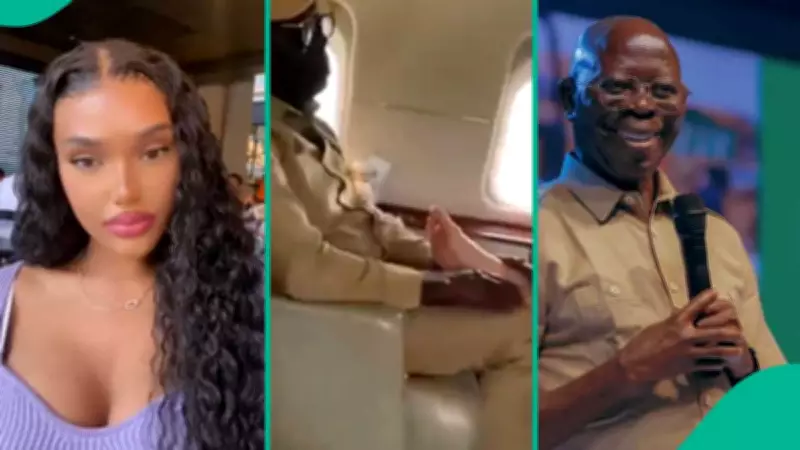
South African Influencer Fires Back After Oshiomhole Labels Viral Jet Video as AI
Senator Adams Oshiomhole has sparked a fresh wave of controversy by reportedly dismissing a trending luxury jet video as digitally manipulated using artificial intelligence technology. The footage, which shows a man believed to be the senator massaging a woman's feet aboard a private aircraft, has dominated social media discussions across Nigeria.
Leshaan Dagama's Direct Contradiction on Instagram
Leshaan Da Gama, the South African adult content creator identified as the woman in the viral video, took to her Instagram Stories on Thursday, February 6, to directly challenge the senator's claims. In a pointed response, she wrote: "Video wasn't AI but believe your senator," clearly countering Oshiomhole's assertion that the entire scene was fabricated through technological means.
The influencer, who finds herself unexpectedly embroiled in Nigerian political discourse, had previously addressed the growing backlash from angry Nigerians. In an earlier post, she directed critics toward their elected representative, stating: "Your senator is the problem, go be mad at him, not me." This response highlights her attempt to distance herself from the political implications of the controversy.
The Origins of the Viral Footage Controversy
The dispute began when a short video surfaced online depicting what appeared to be Senator Oshiomhole providing a foot massage to a woman during a private jet flight. Initial speculation suggested the woman might be the senator's wife, but keen-eyed observers noted significant differences in appearance that prompted further investigation.
This digital detective work eventually led internet users to Leshaan Dagama's social media profiles, where she was identified as the individual in the controversial clip. The identification triggered mixed reactions:
- Some accused her of involvement in a political scandal
- Others dragged her into debates unrelated to her personal circumstances
- The backlash intensified to the point where she felt compelled to address it publicly
Nigerian Social Media Reactions to the Exchange
The ongoing exchange between the South African influencer and the Nigerian senator has generated significant commentary across social media platforms. Various netizens have weighed in with perspectives that reflect broader cultural and political sentiments:
@thefoodnetworknig2 commented: "If na Nigerian baddie now, she go accept say she be AI dey quiet… Imported OS is the weapon fashioned against you all, buy Nigerian??"
@officialtedi_wealth observed: "You see women en fear them. Very powerful people. After them see that your preek en even if you be president them no send your papa them go drag you as you no sabi close your boxer naa"
@bodyglamz expressed frustration: "Naijá and lying kaiiii?. This isn't a big deal but maaaan the way lying is accepted in Naijá is shocking. One African said you can identify who is Naijá by the way they li3 about everting. This is actually shamefu1. Why is lying embedded in Naijá culture? It's not cruise, lying can never be cruise."
Broader Political Context and Implications
This controversy emerges against a backdrop of ongoing political tensions in Nigeria. Senator Oshiomhole, a prominent political figure, has previously been involved in public disputes with other politicians, including his criticism of Rotimi Amaechi during recent public events. The viral video incident adds another layer to his public profile and raises questions about:
- The intersection of politics and social media in modern Nigeria
- The credibility of digital evidence in political controversies
- The role of international figures in domestic political discourse
- Public expectations of transparency from elected officials
As the story continues to develop, it highlights how quickly personal moments can become political flashpoints in today's digitally connected world. The conflicting narratives between the senator's AI claims and the influencer's authenticity defense create a compelling drama that resonates beyond entertainment gossip into questions of truth, technology, and political accountability.