A man who lost his mother to cancer has ignited an online conversation after sharing a list of demands from his village groups that he must fulfill for her burial. Emeka Nobis, whose mother died after a costly cancer battle, detailed the requirements imposed by three groups in his village during negotiations for the funeral arrangements.
Village groups present demands for burial discussions
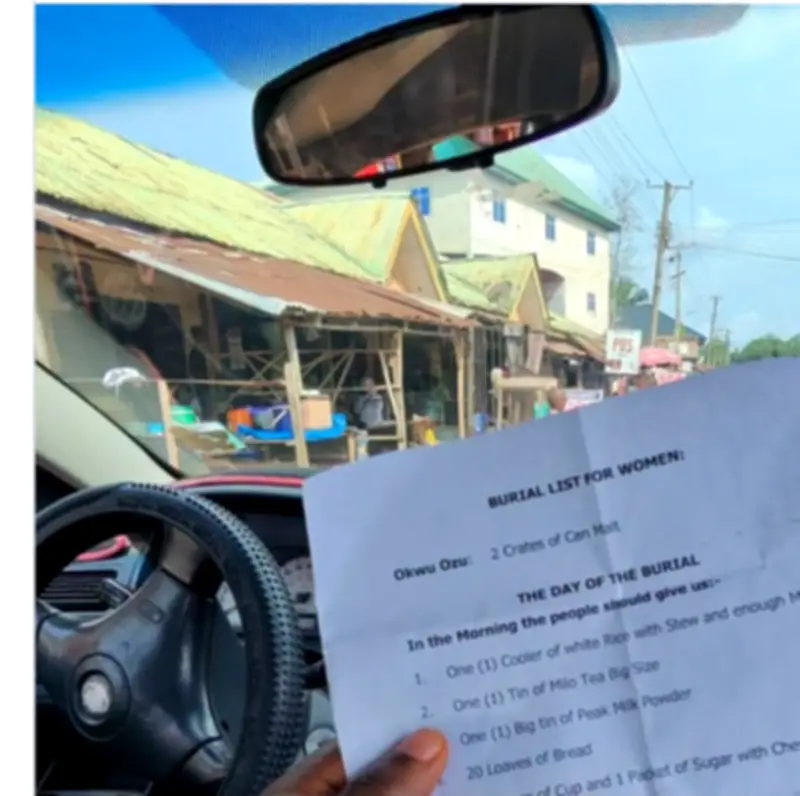
Nobis explained that he and his brother met with three distinct groups in his mother’s village: the umunna (men of the kindred), the umuada (women of the kindred), and the alurudi (women married into the kindred). Each group had its own set of demands before they would even discuss the burial. On their first visit, they received the lists from the first two groups. On the second visit, they obtained the demands from the alurudi.
The list from one group included various food items intended for the refreshment of its members. Social media users reacted with anger, questioning why a grieving family should face such financial strain. Many argued that traditions should be reconsidered when they add undue burden.
Emeka Nobis calls for modification of traditions
Nobis took to Facebook to share his experience and advocate for changing cultural practices that no longer serve the community. He wrote: 'Today, we went again to my mum’s village - my brother and I. The first visit is what is called “Mbete Akwa.” It means to cry about the bereaved. The second visit is called “Okwu Ozu.” It means conversations concerning the dead.'
He continued: 'Today, we met with three sets of people. - the umunna (men of the kindred) - the umuada (women of the kindred) - the alurudi (women married into the kindred). Each of these groups have their demands. We got the demands of the first two sets on our first visit. Today, we got the list of demands from the third set.'
Nobis noted that because his mother died at age 71, she is considered to be in the topmost category of deaths, which requires a cow as part of the demands. He added: 'Thankfully, with wisdom, we’ve been having meaningful conversations concerning these demands. I’ve kept my cool with a smiley face, navigating these conversations.'
Documenting the experience to spark change
Nobis explained his reasons for documenting the process: 'Firstly, to share my experiences concerning burial in the part of Igboland I come from. I deem certain rituals involved in burials as totally unnecessary and I still maintain my stand. By experiencing it firsthand, I’m now knee-deep into it to see the import firsthand.'
He added: 'Secondly, to prepare the hearts of any who will walk this path. It’s project management that requires emotional intelligence to navigate. Thirdly, culture can be modified. It’s left to us to challenge these practices as years go by. I’m pretty sure that it definitely will happen.'
The post has sparked widespread debate about the financial pressures of traditional burial rites in Igbo culture, with many calling for reforms to reduce the burden on bereaved families.