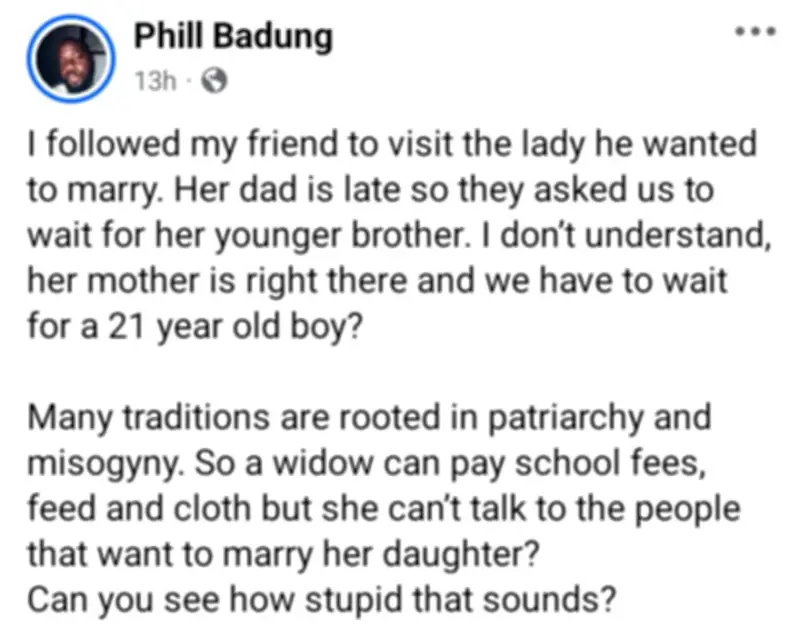
Phill Badung, a Nigerian man, has sparked a heated debate online after calling out what he describes as deeply patriarchal and misogynistic traditions in African marriage customs. In a Facebook post on Tuesday, August 4, Badung recounted how a widow was sidelined during her own daughter's marriage negotiation, with the family insisting on waiting for her 21-year-old son to handle the matter.
Widow Ignored in Favor of 21-Year-Old Son
Badung explained that he had accompanied a friend to the family home of the woman his friend intends to marry. Upon arrival, they were informed that the woman's father had passed away, and they would need to wait for her younger brother—who was only 21 years old—to participate in the negotiations, even though her mother was present in the room the entire time.
“I followed my friend to visit the lady he wanted to marry. Her dad is late so they asked us to wait for her younger brother. I don’t understand, her mother is right there and we have to wait for a 21 year old boy?,” he wrote in his post.
Questioning the Logic of Tradition
Badung expressed frustration at the apparent contradiction in these customs, noting that the same woman who has raised and provided for her children is deemed incapable of handling marriage negotiations for her daughter. He argued that such practices are rooted in patriarchy and misogyny, which systematically sideline women even in matters that directly concern them.
“Many traditions are rooted in patriarchy and misogyny. So a widow can pay school fees, feed and cloth but she can’t talk to the people that want to marry her daughter? Can you see how stupid that sounds?” he asked rhetorically.
Broader Implications for Women's Roles
The post has ignited a conversation about the role of women in traditional settings, with many users sharing similar experiences and supporting Badung's critique. Some pointed out that this practice is not isolated but reflects a widespread tendency to prioritize male authority even when the male is younger and less experienced than the female elder.
According to cultural observers, such traditions often stem from historical norms where property and lineage were traced through the male line, and women were considered minors under customary law. While many families have modernized, others still adhere to these outdated practices, leaving women like the widow in the story feeling disrespected and undervalued.
Call for Change
Badung's comments have added to growing calls for a reexamination of traditional practices that undermine women's dignity and agency. As more Nigerians engage in public discourse on gender equality, many are urging families to adapt their customs to reflect contemporary values of fairness and respect.
The incident also highlights the need for dialogue within families about the roles of women in significant life events, such as marriage negotiations, where their voices should be heard and respected. As one commenter noted, “It's time for us to question these norms and ensure that our traditions evolve to honor the contributions of women, not silence them.”
While Badung's post may have been prompted by a single incident, it has resonated with many who see it as a microcosm of broader societal issues. The debate continues online, with many hoping that such conversations will lead to more inclusive practices in the future.