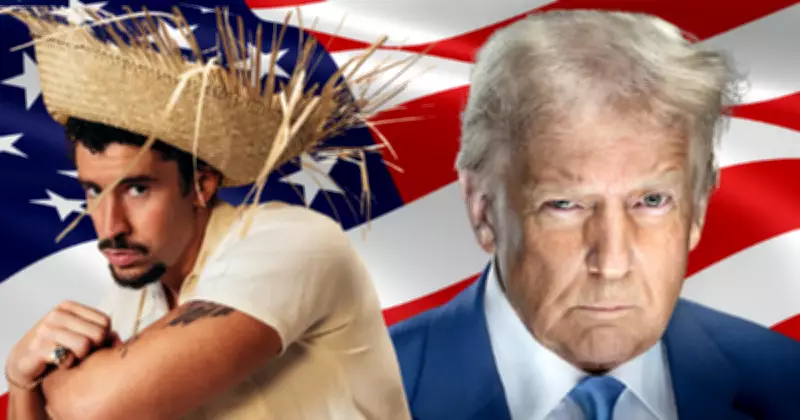
Trump's Scathing Review of Bad Bunny's Historic Super Bowl Performance
Former United States President Donald J. Trump has unleashed a blistering critique of Bad Bunny's groundbreaking Super Bowl halftime show, describing the performance as "terrible" and devoid of American values. The controversial political figure took to his preferred social media platform, Truth Social, to express his disapproval of the historic event that took place on February 8, 2026.
A Historic Moment for Latin Music
Bad Bunny, the Puerto Rican megastar, made entertainment history by becoming the first solo Latin artist to headline the prestigious Super Bowl halftime show. The performance occurred during Super Bowl LX, where the Seattle Seahawks secured a decisive 29-13 victory over the New England Patriots. What made this performance particularly noteworthy was Bad Bunny's decision to deliver his entire set in Spanish, marking another unprecedented achievement for the iconic event.
Despite Trump's harsh criticism, the performance has received widespread acclaim from numerous American media outlets. Rolling Stone magazine notably ranked Bad Bunny's show as the second greatest Super Bowl halftime performance in history, placing it just behind Prince's legendary 2007 appearance. This recognition highlights the cultural significance and artistic merit that many observers found in the Latin superstar's presentation.
Trump's Specific Objections
In his strongly worded social media post, President Trump articulated several specific complaints about the halftime show:
- He objected to Bad Bunny performing entirely in Spanish, stating that "nobody understands a word this guy is saying"
- He described the dancing as "disgusting" and inappropriate for young children watching the event
- He characterized the performance as "a slap in the face" to the United States
- He claimed the show lacked inspiration and failed to represent American standards of success, creativity, or excellence
Trump concluded his critique with a call for the NFL to replace its new kickoff rule and reiterated his famous campaign slogan, "Make America Great Again."
Political Context Behind the Criticism
The tension between Trump and Bad Bunny extends beyond artistic differences. The Puerto Rican musician has been an outspoken critic of the former president for several years. In 2024, Bad Bunny publicly endorsed Democratic candidate Kamala Harris for the presidency, citing Trump's handling of Hurricane Maria in 2017 as a primary motivation for his political stance.
More recently, at the 2026 Grammy Awards, Bad Bunny joined other prominent artists in criticizing Trump's immigration policies, particularly the actions of United States Immigration and Customs Enforcement (ICE). This ongoing political friction provides important context for understanding the depth of Trump's criticism of the Super Bowl performance.
The Actual Performance Details
Contrary to Trump's negative assessment, Bad Bunny's halftime show was a carefully crafted celebration of Puerto Rican culture and Latino heritage. The performance featured several notable guest appearances that delighted audiences worldwide:
- Lady Gaga delivered a salsa rendition of her hit song 'Die With A Smile'
- Puerto Rican icon Ricky Martin made a surprise guest appearance
- Additional cameos included singer Karol G, rapper Cardi B, actress Jessica Alba, and actor Pedro Pascal
The show has generated significant positive engagement across social media platforms, with numerous clips circulating that highlight the vibrant energy and cultural significance of the performance. Many viewers appreciated the tribute to Puerto Rico and the celebration of Latino contributions to American culture.
This incident highlights the ongoing intersection of politics, entertainment, and cultural expression in contemporary American society. While Trump's criticism reflects certain political perspectives, Bad Bunny's historic achievement represents a significant milestone for Latin representation in mainstream American entertainment.