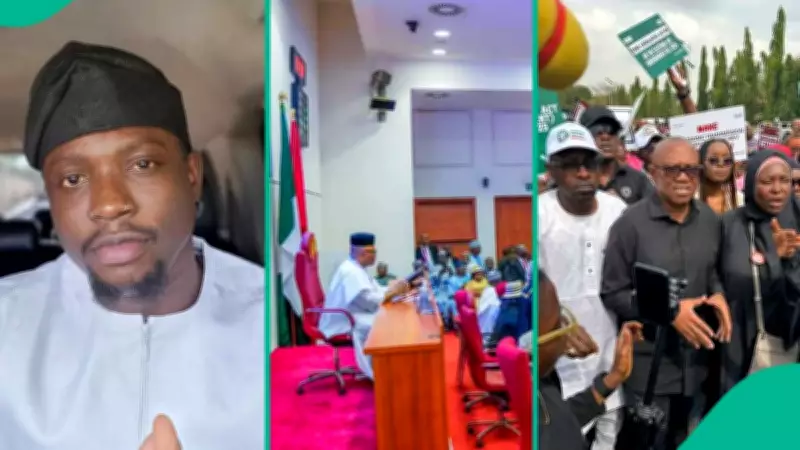
Social Media Activist VDM Dismisses Peter Obi's Electoral Reform Protest as Futile
Popular Nigerian social media personality Martins Otse, widely known as VeryDarkMan (VDM), has strongly criticized the recent protest led by Labour Party presidential candidate Peter Obi at the National Assembly. The demonstration, which occurred on Monday, February 9, 2026, was organized to demand comprehensive electoral reforms ahead of the 2027 general elections, with particular emphasis on improving the transmission of election results.
VDM's Controversial Stance on Electoral Reform Movement
In a video statement posted online, VDM made his position unequivocally clear, describing the entire electoral reform conversation as "dead on arrival" and a complete waste of time. The activist, known for his blunt and often polarizing commentary on social and political matters, expressed firm reluctance to engage with what he perceives as a doomed initiative.
VDM argued that the responsibility for pushing electoral reforms should fall squarely on the shoulders of politicians who actually contest elections, rather than social media activists or ordinary Nigerian youths. He specifically named prominent political figures including Peter Obi, Atiku Abubakar, and Nasir El-Rufai as individuals who should be leading such reform efforts from the frontlines.
Youths Should Play Supporting Role, Not Lead Reform Efforts
The activist elaborated on his perspective, stating that electoral reforms primarily affect those who participate directly in the electoral process as candidates. According to VDM, Nigerian youths are being strategically positioned as shields in political struggles when they should instead assume a "supporting role" behind established political actors.
"I can't waste my time on electoral reform because it is dead on arrival," VDM declared in his video statement. "Peter Obi, Atiku, El-Rufai, and other candidates are the ones supposed to be at the forefront pushing for the reforms. The youths are supposed to support them from behind."
Mixed Reactions from Social Media Users
VDM's comments have sparked significant debate across Nigerian social media platforms, with users expressing diverse opinions about his controversial stance.
One user, @Larryparkersly, commented: "VDM can only be famous in a broken society. If this country had good leaders, there wouldn't be need for VDM."
Another user, @Davidfolksy, challenged VDM's perspective: "VDM is sounding shady. How can it not directly affect you when the rigging affects your daily life directly? Those you are talking about are comfortable in good or bad governance. I don't want to assume you are a tool or have been aligned to the system as a pattern of distraction."
A third user, @LetsPlay75886, questioned VDM's credibility on political matters: "Anything that has to do with politics, VDM has always avoided it. He has fought for nothing in terms of politics. Therefore if it has to do with politics, he doesn't have any moral right to talk."
Broader Context of VDM's Political Commentary
This recent statement continues VDM's pattern of controversial commentary on Nigerian political affairs. The activist has previously gained attention for his outspoken views on various social issues, though he has often maintained distance from direct political engagement.
The protest that prompted VDM's comments saw Peter Obi and supporters gathering at the National Assembly complex to demand comprehensive electoral reforms. Their specific demands included improved transparency in election result transmission, enhanced electoral integrity measures, and stronger safeguards against electoral malpractice ahead of the 2027 general elections.
VDM's dismissal of these efforts reflects a growing skepticism among some Nigerians about the effectiveness of protest movements and reform initiatives in the country's political landscape. His comments highlight ongoing debates about the appropriate roles for different segments of society in driving political change and electoral reform in Nigeria.