In a landmark moment for African digital entertainment, Nigerian content creator Carter Efe hosted Afrobeats superstar Davido on a live stream, shattering records but also exposing critical fault lines in the continent's creator economy.
The Peak and The Sudden Fall
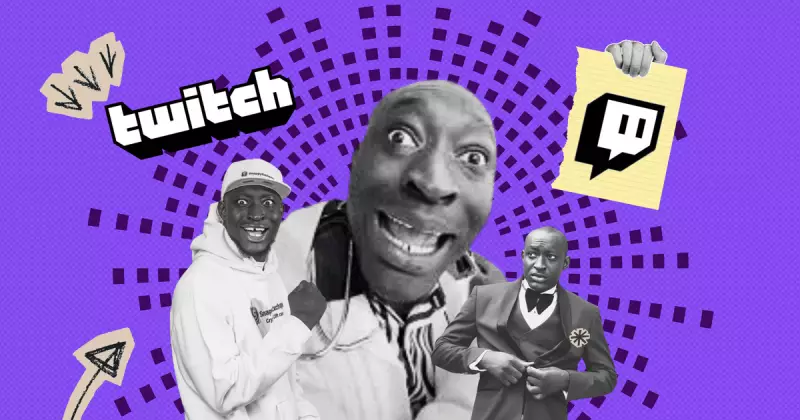
On 17 December 2025, Carter Efe's Twitch channel made history. The stream, featuring Davido in a small Lagos room, peaked at 83,000 concurrent live viewers, setting a new record for the most-watched Twitch stream originating from Africa. The aftermath was explosive: Carter's follower count surged to 405,000, and he became the first African streamer to cross the 20,000 paid subscriber milestone on the platform.
However, the triumph was short-lived. By 22 December, Carter Efe posted a screenshot revealing a sudden suspension from Twitch. This triggered a 24-hour frenzy, a temporary migration to YouTube, and an equally mysterious reinstatement a day later.
The Conversion Vacuum and The Naira Floor
A deep dive into the analytics reveals a troubling paradox. Despite massive viewership and follower growth, the conversion of this audience into paying subscribers has hit a wall. This phenomenon, termed the 'Conversion Vacuum,' highlights a broken digital funnel. While over 5 million views were recorded for the Davido stream VOD, a subsequent 'prison-themed' return stream on 23 December attracted only about 490,000 views—a 90% attrition rate.
The core issue is economic, described as the 'Naira Floor.' This is the point where Nigerian fan passion collides with the dollar-based pricing of global platforms. Even with regional adjustments, a Twitch subscription costing roughly $2.50 translates to about ₦3,600. In Nigeria's economic climate, with inflation hovering around 14.45%, this sum represents a significant financial decision—equivalent to food or transport costs for days.
When combined with the high data costs required to watch lengthy HD streams, the total cost of fandom becomes prohibitive for many. This creates a vast audience of 'economic humans'—emotionally invested fans who are financially locked out, explaining the stagnation in paid subscriber growth despite soaring popularity.
Governance Lag: When Silicon Valley Misreads Lagos Vibes
The whiplash-inducing 24-hour ban and unban spotlight a critical issue: Governance Lag. Experts like Tiwalola Olanubi Jnr (TJ Dotts) of Dotts Media House explain that platforms like Twitch are governed by US-centric standards ill-equipped to interpret Nigerian cultural nuance.
For instance, a loud, staged boxing match with fellow creator Enzo—seen as energetic 'vibes' in Lagos—can be flagged as a safety violation by automated systems in California. As creators like Carter Efe scale rapidly, their expressive style triggers risk algorithms not designed for their context, placing them in a state of 'Pre-emptive Guilt.'
'The ban does not suggest Nigerian creators are doing something 'wrong.' It suggests African creator culture is evolving faster than Western platform governance frameworks,' TJ Dotts tells Pulse Nigeria.
The Industry's Wake-Up Call
The saga serves as a stark warning for brands and the industry at large. Compliance officer Nena from The Influence Media Agency (TIMA) stresses that 'hope is not a strategy.' Betting major campaigns on creators in constant friction with platform policies is a high-risk gamble.
She predicts that 2026 will be the year of the 'Stable Creator'—talents who can generate high energy without incurring high platform risk. The focus is shifting from pure virality to sustainable presence, where understanding and navigating platform rules is as crucial as attracting viewers.
Carter Efe's 'resurrection' stream on 23 December, featuring stars like Victor Boniface, Vinícius Júnior, and Florian Wirtz, proved his pulling power remains intact. Yet, Boniface's on-stream roast—chiding Carter for perceived disloyalty to Wizkid—underscored the fragile ecosystem where a creator's entire livelihood depends on platform access.
The ultimate takeaway is clear. The future of Nigerian streaming lies not in choosing between chaos and compliance, but in mastering the balance. 'While chaos wins attention, compliance preserves it,' TJ Dotts concludes. For African creators aiming for longevity, the challenge is to sustain their disruptive energy while building resilience against the unforgiving systems that host them.