Adamawa Family Drama: Public Rejection of Daughter's Wedding Sparks Controversy
In a dramatic turn of events, the family of a Nigerian lady, Abigail Ishaya, has publicly rejected her proposed wedding to her partner, Believe Yakubu. The wedding was scheduled to take place on April 6, 2026, at LCCN No. 2 Kala’a in Hong Local Government Area of Adamawa State, but now faces significant opposition from her immediate relatives.
Family Opposition and Allegations of External Pressure
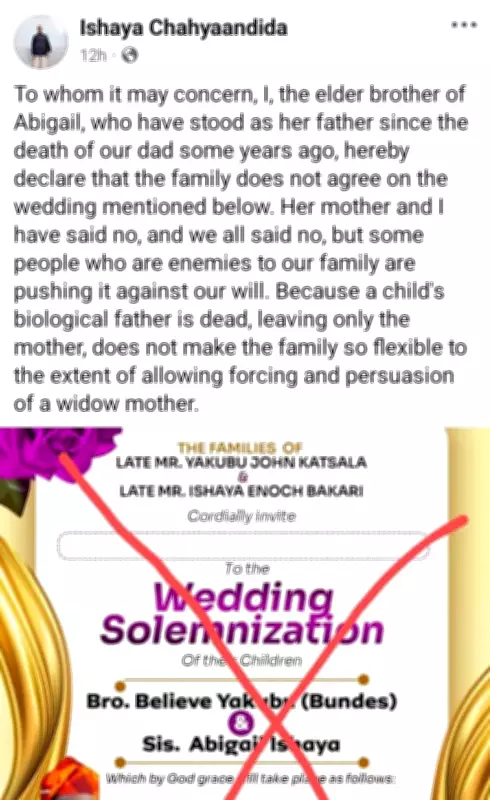
Abigail’s elder brother, Ishaya Chahyaandida, who claims to have acted as her father since their late father's death, disclosed this rejection in a Facebook post on Tuesday, March 3, 2026. According to him, both he and their mother are firmly against the marriage. He alleges that some 'enemies' are attempting to push the wedding against the family's will, creating a tense and public dispute.
In his social media statement, he wrote, "To whom it may concern, I, the elder brother of Abigail, who have stood as her father since the death of our dad some years ago, hereby declare that the family does not agree on the wedding mentioned below. Her mother and I have said no, and we all said no, but some people who are enemies to our family are pushing it against our will."
Broader Implications and Family Dynamics
He further elaborated on the family's stance, emphasizing that the absence of a biological father does not make the family vulnerable to external pressures. "Because a child's biological father is dead, leaving only the mother, does not make the family so flexible to the extent of allowing forcing and persuasion of a widow mother," he added, highlighting concerns over coercion and the protection of family integrity.
This public rejection has sparked discussions on social media and within the local community, raising questions about:
- The role of family consent in modern weddings in Nigeria.
- The impact of social media on private family matters.
- Allegations of external interference in personal decisions.
The situation remains unresolved as the scheduled wedding date approaches, with the family's firm opposition casting doubt on whether the ceremony will proceed as planned. This incident underscores the complex interplay between tradition, family authority, and individual choice in contemporary Nigerian society.