For many Nigerians, the tradition of setting ambitious New Year's resolutions every January is a familiar ritual. Yet, by the time February or March arrives, those carefully laid plans often feel disconnected from reality. This common struggle is precisely why a revolutionary approach to planning—the 12-week year—is gaining traction as a more human and adaptable way to structure ambition.
Why Year-Long Plans Often Fail
Chidirim Ndeche, writing for Guardian Life, captures a universal experience in the series Navigating Life. She describes sitting down each January with clear objectives, only to find herself a few months later trying to force behaviours that suited a version of herself that no longer existed. Life, work, priorities, and energy levels are in constant flux, making a rigid 12-month plan feel increasingly misaligned as the year progresses.
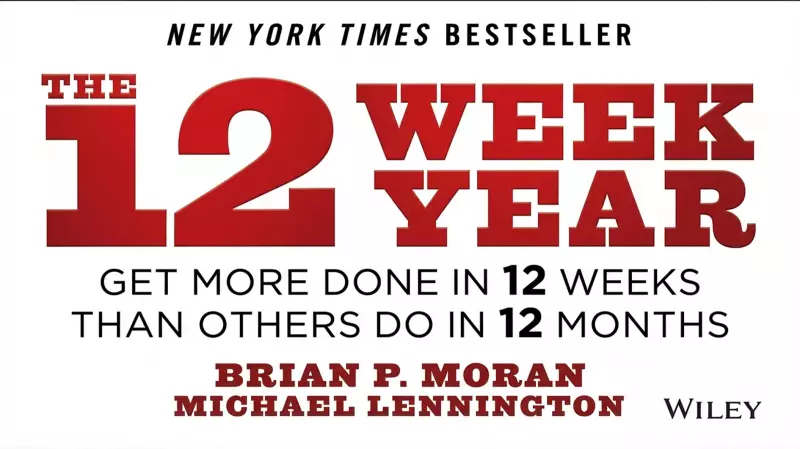
The core idea of the 12-week year, as outlined by Brian P. Moran and Michael Lennington in their recommended book The 12-Week Year, is simple yet powerful. It proposes treating a year not as one long marathon but as four distinct chapters, each lasting just 12 weeks. This condensed timeline forces clarity and creates a healthy sense of urgency, helping to combat procrastination and maintain momentum.
Building Your Year with Identity and Themes
The method goes beyond mere scheduling. Ndeche emphasises that the most significant shift occurs when you start with identity before setting any goals. Instead of listing robotic tasks like "go to the gym," she advocates choosing an overarching theme for the year that acts as a compass. A theme answers the deeper question: "Who am I becoming?"
Examples of powerful, identity-based themes include:
- The year of courageous moves.
- The year of quiet power.
- The year of foundations.
- The year of self-trust.
This theme then guides each 12-week chapter. For her first chapter of 2026, Ndeche's philosophy is "everything is a muscle," focusing on building skills and habits through consistent repetition. Each chapter gets one primary objective, ensuring focus and allowing for a different story each quarter while staying true to the annual theme.
Practical Steps to Implement Your 12-Week Plan
Getting started with this system is straightforward and can be done with tools readily available to any Nigerian, from a Google Doc to a physical journal. Ndeche outlines a simple process:
- Create general yearly goals across broad life categories like health, career, finances, and relationships.
- Choose one primary objective for the next 12 weeks that aligns with your theme. Ask: "What would make the rest of the year easier if I focused on this now?"
- Define two lead measures—actionable steps you can repeat weekly, such as "move three times a week" or "journal every morning."
- Track progress visibly in a satisfying way, using checkboxes or coloured stars, to maintain motivation.
- Check in after 12 weeks, journal what changed, and decide what the next chapter needs.
Crucially, this framework acknowledges that not every chapter must be about explosive growth. Maintenance chapters focused on recovery, consistency, or strengthening foundations are not just allowed but encouraged. This recognises that progress is not linear and builds resilience for when life becomes chaotic.
By adopting the 12-week year, planners gain structure without rigidity. It offers a pragmatic Nigerian approach to ambition—one that provides room to evolve, adapt to shifting circumstances, and pursue goals without the inevitable burnout of a poorly fitting annual plan. As Ndeche concludes, your story doesn't have to be written all at once; sometimes, it's better told in focused, manageable chapters.