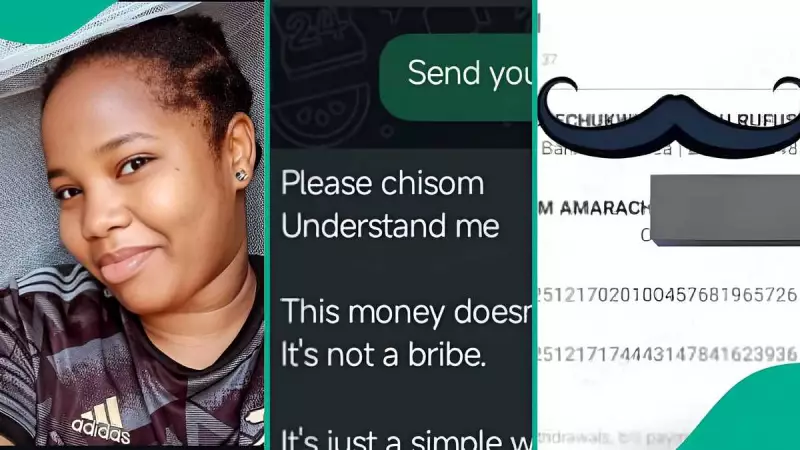
A young Nigerian woman has ignited a spirited conversation online after publicly sharing a chat where she refunded a substantial Christmas gift from a male admirer. The incident, which highlights the complex intersection of modern dating, financial gestures, and personal principles, has drawn widespread reactions from netizens.
The Viral Refund That Sparked a Debate
The story unfolded when a social media user identified as @Nchizzyy posted screenshots of a conversation. She explained that a man who had been expressing romantic interest, colloquially known as "toasting" her, sent her N30,000 as a Christmas gift. Despite the timely financial boost, the lady was clear about her stance.
She stated emphatically that she had "no intentions of dating him or saying yes to him." Driven by this conviction, she insisted on returning the money. Her action was rooted in a firm belief she shared with her followers: "Don't send a girl money if you know she has no interest in you. Don't buy love with money." This statement directly references a popular sentiment in Nigerian pop culture, echoing advice from celebrities like Neo Official and Wizarab.
Insisting on Integrity: The Struggle to Return the Cash
The process of refunding the money was not straightforward. According to her account, the admirer was reluctant to provide his payment details to facilitate the return. @Nchizzyy revealed she had to practically beg him for his information.
Her commitment was so strong that she had already considered an alternative plan: "I literally had to beg... Was already thinking of how to withdraw it as cash and drop at his door." This detail underscores her determination to dissociate herself from a financial gesture she felt was attached to unreciprocated romantic expectations.
Mixed Reactions from the Online Community
The post quickly went viral, attracting a flood of comments that reflected diverse perspectives on money, dating, and gender dynamics in Nigeria.
Some users praised her integrity. @Salome_Wueseter tackled a common query, explaining how the sender likely got her account number through Opay's system that links phone numbers to accounts. Others, like @SumolaIdowu, criticized the man's approach, calling it a "disgusting weakness" and "zero game."
However, several comments questioned whether her resolve would hold if the sum was significantly larger. User @Iam_Jayphlow remarked, "Very easy and nice gesture, until it's N1million. Feelings go just sprout from everywhere asap." Similarly, @ToluDirect suggested the outcome might be different if the admirer was a "grand simp" offering millions, foreign trips, and the latest iPhone.
The discussion also veered into criticism of men's behavior. @Kaydeyofficial commented, "My gender useless I Dey always talk am... Na why I no Dey ever pity men wey dey suffer for woman hand sha." Another user, @writernimSS, shared similar personal experiences of men persisting despite being told the woman is committed elsewhere.
The incident serves as a modern case study in the ongoing dialogue about courtship, financial transactions, and autonomy in relationships within Nigeria. It raises pointed questions about the expectation that monetary gifts can or should influence romantic feelings, and the ethical responsibility of individuals on both sides of such exchanges.