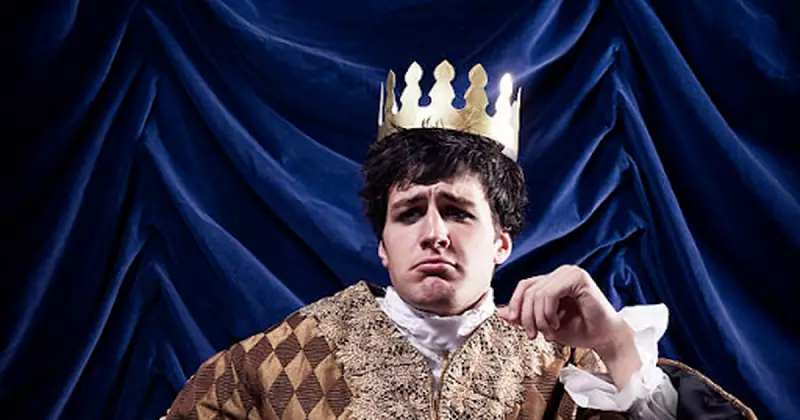
In the ever-evolving world of modern romance, a new term has taken centre stage: Throning. This trend, which has rapidly gained traction online, describes the act of dating someone primarily for their social status, relevance, or 'brand value,' rather than for genuine emotional connection or love.
What Exactly Is Throning?
Coined by writer Adeola Olatunji and discussed in an article dated 06 December 2025, Throning is straightforward in concept but complex in practice. It occurs when an individual pursues a relationship because their potential partner looks good for their image. The primary motivation is not affection, compatibility, or shared values, but the perceived upgrade the partner provides to one's own social standing.
Think of it as placing someone on a metaphorical throne so that their shine, popularity, and influence rub off on you. Their reputation becomes a social accessory, and their clout acts as a shortcut to greater visibility and perceived importance. In essence, it's the romantic equivalent of aligning yourself with the 'cool kids' to boost your own social capital.
Throning vs. Shrekking: A Tale of Two Trends
To fully understand Throning, it's helpful to contrast it with its conceptual opposite: Shrekking. As previously explored, Shrekking involves intentionally 'dating down'—choosing a partner perceived to be of lower social status or attractiveness with the expectation that they will be more loyal, grateful, and devoted.
The intentions behind these two trends are fundamentally different. Shrekking is driven by a desire for comfort and emotional security, often rooted in a fear of being challenged or overshadowed. Throning, however, is a calculated move for social gain and upward mobility. While Shrekking overestimates one's own desirability, Throning overestimates the value of a partner's external status.
Both trends share a critical flaw: love is not the primary ingredient. This fundamental absence transforms what should be a relationship into a transactional arrangement, leaving one party taken for granted or used as a mere prop for the other's image.
Why Is Throning Becoming So Popular?
The rise of Throning is inextricably linked to the performance culture fostered by social media. Modern dating, especially in digitally savvy societies like Nigeria, has become a public spectacle. People increasingly think in terms of aesthetics, 'soft life' optics, and audience perception, navigating a minefield of ghosting, breadcrumbing, and staged relationship launches.
In this chaotic environment, Throning presents a tempting shortcut. The logic is simple: "If I date someone admired by others, I automatically look better." It turns a partner into social currency—a walking PR package that elevates one's personal brand. The dangerous shift here is from asking "Do I like them?" to asking "Do they elevate my status?"
The Emotional Cost of a Status-Driven Relationship
While wanting a partner who looks good beside you is natural, Throning crosses a fine line from admiration to utilisation. Relationships built on this foundation lack depth because the 'throner' engages only with their partner's external world—the hype, the followers, the public admiration—and not with their inner values, quirks, fears, or love language.
Such connections, devoid of genuine intimacy, cannot survive on curated Instagram photos or influencer aesthetics alone. You cannot build a sustainable future on clout. The emotional risk is significant, and it is typically the person on the throne—the one who believed the affection was real—who ends up with a broken heart when the superficial foundation crumbles.
Trends like Throning and Shrekking reveal an uncomfortable truth: many people are seeking to avoid the emotional vulnerability and hard work that authentic love requires. Throning offers quick validation, while Shrekking offers quick security. Neither fosters the deep, fulfilling connection that leaves individuals feeling whole.
Recognising these trends is the first step toward avoiding their pitfalls. True dating should be anchored in mutual respect, emotional connection, and shared values—not in social hierarchy, personal insecurity, or meticulous image management. The most beautiful relationships are not those that look perfect from the outside, but those that feel authentic and safe on the inside, where you are seen for who you are, not displayed for what you represent.
As the digital age continues to reshape human interaction, Throning may be the trend of the moment, but real, meaningful connection will always outlast the algorithm.