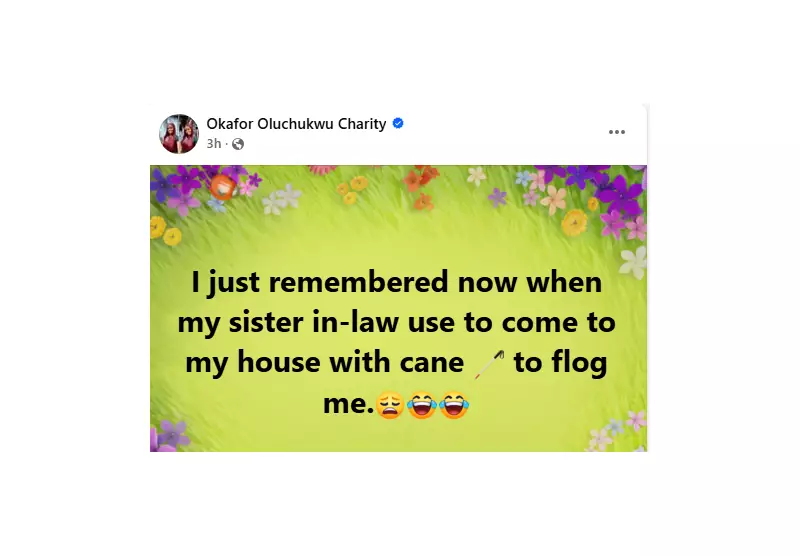
A Nigerian woman has shared a disturbing account of her early married life, alleging she endured physical abuse from her husband's sister for nearly a decade. Okafor Oluchukwu Charity, who remains married to her husband, brought these memories to light in a social media post that has sparked conversations about family dynamics and abuse.
The Shocking Facebook Revelation
On January 2, 2026, Oluchukwu took to Facebook to recount painful experiences from the first years of her marriage. She revealed that she entered the union at the young age of 19 and faced the alleged mistreatment for eight years. Her post described a pattern of intimidation and violence that she silently endured.
"I just remembered now when my sister in-law used to come to my house with cane to flog me," Oluchukwu wrote, capturing the visceral nature of her ordeal. This statement paints a vivid picture of the invasions into her marital home and the physical punishment she claims she suffered.
Allegations of Control and Degradation
The abuse, as described, went beyond physical violence. Oluchukwu detailed how her sister-in-law would police her personal choices, using them as justification for punishment. One specific instance she recalled involved her choice of appearance.
"My sister in-law will come to my house then and start asking me why should I fix nails?" she wrote. The relative allegedly demanded she remove them, framing it as a necessity for Oluchukwu to "serve them well as the slave I am." This language points to an alleged dynamic of domination and humiliation, where the sister-in-law enforced a subservient role.
The Lasting Impact of Early Marriage Trauma
While the location in Nigeria was not specified in her post, Oluchukwu's story highlights broader issues that can surround very young marriages. Getting married at 19 potentially placed her in a vulnerable position, which the alleged abuser exploited. The fact that she is still married to her husband adds complexity to the narrative, raising questions about family intervention, spousal support, and the long-term resilience required to overcome such trauma.
Sharing this story publicly, years after the events, suggests a powerful step towards reclaiming her narrative. It serves as a stark reminder of the hidden conflicts that can occur within extended families and the silent suffering some individuals endure. Her courage in speaking out provides a voice for others who may have faced similar situations in silence.