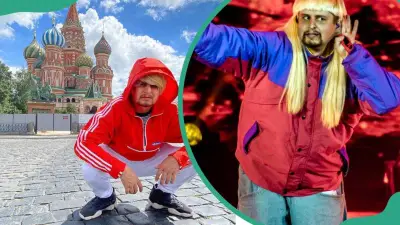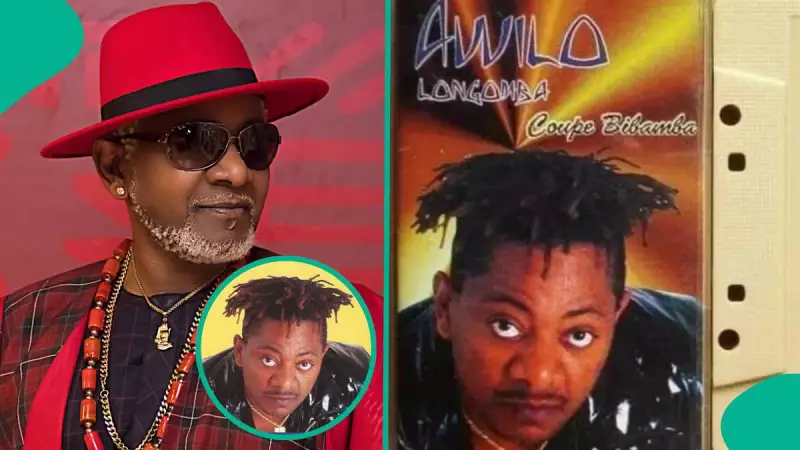
The late 1990s and early 2000s witnessed an extraordinary phenomenon in Nigeria's entertainment landscape as Congolese music superstar Awilo Longomba captured the hearts of millions despite language barriers. His unique sound and infectious dance moves created a cultural wave that remains memorable for Nigerians who experienced that era.
The Rise of a Musical Phenomenon
Louis Albert William Longomba, born on May 5, 1962, revolutionized African music by pioneering techno-soukous, a genre derived from Congolese Rumba. What made his success in Nigeria particularly remarkable was his ability to connect with audiences without singing in English, Nigeria's official language. Instead, he performed primarily in French and Lingala, yet his catchy melodies and energetic performances transcended linguistic boundaries.
Nigerians who grew up during this period vividly recall the distinctive Makossa dance that accompanied Awilo's music. The dance involved stretching arms, bending knees, and wiggling in rhythm to beats that dominated parties, weddings, and social gatherings across the country.
Record-Breaking Stadium Performances
Awilo Longomba achieved what few African artists have accomplished before or since. He made history by selling out Lagos National Stadium for three consecutive days, filling the 40,000-capacity venue each time. This unprecedented feat demonstrated his massive popularity and the deep connection Nigerian fans felt with his music.
His dominance extended beyond Lagos to other major Nigerian cities. In 2003, he packed the Nnamdi Azikiwe Stadium in Enugu and later the Jolly Nyame Stadium in Jalingo, cementing his status as the first Congolese artist to achieve such widespread success in Nigeria. These accomplishments paved the way for other non-Nigerian African artists like Koffi Olomide and Fally Ipupa to find audiences in the country.
Lasting Influence and Legacy
Even after his temporary disappearance from the Nigerian music scene, Awilo's influence persisted. He revealed in a 2014 interview with Vanguard that he had returned with new music, including his single 'Bundele' that was gaining international recognition in Brazil and other markets.
His collaborative spirit connected him with Nigeria's music elite, including work with Tiwa Savage, P-Square, Timaya, and Yemi Alade. This cross-cultural exchange highlighted the enduring bonds between African musical traditions.
In 2023, Awilo's legacy resurfaced when Mavin Records star Ayra Starr sampled his music in her song 'Sability,' sparking conversations among Nigerian music fans about his enduring impact. The controversy surrounding this sampling demonstrated how deeply Awilo's music remains embedded in Nigeria's cultural consciousness.
Throughout his career, Awilo released five influential albums: Moto Pamba (1995), Coupe Bibamba (1999), Kafou Kafou (2001), Mondongo (2003), and Super-Man (2008). His hit songs like 'Karolina,' 'Mondongo,' and 'Coupe Bibamba' continue to evoke nostalgia among Nigerian music enthusiasts who remember when the Congolese legend ruled their airwaves and dance floors.